
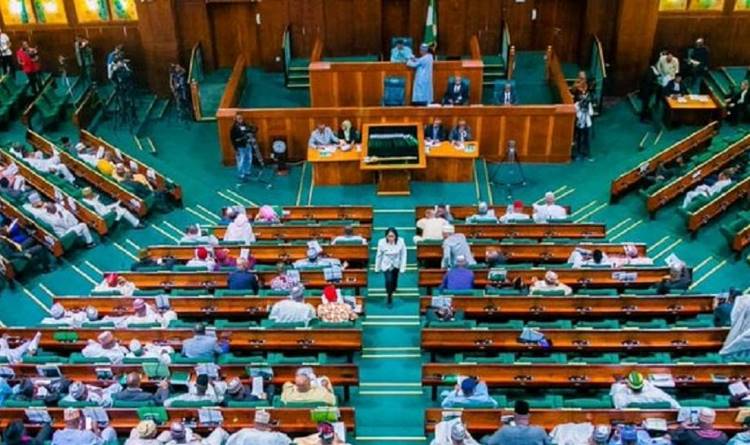
The House of Representatives has released the four tax reform Acts recently signed into law by President Bola Tinubu, following concerns over alleged discrepancies between the laws passed by the national assembly and versions in public circulation.
The move came after lawmakers raised alarm during plenary over inconsistencies in some gazetted copies of the new tax laws, warning that failure to address the issue could undermine public confidence in the legislative process.
Consequently, Speaker of the House, Tajudeen Abbas, in concurrence with Senate President Godswill Akpabio, directed the immediate release of the Certified True Copies (CTCs) of the Acts, including the endorsement and assent pages signed by the President, to enable public verification.
The released laws are the Nigeria Tax Act, 2025; Nigeria Tax Administration Act, 2025; National Revenue Service (Establishment) Act, 2025; and the Joint Revenue Board (Establishment) Act, 2025.
The controversy arose after Abdussamad Dasuki, a lawmaker from Sokoto State, raised a point of privilege, alleging inconsistencies between versions of the tax laws circulating publicly and the texts debated and passed by the National Assembly. He cautioned that allowing such versions to persist could erode trust in both the legislation and the legislature.
In response, the House ordered an internal verification and resolved to release the certified versions to dispel doubts about their authenticity.
In a statement on Saturday, House spokesperson Akin Rotimi said the release underscored the leadership’s commitment to transparency and legislative integrity.
“The attention of the House was drawn to the existence of inconsistent versions of the tax laws in circulation after a vigilant Honourable member identified discrepancies, raised the alarm, and formally reported the matter to the House on a point of privilege,” the statement said.
“Acting promptly, the Speaker ordered an internal verification and the immediate public release of the certified Acts to eliminate doubt, restore clarity, and protect the sanctity of the legislative record.”
Rotimi said Abbas provided firm leadership throughout the tax reform process, which involved stakeholder consultations, committee scrutiny, clause-by-clause consideration and plenary debates.
“Throughout the process, the Speaker consistently emphasised that tax reform must be anchored on clarity, fairness, and strict adherence to constitutional and parliamentary procedure,” he said.
According to the House, the four Acts form the foundation of Nigeria’s current tax reform framework, aimed at modernising revenue administration, improving compliance, reducing inefficiencies and strengthening fiscal coordination across the federation.
Abbas reassured Nigerians that the National Assembly operates as an institution of records.
“The National Assembly is an institution built on records, procedure, and institutional memory. Every bill, every amendment, and every Act follows a traceable constitutional and parliamentary pathway,” he was quoted as saying.
“Once a law is passed and assented to, its integrity is preserved through certification and custody by the legislature. There is no ambiguity about what constitutes the law.”
The House stressed that the certified versions released by the National Assembly remain the only authentic and authoritative texts of the four tax Acts, urging the public to disregard any other versions not duly certified.
It also disclosed that the Clerk to the National Assembly has aligned the Acts with the Federal Government Printing Press to ensure accuracy and uniformity, while hard copies have been circulated to lawmakers and made available to the public.
Meanwhile, the Ad-Hoc Committee investigating the alleged alterations will continue its work.
“The committee, chaired by Rt Hon Muktar Betara, will determine the circumstances surrounding the circulation of unauthorised versions of the tax Acts and recommend measures to prevent a recurrence,” the statement added.
The House reaffirmed its commitment to constitutionalism, transparency and the protection of the integrity of Nigeria’s legislative process.