
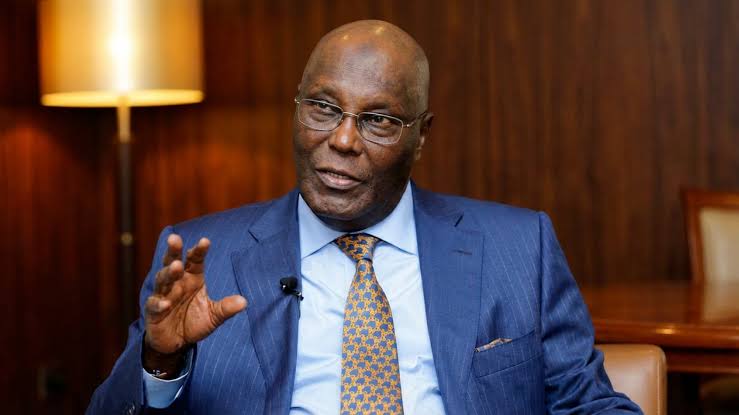
Former Vice President Atiku Abubakar has described the latest revelations by the Association of Power Generation Companies (APGC) as the final collapse of the Tinubu administration’s carefully manufactured narrative on the settlement of power sector debts.
In a statement issued by his Senior Special Assistant on Public Communication, Phrank Shaibu, the Waziri Adamawa said Nigerians have now been presented with compelling evidence that the Federal Government’s repeated bond issuances have become an endless cycle of borrowing without accountability.
Atiku said the startling disclosure by the Executive Secretary of the APGC, Dr. Joy Ogaji, that the much-publicised ₦501 billion bond had not even been fully disbursed, despite repeated government claims to the contrary, raised grave questions about transparency, fiscal discipline and the credibility of the administration’s economic management.
He said more damning was her challenge to the Federal Government to publish the complete list of beneficiaries, the amounts paid to each generation company and the dates of such payments if indeed the money has been released.
Her description of the government’s payment as “like rubbing oil on a crying child’s mouth to imply that he had eaten” sums up the administration’s style, Atiku said: “grand announcements, impressive figures, glossy headlines, and very little substance.”
The former VP recalled that Nigerians were first told of a ₦590 billion intervention, then a ₦501 billion bond hailed as a breakthrough, followed by talk of a multi-trillion-naira settlement. He noted another debt package is being considered while Gencos insist liabilities keep rising.
“If the earlier interventions worked, why is another intervention necessary? If the debts were substantially cleared, why are the creditors saying otherwise? If the government has faithfully discharged its obligations, why has APGC publicly challenged the Minister’s claims and demanded documentary evidence?” Atiku asked.
He said these were “industry questions, not opposition questions” and urged the government to answer them.
Atiku demanded that the Federal Government should immediately accept Dr. Ogaji’s challenge of full transparency by publishing the names of every Genco paid, the amount each received, the dates of payment, and the outstanding balances.
“Public money cannot disappear into official press statements. Every naira borrowed in the name of Nigerians must be traceable to its destination,” he said.
He accused the administration of treating governance as “an endless exercise in announcements,” adding that while bonds are floated and headlines made, “electricity generation remains constrained, investors remain uncertain, businesses continue to spend fortunes powering themselves, and ordinary Nigerians still pay exorbitantly for darkness.”
Atiku called on the National Assembly, the Auditor-General of the Federation and other oversight bodies to conduct a “comprehensive public audit” of all power sector intervention funds raised under Tinubu.
“Darkness has become one of the most expensive commodities in Nigeria. The least Nigerians deserve is the truth,” he said.
“Transparency is not an act of generosity; it is a constitutional obligation. Nigerians are tired of official declarations that dissolve upon contact with reality. History will not remember how many bonds this administration floated. It will remember whether those bonds brought light to Nigerian homes or merely deepened the darkness of official opacity.”