
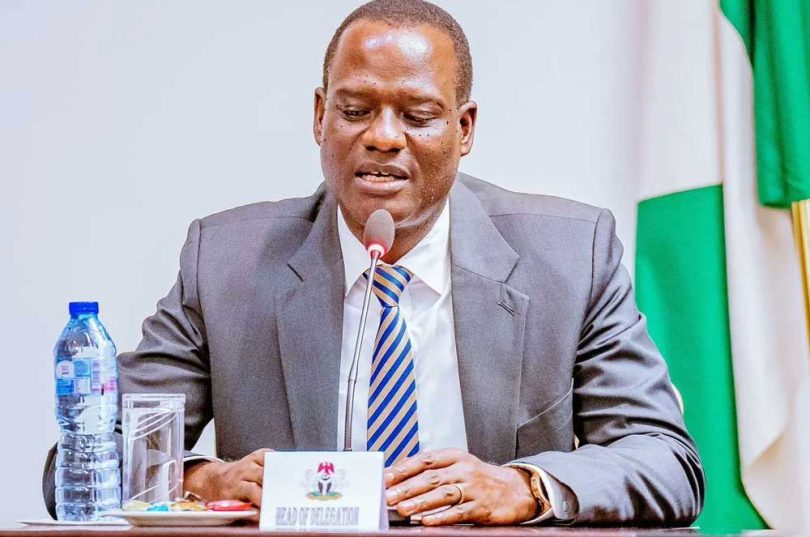
The Federal Government has allocated savings derived from the removal of fuel subsidy and the liberalisation of the foreign exchange market towards servicing public debt, financing the new national minimum wage, supporting the student loan scheme, and meeting other critical government obligations. This disclosure was made by the Minister of Finance and Coordinating Minister of the Economy, Taiwo Oyedele, during the 7th Africa Emerging Markets Forum in Abuja.
Minister Oyedele announced that a detailed account of the utilisation of these subsidy savings would be published imminently, underscoring the administration’s commitment to transparency and accountability. The reforms, initiated with President Bola Tinubu’s declaration of “fuel subsidy is gone” on May 29, 2023, alongside the unification of the foreign exchange market, represent a significant shift in fiscal policy aimed at reducing government expenditure, enhancing public revenue, and attracting investment. While these measures have demonstrably boosted government revenues, they have also led to increased costs for petrol, transportation, and a general rise in inflation, fuelling public demand for clarity on fund deployment.
Addressing these concerns, Oyedele stated that Nigerians are entitled to a comprehensive understanding of how these funds have been applied. He explained that the combined fuel and foreign exchange subsidies previously represented approximately five per cent of Nigeria’s Gross Domestic Product. The reforms were therefore deemed essential for restoring fiscal sustainability, rectifying market distortions, and mitigating corruption associated with the prior subsidy regime.
A substantial portion of the savings, according to the Minister, has been directed towards settling the Federal Government’s Ways and Means obligations, servicing public debt, and implementing the recently established national minimum wage. Oyedele elaborated that the cessation of monetary financing, which previously sustained government spending, necessitated the identification of alternative funding sources. He also highlighted the impact of rising interest rates on Nigeria’s debt servicing burden, noting that the nation is now facing interest rates as high as 24 per cent, compared to the previous eight per cent.
Furthermore, the increase in the national minimum wage from N30,000 to N70,000 has nearly doubled the Federal Government’s wage bill, requiring significant additional fiscal resources. The subsidy savings have also provided crucial support to the Nigerian Education Loan Fund (NELFUND), enabling over 1.5 million students to access tuition financing and monthly upkeep allowances, thereby alleviating financial pressure on households.
Responding to queries regarding continued government borrowing despite exceeding revenue targets, Oyedele clarified that improved revenue performance does not negate the necessity of borrowing when expenditure still outpaces income. He posited that government borrowing should be evaluated based on the value it generates, asserting that “We must add more value than the cost of every naira and every dollar that we borrow.” The ongoing fiscal reforms are designed to strengthen public finances, enhance transparency, improve economic efficiency, and ensure that public resources are channelled into initiatives that yield sustainable economic benefits for all Nigerians.
... Fuel Subsidy Savings Deployed to Debt Servicing, Minimum Wage, and Student Loans: Finance Minister Details Fiscal Reforms ... Naijaonpoint.