
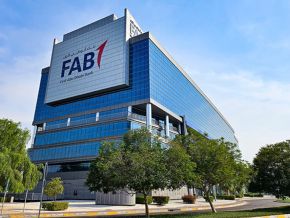
First Abu Dhabi Bank (FAB), the United Arab Emirates’ largest lender, has achieved a significant milestone in its expansion strategy, clearing a decade-old trademark hurdle that previously obstructed its entry into the South African market. The nation’s Supreme Court of Appeal has dismissed a trademark challenge, paving the way for FAB to pursue a banking license in Africa’s most sophisticated financial hub. While this ruling does not grant immediate operational authority, it removes the primary legal impediment to FAB’s ambitious pan-African plans, which are already taking shape in Nigeria.
The protracted dispute originated from FirstRand, the parent company of First National Bank, which contested the registration of “First Abu Dhabi Bank” and “FAB” trademarks. FirstRand argued that these names posed a risk of customer confusion with its existing brands. Following multiple legal proceedings, the Supreme Court of Appeal’s decision effectively resolves this objection, which had effectively stalled FAB’s South African ambitions for years, as a bank cannot establish a viable presence without the legal protection of its brand identity.
It is crucial to note that this judgment does not authorise FAB to commence banking operations. The bank has confirmed its intention to apply for a South African banking license, a process that will be overseen by the South African Reserve Bank and the Prudential Authority. Securing the necessary approvals, recruiting personnel, and launching operations are anticipated to take an additional one to two years, even under an optimistic timeline.
The strategic significance of this development extends beyond South Africa, forming a critical component of FAB’s broader pan-African strategy. The bank is assembling a two-anchor platform across sub-Saharan Africa, with Lagos serving as its western hub and Johannesburg poised to become its southern anchor. This dual presence aims to leverage the distinct strengths of both economic powerhouses.
FAB established a representative office in Lagos in February, positioning it as a beachhead for its sub-Saharan expansion. This office, while not a retail banking operation, is designed to originate transactions, service international clients, and cultivate relationships with major African corporations, governments, and financial institutions. Lagos offers access to Africa’s most populous economy, its substantial infrastructure needs, and its dynamic energy and telecommunications sectors. Johannesburg, conversely, provides a more developed financial market, a robust banking regulatory framework, and direct access to influential mining, industrial, and financial groups operating continent-wide. Together, these hubs are intended to facilitate capital and trade flows between the Emirates, Asia, the Middle East, and Africa.
FAB’s initial foray into South Africa is expected to concentrate on its core wholesale banking activities, including corporate and investment banking, trade finance, syndicated lending, capital markets, liquidity management, and large-project financing, rather than an extensive retail branch network. This strategic focus aligns with FAB’s considerable scale; with assets totalling 1.4 trillion dirhams ($381 billion) at the close of 2025, it stands as the largest financial institution in the Middle East and Africa by balance sheet. This financial firepower enables FAB to underwrite substantial deals that may require syndication by local players.
Furthermore, a South African banking license will empower FAB to support its existing Gulf-based clients as they expand their operations across Africa. Given the significant investments by Gulf companies in African ports, logistics, energy, infrastructure, telecommunications, commodities, and renewables, an established presence in both Lagos and Johannesburg will position FAB to finance these ventures, manage cross-border payments, and provide essential foreign-exchange services.
For South Africa’s incumbent “big four” banks – Standard Bank, FirstRand, Absa, and Nedbank – the immediate competitive threat appears manageable. They possess established branch networks, substantial deposit bases, and deep market knowledge that FAB cannot replicate swiftly. However, the pressure is likely to be concentrated in high-value segments. FAB’s substantial balance sheet, strong relationships with Gulf investors, and potentially more competitive funding costs could offer a distinct advantage in financing large corporates, government projects, infrastructure, commodities, and Africa-Middle East transactions. This increased competition could benefit African borrowers through compressed pricing and expanded access to capital, particularly for major sovereign, infrastructure, and trade finance mandates.
In essence, the Supreme Court’s ruling has not opened the doors to a new bank but has unlocked a strategic project. What was a long-stalled ambition is now an actionable plan, with the license application representing the next critical milestone. With Lagos as its initial sub-Saharan anchor and Johannesburg as the anticipated next step, First Abu Dhabi Bank is charting a course towards a potentially pan-African presence.
... First Abu Dhabi Bank Secures South African Market Access After Decade-Long Trademark Dispute ... Naijaonpoint.