
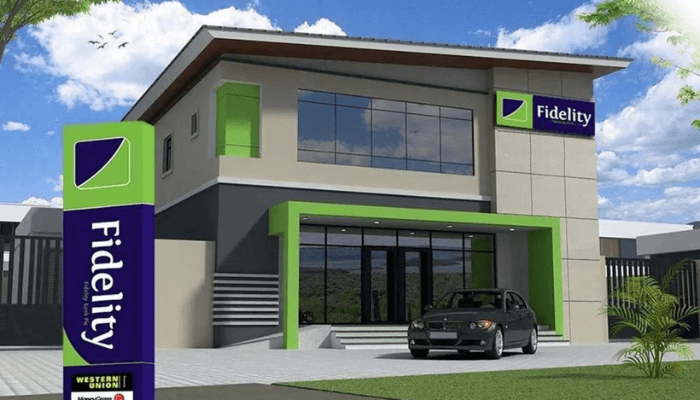
Fidelity Bank Plc said it has raised the required minimum share capital for lenders with international authorisation, boosting its capital base as Nigerian lenders race to comply with tougher regulatory requirements scheduled to end by March 2026.
The push-up in its eligible capital, raised through a private placement, effectively placed Fidelity Bank among lenders that have successfully scaled through the regulatory mandate.
The Lagos-based bank, in a disclosure on the Nigerian Exchange on Tuesday, said the offer, which opened and closed on December 31, 2025, was approved by the Central Bank of Nigeria and the Securities and Exchange Commission. Proceeds from the transaction lift Fidelity’s eligible capital to about N564.5 billion from N305.5 billion, subject to final regulatory approvals.
The private placement was carried out under a mandate granted by shareholders at an extraordinary general meeting on February 6, 2025, authorising the bank to issue up to 20 billion ordinary shares. Fidelity did not disclose the pricing or investor mix for the transaction.
The fundraising caps an aggressive capital-raising drive by Fidelity over the past two years. In 2024, the lender raised N175.85 billion through a public offer and rights issue, which brought its eligible capital to N305.5 billion. That left a shortfall of about N194.5 billion relative to the new minimum capital threshold.
Nigeria’s central bank in 2024 announced a sweeping recapitalisation programme aimed at strengthening the banking system, raising the minimum capital for commercial banks with international authorisation to N500 billion.
The apex bank mandated an increment in capital for national banks, pushing it to N200 billion and N50 billion for regional banks. The 24‑month compliance window ends on March 31, 2026, a regulation that’s triggering a wave of equity issuances, merger talks, and balance-sheet restructuring across the sector.
Fidelity’s latest capital raise places it above the regulatory floor, potentially easing pressure on the bank as peers continue to tap markets. The additional capital is also expected to support balance-sheet expansion, larger ticket lending, and resilience against macroeconomic shocks in Africa’s fourth-largest economy, which has been grappling with currency volatility, double-digit inflation, and elevated interest rates.
Analysts stated the scale and speed of this transaction validate Fidelity Bank’s standing among tier‑one lenders. Recently, Fitch Ratings affirmed the bank’s Long‑Term Issuer Default Rating at ‘B’ and upgraded its National Long‑Term Rating to ‘A+(nga)’, citing stronger capital buffers and improved profitability.
Fitch also recognised the bank’s expanding franchise, sound fundamentals, and healthy foreign‑currency liquidity, noting it was Nigeria’s sixth‑largest lender by assets at the end of 2024.
Shares of Nigerian banks have drawn renewed investor attention since the recapitalisation push was announced, with regulators arguing that stronger capital buffers are needed to support economic growth and restore confidence in the financial system.
Fidelity said it is awaiting final regulatory approvals for the updated capital figures.
Shares of Fidelity Bank have gained 0.26 percent so far this year, closing 2025 at about 9 percent. The current share price of Fidelity Bank is N19.05. As of Wednesday, January 7, 2026, recording a 2.3 percent drop from its previous closing price of N19.50.
Fidelity Bank is the third most traded stock on the Nigerian Stock Exchange over the past three months – Oct 8, 2025 to Jan 7, 2026, with a total traded volume of 2.78 billion shares—in 32,802 deals—valued at N53.9 billion over the period, with an average of 44.1 million traded shares per session, data compiled by African ‘Xchanges show.