
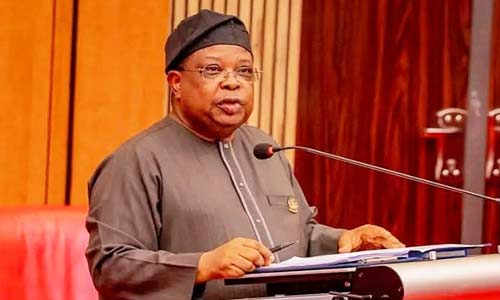
The Federal Government has announced plans to sanction underperforming electricity distribution and generation companies as part of measures aimed at improving accountability, strengthening the electricity market and supporting Nigeria’s industrialisation drive.
Minister of Power, Joseph Olasunkanmi Tegbe, said the government would introduce performance scorecards for operators across the electricity value chain, including Distribution Companies, DisCos, Generation Companies, GenCos, and relevant power sector personnel.
Tegbe disclosed the plan in a policy brief presented on his behalf by his Special Adviser, Martins Olajide, at the Nigerian Economic Summit Group Industrialisation and Competitiveness Forum on Wednesday.
According to the Minister, the proposed scorecards will establish measurable performance standards under which operators that deliver results will be rewarded while those that consistently underperform will face penalties.
He said the initiative forms part of an eight-point agenda being pursued by the Ministry to stabilise the electricity value chain, restore market discipline and strengthen governance across the power sector.
Tegbe said the Federal Government would also pursue tariff reforms intended to ensure the financial sustainability of the electricity market while protecting vulnerable consumers.
He maintained that electricity tariffs must be structured in a manner that allows operators to meet their obligations across the value chain without placing excessive burdens on Nigerians who are least able to afford higher energy costs.
The Minister painted a troubling picture of Nigeria’s electricity supply situation, noting that despite an installed grid generation capacity of 13,625 megawatts, average daily available generation stands at only about 4,854MW.
According to him, the figures mean that roughly 62 per cent of the country’s installed electricity generation capacity remains unavailable or idle despite estimated realistic peak demand of about 20,000MW.
“The power arithmetic does not add up,” Tegbe said.
He said the huge gap between electricity demand and grid supply has forced millions of households and businesses to depend on generators and other forms of self-generated power.
The Minister disclosed that Nigerians spent an estimated ₦16.5 trillion on self-generated electricity in 2023, compared with approximately ₦1 trillion in revenue generated by the national electricity grid during the same period.
He said the figures illustrate both the economic cost of unreliable electricity and the enormous amount of private capital being spent by households and businesses to compensate for deficiencies in the national grid.
He said resolving persistent performance problems among operators and reforming the tariff system were essential to creating an electricity market capable of supporting manufacturing, industrial development and wider economic growth.
He said resolving persistent performance problems among operators and reforming the tariff system were essential to creating an electricity market capable of supporting manufacturing, industrial development and wider economic growth.
The Minister said the government’s reform agenda would also focus on better utilisation of existing generation and transmission assets rather than relying solely on the construction of new infrastructure.
As part of the plan, the Ministry intends to strengthen major transmission corridors, including Lagos, Enugu-Port Harcourt and Abuja-Kaduna-Kano.
Tegbe said Lagos would serve as the initial proof of concept for the wider grid stabilisation programme before similar interventions are expanded to other parts of the country.
The Federal Government also plans to reduce commercial and technical losses across the electricity supply industry.
High technical losses, energy theft, poor collections and inadequate metering have remained major challenges affecting the financial viability of Nigeria’s electricity market.