
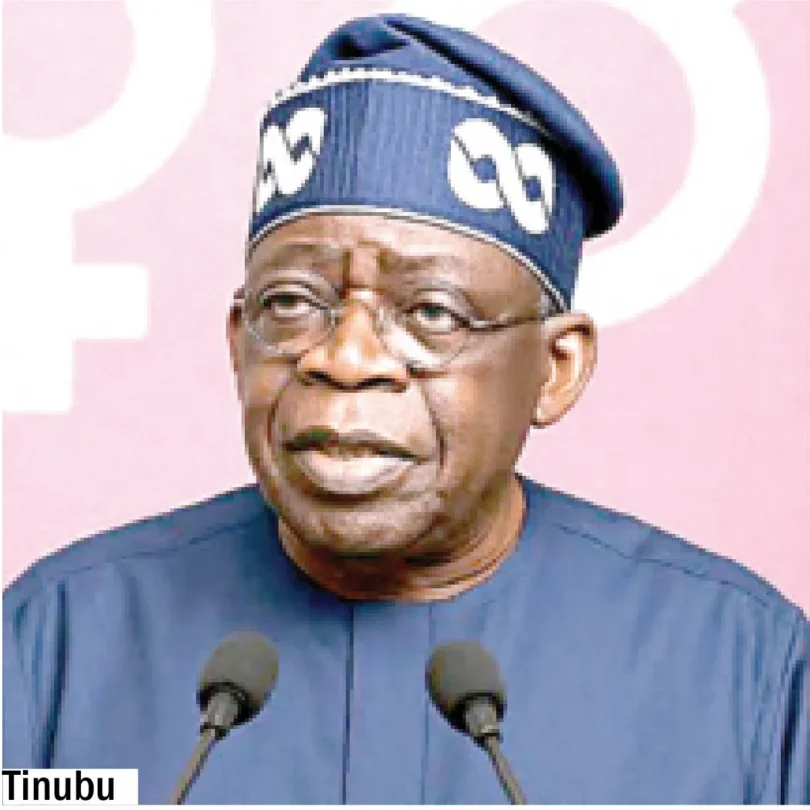
The Federal Government on Friday advanced its “brain gain” agenda by unveiling a new Diaspora Healthcare Impact Initiative aimed at harnessing the expertise of Nigerian medical professionals abroad to strengthen the country’s healthcare system, insisting that migration should be seen as an opportunity for national development rather than a loss of talent.
The position was reinforced at the 2026 National Diaspora Day celebration in Abuja, where President Bola Ahmed Tinubu announced plans to institutionalise the Diaspora Healthcare Impact Initiative (DHII), while the Minister of State for Foreign Affairs, Ambassador Sola Enikanolaiye, described the country’s growing diaspora community as a strategic asset driving innovation, investment and healthcare development.
The event, themed “Harnessing Global Diaspora Medical Expertise to Strengthen Local Health Systems for National Development,” brought together Nigerian health professionals from across the world, government officials, lawmakers and development partners.
ALSO READ: Kano’s education gains result of deliberate reforms — Gov Yusuf
Speaking at the event, Enikanolaiye said the migration of skilled Nigerians should not be viewed as “brain drain” but as “brain gain” because professionals abroad continue to contribute significantly to both their host countries and Nigeria.
“It is a case of talent circulation, brain gain rather than brain loss. Migration should not be criminalised, weaponised or demonised because Nigerians abroad continue to make significant contributions to both their host countries and Nigeria,” he said.
The minister disclosed that Nigerians in the diaspora remit an estimated $21.8 billion annually, exceeding Nigeria’s official development assistance, and called for greater efforts to channel the funds into productive investments.
He also urged Nigerians abroad to remain united and continue projecting a positive image of the country.
In his address, President Tinubu said the Federal Government would institutionalise the Diaspora Healthcare Impact Initiative to provide a structured platform connecting Nigerian healthcare institutions with doctors, researchers, nurses and other medical specialists living abroad.
Describing Nigerians in the diaspora as one of the country’s greatest assets, the President said their achievements in medicine, science and public health had positioned them to help transform healthcare delivery in Nigeria.
“Our diaspora is a source of national pride. Across the world, Nigerian doctors, nurses and public health leaders are saving lives, advancing science and shaping global healthcare. Today, we celebrate not only your achievements abroad but also your enduring commitment to the homeland,” Tinubu said.
He commended the Nigerians in Diaspora Commission (NiDCOM), led by Hon. Dr. Abike Dabiri-Erewa, for strengthening engagement between Nigeria and its citizens overseas.
Tinubu said the administration would expand diaspora medical missions, establish knowledge-transfer partnerships between teaching hospitals and foreign-based specialists, promote telemedicine, encourage diaspora investment in hospitals, pharmaceutical industries and research centres, and strengthen NiDCOM’s coordinating role.
“To support this vision, we will create a platform that will institutionalise the Diaspora Healthcare Impact Initiative to coordinate contributions, offer incentives for diaspora medical professionals who return to practise or invest, and ensure transparency so that every effort delivers measurable impact,” the President said.
He urged Nigerian medical professionals abroad to contribute actively to building a resilient healthcare system.
“Whether you are a surgeon in London, a researcher in Boston, a laboratory scientist in China or a nurse in Johannesburg, your skills are vital to building a resilient, inclusive and world-class healthcare system in Nigeria,” he added.
Earlier, the Minister of State for Health and Social Welfare, Dr. Iziaq Adekunle Salako, said the strong participation of Nigerian medical professionals from across the world reflected growing confidence in the Federal Government’s Renewed Hope Agenda.
“The enthusiastic participation we have witnessed has attracted surgeons, infectious disease specialists, gynaecologists, specialist nurses and an array of health experts from virtually every continent of the world. It is another validation of the power and reach of the Renewed Hope Agenda,” Salako said.
He noted that the Diaspora Healthcare Impact Initiative had already delivered specialised healthcare services across Nigeria’s six geopolitical zones, including complex procedures such as uterine fibroid embolisation, which ordinarily costs about ₦8 million per patient but was provided free of charge during medical missions.
Salako described the partnership between the Federal Ministry of Health and Social Welfare and NiDCOM as evidence of President Tinubu’s commitment to inter-agency collaboration, adding that the initiative would become an annual programme.
He also said maternal and infant mortality rates were declining while immunisation coverage continued to improve, although he acknowledged that healthcare worker migration remained a challenge requiring ethical migration policies and stronger international collaboration.
According to him, the Federal Government approved new allowances for health workers in November 2025 at an annual cost of about ₦90 billion and launched a digital portal to enable Nigerian health professionals abroad to contribute to the country’s health sector.
In her remarks, the Chairman and Chief Executive Officer of NiDCOM, Hon. Dr. Abike Dabiri-Erewa, said the commission had transformed diaspora engagement from policy into measurable impact since its establishment in 2019.
“Our mandate was clear: engage, empower and enable Nigerians in the diaspora. Today, we can say with pride that we have moved from policy to impact,” she said.
She said NiDCOM had institutionalised diaspora engagement through the National Diaspora Policy, the appointment of diaspora focal-point officers across nearly all states and the development of a national database of Nigerian professionals abroad.
According to her, the Diaspora Healthcare Impact Initiative has facilitated medical missions, telemedicine services and diaspora health investments in more than 20 states, with Nigerian specialists abroad conducting remote surgeries and training healthcare workers nationwide.
Dabiri-Erewa said diaspora medical associations from Canada, the United Kingdom, Germany, the United States, Australia and South Africa had provided specialised healthcare services across Nigeria’s six geopolitical zones, covering maternal and neonatal healthcare, neurosurgery, emergency medicine, sickle cell management and interventional radiology.
“Our diaspora medical groups have equipped hospitals and primary healthcare centres with medical equipment worth billions of naira,” she said.
She disclosed that diaspora remittances had increased from $17 billion in 2019 to more than $21 billion in 2025, while the Nigeria Diaspora Investment Summit continued to attract investments into healthcare, agriculture, information technology, real estate and the creative economy.
The NiDCOM boss also announced plans to establish a Diaspora Investment Fund, launch a National Diaspora Health Corps expected to engage 1,000 diaspora health professionals annually, and continue advocacy for diaspora voting.
“When NiDCOM was established in 2019, many people asked what the diaspora could do for Nigeria. Today, the answer is obvious. The diaspora are no longer just about remittances.
“They are building hospitals, conducting medical missions, lecturing in our universities, investing in agriculture, SMEs, information technology and digital infrastructure, while defending Nigeria’s image globally. They are truly Nigeria’s ambassadors at large,” she said.