
…To publish detailed account of fuel subsidy savings, spending
…Oyedele assures stability must now deliver prosperity
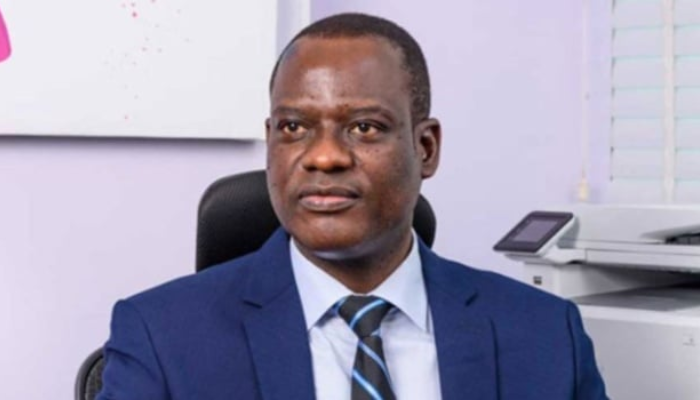
The federal government is developing a new framework to reduce the cost of capital without introducing fresh subsidies, as it seeks to unlock private sector investment and sustain the gains from its economic reforms, Taiwo Oyedele, minister of finance and coordinating minister of the economy said on Thursday.
Speaking at the 7th Africa Emerging Markets Forum in Abuja, Oyedele said the initiative would complement the Central Bank of Nigeria’s efforts to tame inflation while easing financing costs for businesses, describing high borrowing costs as one of the biggest constraints to economic growth.
“There is a high cost of borrowing in an economy where you need growth to deliver results from reforms,” Oyedele said. “Within the Ministry of Finance, we are working on a framework on how to bring down the cost of capital without introducing subsidies because we believe we can complement the work of the monetary authorities.”
The minister also disclosed that the government would soon publish a comprehensive report detailing savings from the removal of fuel and foreign exchange subsidies and how the funds have been utilised, responding to growing public scrutiny over the impact of the reforms.
“The combined impact of the subsidy on fuel, as well as what I call the subsidy on FX, was about 5% of GDP,” he said.
“In a few days, you will see the detailed analysis because we believe we owe a duty to explain what we do to the Nigerian people. That’s what transparency looks like.”
According to Oyedele, the savings from the reforms have largely gone into financing obligations that emerged after the government stopped deficit financing through money printing, servicing higher debt costs as interest rates climbed, funding the new N70,000 minimum wage and financing social intervention programmes.
He noted that before the reforms, government borrowing costs were about 8%, compared with as much as 24% today, while the minimum wage has risen from N30,000 to N70,000, significantly increasing the public wage bill.
He added that the Nigerian Education Loan Fund (NELFUND) has supported more than 1.5 million students with tuition and monthly stipends.
Responding to concerns that government continues to borrow despite exceeding its revenue targets, Oyedele said stronger revenue collection does not eliminate the need for deficit financing where expenditure exceeds income.
“If you have a budget to spend 10 and a revenue target of six, you still need to borrow four. If revenue rises to seven, you have exceeded your target, but you still need to borrow three,” he said, adding that borrowing remains appropriate provided it finances productive investments that generate returns above borrowing costs.
The minister defended the Tinubu administration’s reform programme, saying government chose long-term economic stability over short-term political expediency by removing market distortions that discouraged investment and weakened competitiveness.
He cited foreign exchange unification, subsidy removal, fiscal consolidation and tax reforms as key pillars of the government’s economic strategy, noting that the tax reforms have eliminated nuisance taxes, expanded VAT input credits for manufacturers, removed withholding tax on manufacturing activities, exempted small businesses from several taxes and removed VAT from essential goods and services.
Oyedele argued that the reforms are already yielding measurable results. According to him, capital inflows have increased across both foreign portfolio and direct investment, Nigeria’s stock market is the world’s best-performing market so far in 2026, while real GDP expanded by 3.89% in the first quarter.
In dollar terms, he said the economy grew 11.2% in 2025, while the non-oil sector expanded by 3.94% in the first quarter, signalling increasing diversification away from crude oil.
He told the audience that Nigeria’s external reserves have exceeded $50billion, inflation has moderated significantly from its 2024 peak, banks raised a combined N4.65 trillion during the recent recapitalisation exercise, with over 70% coming from domestic investors, and the country exited the Financial Action Task Force grey list last October.
“Capital has no passports, no charm and no patriotic loyalty. It responds to evidence, not rhetoric,” Oyedele said. “Every one of these is a fact you can verify, not a claim you have to trust.”
Despite the improving macroeconomic indicators, the minister acknowledged that stabilisation alone would not be enough, insisting that reforms must ultimately translate into better living standards.
“A stable economy can still be a stagnant one if growth is weak,” he said. “We have done the gruelling foundational work of the first phase. Our task now is converting that stability into investment, investment into productivity, productivity into decent jobs and decent jobs into incomes that Nigerian families can actually feel.”
He said government had expanded cash transfers to 15 million vulnerable households, lifting an estimated 7.5 million Nigerians out of extreme poverty, while President Tinubu recently launched a more than $3 billion initiative to strengthen primary healthcare, basic education and support displaced communities.
Oyedele also challenged the narrative that reforms have permanently worsened poverty, arguing that while subsidy removal inevitably reduced real incomes initially, the reset was necessary to restore fiscal sustainability.
He said Nigeria recorded nearly 10% real per capita income growth in dollar terms in 2025, placing it among the fastest countries lifting people out of poverty, while government would henceforth assess performance using multidimensional poverty, real per capita income growth and the Gini coefficient to measure whether growth is inclusive.
The finance minister further disclosed that preliminary government analysis showed the economic cost of excessive regulation, bureaucracy and policy inconsistency exceeds the combined revenue generated from corporate income tax, personal income tax and value-added tax.
Looking ahead, he reaffirmed the administration’s ambition of building a $1 trillion economy by 2030, stressing that macroeconomic stability must now translate into shared prosperity.
“A trillion-dollar Nigerian economy by 2030 is not a slogan; it is a target,” Oyedele said. “Prosperity is never an accident. It is the deliberate product of sound policy, disciplined execution, effective coordination between fiscal and monetary authorities, and partnership between government and enterprise.”