
Secrets Reporters
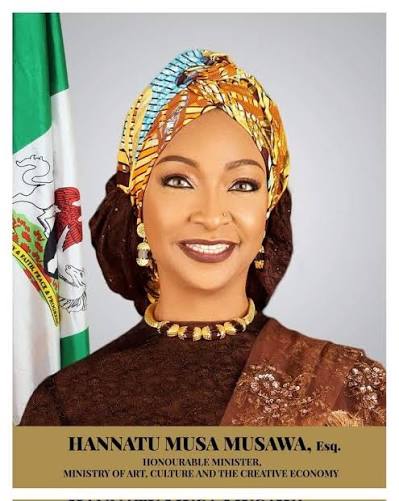
SecretsReporters has exclusively obtained internal details of a damning set of findings that cast a long shadow over the Federal Ministry of Arts, Culture, Tourism and Creative Economy led by Hannatu Musawa. The revelations centre on a N750 million special intervention fund released to the ministry in December 2024, money whose purpose and controls remain unexplained because the basic authority document required to spend it has never been produced.
According to the exclusive information in our possession, auditors discovered that the ministry received the full N750 million yet could not present the Authority to Incur Expenditure (AIE).
Without the AIE, there is no official record of what the money was supposed to finance, who authorised its use, or under what conditions it was meant to be spent.
This is not a minor paperwork lapse. Under Nigeria’s Financial Regulations, every officer who handles public funds is personally and financially responsible for proper custody, accurate accounting and compliance with spending rules. The absence of the AIE creates a direct opening for diversion or misapplication of public money. The draft findings explicitly flag both risks and point to serious weaknesses in the ministry’s internal control systems.
The officials who bear responsibility for such a release sit at the top of the ministry’s hierarchy. Barrister Hannatu Musa Musawa has led the portfolio since its creation and subsequent expansion after the 2024 merger of the art, culture, creative economy and tourism mandates.
The Permanent Secretary’s office, then under transitional leadership and later assumed by Dr Mukhtar Yawale Muhammad, and the Director of Finance and Accounts are the principal custodians of financial authorisation and record-keeping. Their collective failure to produce the foundational spending authority for a sum of this size leaves them exposed.
The N750 million is no small sum. In the 2025 budget the entire ministry and its agencies were allocated roughly ₦71.7 billion. A single special intervention of three-quarters of a billion naira therefore represents a material slice of discretionary funding in a sector the Tinubu administration has repeatedly described as central to economic diversification, job creation and soft-power projection. Officials have spoken of ambitions to grow the creative economy’s contribution dramatically, secured multi-hundred-million-dollar external commitments, launched new funding vehicles and infrastructure special-purpose vehicles, and promoted everything from cultural assets monetisation to domestic tourism.
Against that public narrative of ambition and reform, the inability to account for the basic authorisation of a N750 million intervention released in the final weeks of 2024 stands out as a glaring contradiction.
No public explanation of the purpose of this particular intervention has ever been issued. No breakdown of how the money was applied has been published. The draft findings in SecretsReporters’ possession make clear that the auditors who will visit there for audit will be left unable to determine the intended use of the funds precisely because the controlling documents were withheld.
This episode fits a wider pattern in which special intervention releases across government have later proved difficult to track.