
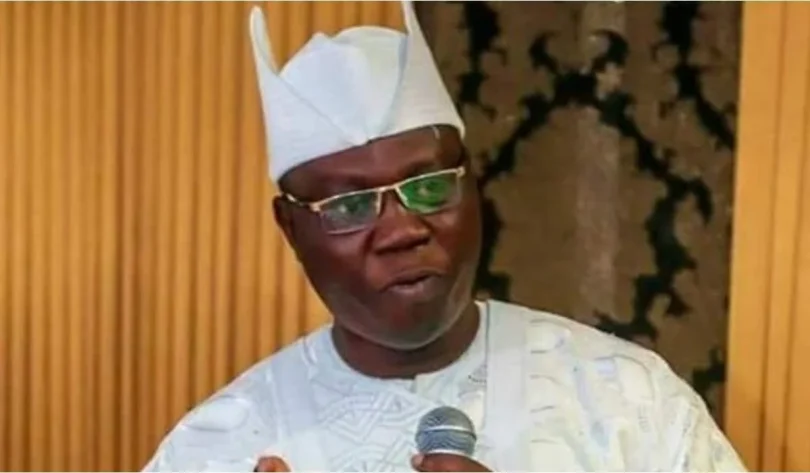
The Aare Onakakanfo of Yorubaland and founder of the Olokun Festival Foundation (OFF), Iba Gani Abiodun Ige Adams, has urged Nigerians to stop stigmatising Yoruba spiritual groups, saying they constitute an important part of the race’s cultural heritage and spiritual identity.
Adams spoke on Tuesday at Lakowe, Ibeju-Lekki, Lagos, during the sixth edition of the Egbe Festival organised by the Olokun Festival Foundation.
He specifically appealed to Christian and Muslim religious leaders to desist from portraying Egbe and other indigenous spiritual groups as evil or backward.
According to him, such perceptions have contributed to the erosion of Yoruba cultural practices, particularly as a result of religious influences and modernisation.
“Egbe is not devilish; it is a vital part of our heritage and spiritual existence,” Adams said.
He described Egbe as a spiritual or heavenly companion associated with human beings, arguing that the concept had historically played an important role in Yoruba understanding of destiny, communal life and personal development.
The Aare Onakakanfo said the annual festival was more than a cultural gathering, describing it as an occasion to reconnect with Yoruba spiritual heritage and preserve traditions passed down through generations.
He said the festival provided an opportunity for people to acknowledge and atone for their spiritual groups, which, according to him, were regarded within Yoruba traditional belief as sources of guidance, protection and support.
Adams maintained that the neglect of indigenous spiritual practices had created a gap between Yoruba cultural knowledge and contemporary life.
He urged the people to acquire deeper knowledge of their traditional heritage rather than dismissing practices they did not understand.
The cultural advocate also rejected what he described as the stigmatisation of people associated with spiritual groups, arguing that such groups could promote discipline, social responsibility, unity and communal development.
“Rather than stigmatise people belonging to spiritual groups, we can help them to manage their membership of the group in such a way that the evil attached to the group will not be their portion, except the positives of the group,” he said.
Adams further linked the concept of spiritual groups to the wider human tendency to organise into associations, saying people derive opportunities for self-discovery and the utilisation of their talents through groups and communities.
He cited political organisations, football teams and theatre groups as examples of physical associations through which people pursue common goals.
He also said Egbe festivals were not restricted to Nigeria, noting that Yoruba communities in countries including the United States, United Kingdom, Canada and other parts of West Africa organise cultural activities aimed at maintaining links with their ancestral heritage.
While comparing the Egbe Festival with other cultural and spiritual festivals around the world, Adams said the continued celebration of indigenous traditions was important to cultural identity and continuity.
He commended the Olokun Festival Foundation for sustaining the promotion of Yoruba culture and tradition and praised OPC members for supporting the organisation’s cultural initiatives.
Beyond the cultural issues, Adams used the occasion to draw attention to Nigeria’s economic difficulties, urging the Federal Government to take urgent measures to reduce the burden of the rising cost of living.
He said rising food prices, transportation costs, inflation and other economic pressures had placed severe strain on households and pushed many Nigerians into hardship.
He called for measures to stabilise food prices, improve transportation and strengthen social protection programmes.
According to him, addressing the economic pressures confronting citizens was necessary to prevent further deterioration in living standards and reduce the risk of social instability.
Adams said the preservation of cultural heritage and improvement in citizens’ economic welfare should not be treated as separate concerns, urging governments at all levels to pursue policies that promote both social welfare and national development.
He expressed optimism that the Egbe Festival would continue to provide a platform for transmitting Yoruba cultural knowledge to younger generations.
“As we celebrate the sixth edition of the Egbe Festival, let us honour our spiritual groups with the respect and atonement they deserve, recognising their vital role in our lives and communities.
“Let us reject harmful stereotypes and embrace the strength that comes from our spiritual identities,” he said.
The festival attracted traditional rulers, members of the Oodua People’s Congress (OPC), elders, youths and other guests.
Adams acknowledged the presence of the paramount ruler of Ibeju-Lekki, HRM Oba Waliu Olasunkanmi Rasaq, Oniwonlu Oguntolu I, as well as the royal host, HRM Mufutau Olanrewaju Adewunmi Idogun Larry, Ologunfayo of Ogunfayo Iwerekun Kingdom.