
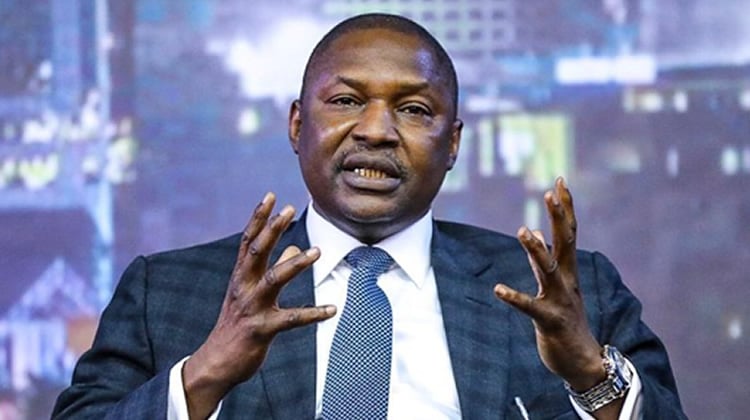
Abubakar Malami, former attorney-general of the federation (AGF) and minister of justice, spent Monday night at the headquarters of the Economic and Financial Crimes Commission (EFCC) as interrogations intensified over an ongoing investigation.
According to an associate who spoke with TheCable, Malami was invited for questioning earlier on Monday but arrived late in the evening, making it necessary for him to remain overnight so he could continue responding to investigators’ questions.
The associate further revealed that 46 bank accounts allegedly linked to Malami are currently under probe, forming a key part of the EFCC’s investigation. The former AGF is expected to report to the commission daily as the inquiry progresses.
Following his initial interrogation on November 29, Malami had posted on X that the session “was successful” and that he had been scheduled for “further engagement” with investigators.
“The engagement was successful, and I am eventually released while on an appointment for further engagement as the truth relating to the fabricated allegations against me continue to unfold,” he wrote.
Malami’s name appeared in several controversial deals under the administration of former President Muhammadu Buhari.
The transactions include:
The unexplained payment of $496 million to Global Steel Holdings Ltd (GSHL) as settlement for the termination of the Ajaokuta Steel concession — nine years after the Indian company had already waived all claims for compensation.
The management and sale of forfeited assets worth billions of naira seized from politically exposed persons by the EFCC.
His involvement in the $419 million judgment debt awarded to consultants who claimed to have assisted in the Paris Club refund process.
The agreement to pay Sunrise Power $200 million as compensation in its dispute with the federal government over the Mambilla power project.
Duplicated legal fees linked to the repatriation of $321 million Abacha loot from Switzerland to Nigeria.
Meanwhile, on November 17, Malami announced his intention to contest the 2027 governorship election in Kebbi State.
He resigned from the All Progressives Congress (APC) in July and joined the African Democratic Congress (ADC), saying his decision followed “wide consultations and deep personal reflection” and was motivated by “love for our nation and concern for the hardship our people are facing”.