
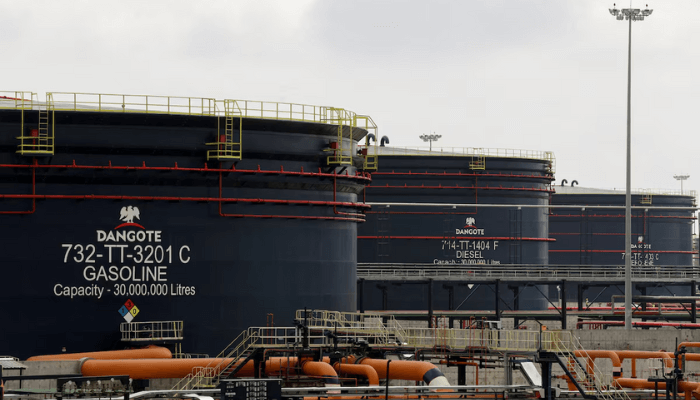
Dangote Petroleum Refinery said on Monday that it continues to produce petrol and other refined products despite ongoing maintenance work on key processing units, pushing back against claims that operations had slowed or stopped.
The refinery said maintenance on its crude distillation unit and residual fluid catalytic cracking unit had not halted production because other core units remain operational.
Reports earlier this month suggested the plant had shut its petrol unit for upgrades. However, company officials disputed those claims, saying output continued through alternative processing systems.
In a statement, the refinery said its integrated configuration allows it to maintain fuel production even when individual units undergo routine servicing.
According to the company, it is producing Premium Motor Spirit, diesel and aviation fuel through units such as the naphtha hydrotreater, continuous catalytic reformer and hydrocracker, which it said are running normally.
“The refinery is not shutting down,” the statement said. “Production remains stable and uninterrupted.”
Read Also: Court orders petroleum minister Lokpobiri, others to maintain status quo in oil field dispute
Dangote refinery said it can supply between 40 million and 50 million litres of petrol per day through January and February, depending on demand. It said output reached 50 million litres on January 4, with 48 million litres loaded and evacuated through its gantry the same day.
The company said existing stock levels are sufficient to cover more than 20 days of national consumption.
Since mid-December, the refinery said daily petrol loadings have ranged between 31 million and 48 million litres, reflecting market demand. It added that the figures can be verified through depot loading records held by the Nigerian Midstream and Downstream Petroleum Regulatory Authority.
The refinery said it continues to sell petrol at an ex-gantry price of ₦699 per litre to marketers and bulk buyers, urging distributors to prioritise locally refined fuel over imports.
Sourcing fuel domestically, it said, would help stabilise prices, reduce pressure on foreign exchange and improve energy security.
The company also argued that its presence has restrained price volatility in the downstream market, warning that without local refining capacity, petrol prices could rise sharply due to unchecked imports.