
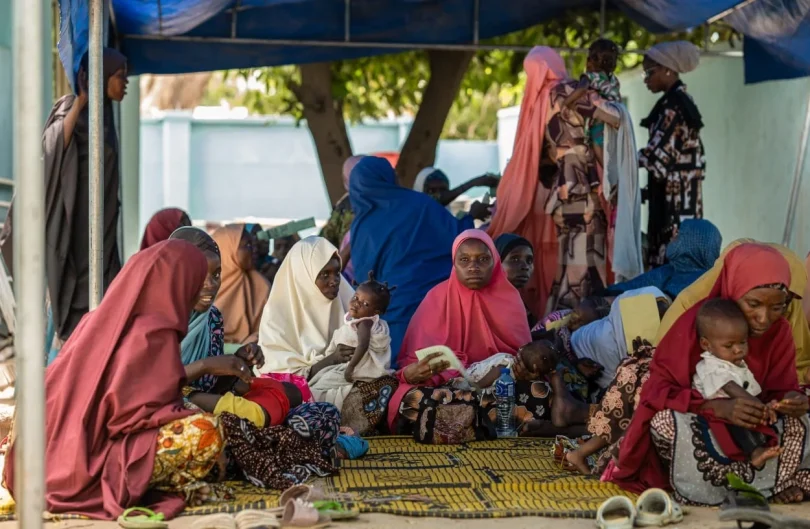
The United Nations‘ World Food Programme (WFP) has warned that northern Nigeria is facing its worst hunger crisis in almost a decade, as escalating conflict, displacement, and shrinking humanitarian assistance leave millions of people without adequate food.
In a statement issued on Wednesday in Abuja, the UN agency said the latest Cadre Harmonisé food security analysis showed that more than 17 million people across nine conflict-affected states in northern Nigeria are experiencing crisis, emergency, or catastrophic levels of hunger.
The figure represents an increase of nearly two million people compared with previous projections.
According to the report, Borno State remains the hardest-hit state, with more than three million people facing acute food insecurity. Of these, more than 750,000 are experiencing severe hunger, while over 10,000 people are classified as facing catastrophic hunger.
Although those in catastrophic conditions account for a small proportion of Borno’s food-insecure population, WFP said the figures highlight the growing impact of conflict, displacement, and declining humanitarian assistance on vulnerable communities.
WFP Regional Director for West and Central Africa, Kinday Samba, expressed concern over the widening scope of the crisis.
“What concerns us most is how this crisis is expanding. For years, insurgent attacks and violence were largely concentrated in parts of northeast Nigeria. Today, they are spreading across a much wider area and forcing people from farmland, driving displacement and restricting humanitarian access, meaning hunger is quick to follow,” Samba said.
The agency noted that humanitarian operations have become increasingly difficult due to worsening insecurity and severe funding shortages.
According to WFP, the number of locations inaccessible to its frontline workers has doubled, with an additional 15 areas now considered partially inaccessible.
Attacks along major transport routes and the proliferation of illegal checkpoints have also disrupted the movement of humanitarian supplies, forcing the agency to rely more heavily on air transport in some locations.
The agency further disclosed that while the number of food-insecure people across the three north-eastern states has risen to 6.2 million, it currently has the resources to support only about 740,000 people. As a result, approximately 5.5 million people, many of them children, are without lifesaving food and nutrition assistance.
WFP said this marks a sharp decline from the 1.3 million people it was able to assist during the peak of the 2025 lean season.
The organisation warned that the suspension of food assistance is forcing vulnerable households to adopt desperate coping mechanisms, with some communities reporting that individuals have joined armed groups in search of food or income.
It also raised concerns that the reduction in food assistance in some displacement camps has contributed to increased exploitation and gender-based violence, particularly affecting women and children.
“When people lose access to food, the risks of displacement, exploitation and instability increase. Yet resources are at their lowest at the time they are needed most,” Samba added.
The WFP appealed to donors for urgent support, saying it requires $89 million over the next six months to sustain food and nutrition assistance as well as essential logistics operations across northern Nigeria, warning that failure to secure the funds could deepen hunger, trigger further displacement, and worsen instability across the region.