
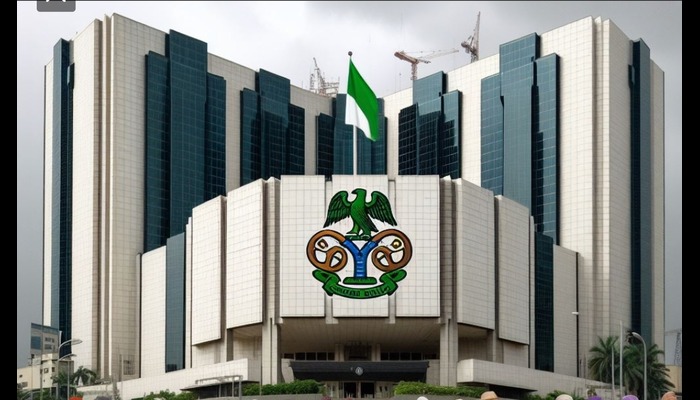
Nigeria’s capital market is expected to sustain its bullish run last year through 2026, buoyed by the ongoing banking sector recapitalisation exercise scheduled to be completed by the end of the first quarter of this year.
“The capital market is expected to remain bullish in 2026, supported by the bank recapitalisation exercise, rising investor confidence, and other policy measures aimed at fostering growth,” the Central Bank of Nigeria said in its outlook report.
The Abuja-based bank, however, warned that despite the bullish momentum, the capital market could face higher concentration risk from the banking sector, as the ongoing recapitalisation could trigger investor fatigue and crowd out other issuers.
According to the report, some of the key measures that are expected to spur new entrants into the capital market include the technology strategy and collaborations between the NGX and Federal Ministry of Industry, Trade & Investment, the zero per cent capital gains tax (CGT) for small businesses, and the N150 million exemption for retail investors.
But unanticipated shocks and uncertainties in the global economy may dampen investor confidence, thereby straining the bullish streak, the CBN said.
Read also: Analysts say recapitalisation to improve banks’ loan growth in 2026
The Nigerian capital market remained bullish all through 2025, driven by robust corporate earnings, more stable macroeconomic conditions, and attractive returns, which triggered a shift from fixed income to equities.
According to the CBN’s report, the increase in trading activities attracted more foreign portfolio inflows, reflecting growing confidence in the market, while improved foreign exchange (FX) liquidity and regulatory clarity continued to bolster foreign investor appetite.
The All-Share Index (ASI) rose by 42.82 percent, reaching 147,000.00 index points compared with 102,926.40 index points in 2024. Similarly, the aggregate market capitalisation (AMC) grew by 36.36 percent to N149.00 trillion from N109.27 trillion in 2024, driven by strong momentum in the Industrial, Banking, and Consumer Goods sectors.
Equities, the CBN said, remained the dominant asset class, contributing N88.57 trillion or 63.80 percent of total market capitalisation, while the debt market accounted for 36.17 percent, and Exchange Traded Funds (ETFs) represented a marginal 0.03 percent, reflecting the market’s continued equity-led growth trajectory.
Trading activity in 2025 was notably strong, the report notes, with equities turnover reaching an estimated N8.38 trillion compared with N2.60 trillion in the preceding year, primarily driven by heightened activity surrounding the banking sector’s recapitalisation efforts.
The aggregate value and volume of transactions increased by 40.90 percent and 9.84 percent to N4 trillion and 152 billion units, respectively, compared with 2.84 trillion and 138.38 billion units in the preceding year. Similarly, the number of deals increased by 78.26 percent to 1,774,241.
The report noted that market breadth was largely positive, as gainers outweighed losers. The favourable market breadth suggests underlying strength and momentum, potentially signalling continued upward movement and widespread buying interest in the near-to long-term.
Read also: CBN: Tackling end-year cash scarcity with policy reforms, regulation
Domestic participation stood at 88.0 per cent, compared with 90.0 per cent in 2024, while foreign participation stood at 12.0 per cent, relative to 10.0 per cent in the preceding period, signalling renewed international interest in the Nigerian equities market.
Research and advisory firm Afrinvest projects that the Nigerian Exchange could continue its bullish run into 2026, anchored by favourable macroeconomic and market dynamics, including stability of the exchange rate and improved corporate earnings.
“In our base case scenario, we project a 40.9% gain in the NGX-ASI, supported by sustained price and naira stability, gradual monetary policy easing, improved corporate earnings, elevated pre-election liquidity, and aggressive capital mobilisation by insurance companies and PFAs, with additional upside from anticipated listings such as Dangote Petrochemicals,” Afrinvest said in its outlook report.
“Upside risks include sharper disinflation and stronger FX inflows, while downside risks stem from renewed inflationary pressures, FX volatility, weak foreign participation, and delays in expected listings.”