
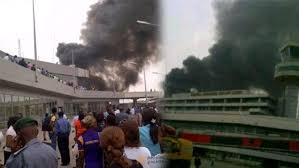
A fire outbreak on Wednesday caused panic at the Murtala Muhammed International Airport in Lagos, as passengers and airport workers were forced to flee one of the terminals.
The incident affected the airport’s temporary terminal building, disrupting activities and raising fresh safety concerns at Nigeria’s busiest aviation hub.
The fire reportedly started suddenly, sending thick smoke across the terminal and creating confusion among travellers.
Witnesses said the situation escalated within minutes, leaving passengers scrambling to find exits while airport officials moved quickly to control the crowd.
“The temporary terminal just caught fire. The whole building is covered with smoke. All passengers, crew, and staff members have been evacuated,” a source at the airport said.
Sources said the incident occurred shortly after an Ethiopian Airlines flight had completed boarding and departed the terminal. This timing helped limit the number of people inside the affected area, though panic still spread quickly among those present.
Emergency response teams were immediately deployed. Firefighters from the Federal Airports Authority of Nigeria (FAAN) arrived at the scene and began efforts to contain the flames. Security personnel also stepped in to cordon off the area and guide passengers to safety.
“There was a lot of panic at first, but people were quickly asked to leave the building. Security officials are trying to manage the situation,” another witness said.
As of the time of this report, the exact cause of the fire remains unknown. Authorities have yet to confirm if there were any injuries, but early indications suggest that the swift evacuation helped prevent casualties.
The latest incident adds to growing concerns about fire safety at the Lagos airport.
In February, Politics Nigeria reported a similar outbreak affected airport operations when a fire hit the control tower area, forcing the evacuation of air traffic controllers and disrupting flight activities.
At the time, aviation authorities confirmed that critical communication systems were badly damaged, forcing reliance on backup infrastructure to sustain operations. The development led to flight delays, diversions, and operational setbacks across the airport.