
Universities and research institutions across Africa have been urged to give greater recognition to women scholars by documenting their work, citing their research and promoting them to positions of academic leadership.
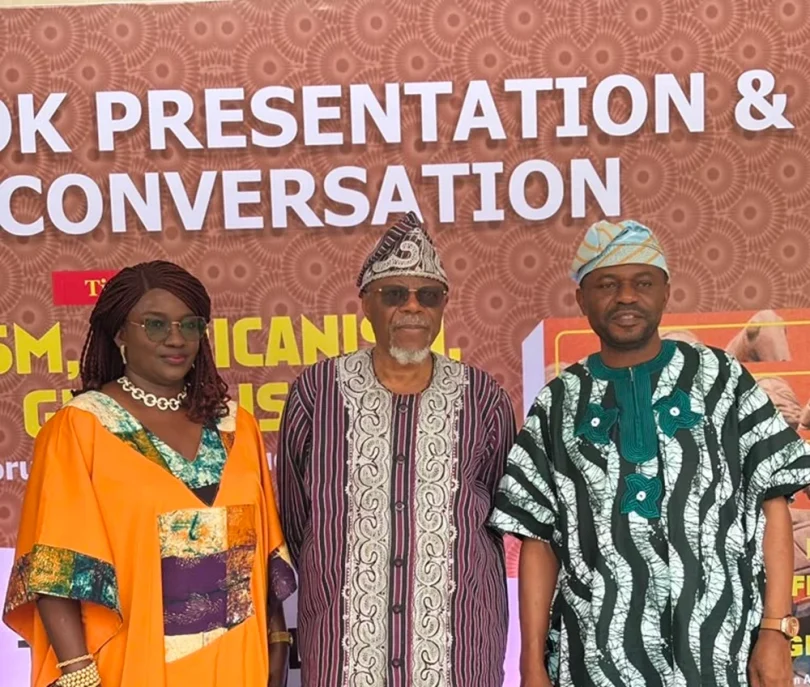
The call came from renowned historian and global scholar Professor Toyin Falola during the presentation of his latest book, Feminism, Africanism, and Globalism: Doyin Aguoru’s Voices through Drama, at the Senator Abiola Ajimobi Resource Centre (International Conference Centre), University of Ibadan, on Wednesday.
Using Professor Doyin Aguoru as a case study, Falola argued that African academia must move beyond symbolic praise and begin to accord women scholars the scholarly recognition their intellectual contributions deserve.
Speaking with journalists after the ceremony, Falola lamented that despite their enormous contributions to scholarship, women continue to occupy the margins of academic recognition.
“Although women have made foundational contributions to Nigerian and African scholarship, their intellectual achievements are still too often undervalued, insufficiently cited, poorly documented, and celebrated less enthusiastically than those of their male colleagues.”
He noted that many women academics continue to encounter structural barriers that restrict their visibility and influence, including limited access to research funding, editorial platforms, professional networks, institutional leadership, prestigious awards and other opportunities that shape academic careers.
According to him, these limitations have contributed to the underrepresentation of women in Africa’s intellectual history, even though many have produced scholarship that has significantly advanced knowledge in literature, history, politics, development and the humanities.
Falola maintained that his latest publication was conceived not merely as a tribute to Professor Aguoru but as a broader intervention aimed at correcting that historical imbalance.
“Professor Doyin Aguoru’s career provides an important opportunity to challenge this imbalance. Celebrating her scholarship is not an act of generosity or tokenism; it is an acknowledgment of intellectual merit. When the work of a woman scholar becomes the subject of sustained critical engagement, it signals that she is not merely participating in an academic field but helping to define its questions, methods, and future directions.”
He stressed that African universities should institutionalise meaningful forms of recognition for accomplished women scholars through deliberate citation of their publications, dedicated scholarly works, invitations to deliver major lectures, appointments to leadership positions, funded collaborative research and the inclusion of their writings in university curricula.
“Appropriate recognition must go beyond ceremonial praise. It should include serious citation of women’s publications, books devoted to their ideas, invitations to major lectures, appointments to decision-making positions, nominations for prizes, institutional archives, funded research collaborations, and the inclusion of their works in university curricula. Women should also be celebrated while they are alive and intellectually active—not only after retirement or death.”
Falola explained that documenting the work of women scholars while they remain intellectually active not only strengthens African scholarship but also provides younger generations with visible models of academic excellence.
ALSO READ: Treat Ifá like Aristotle, Falola charges Nigerian universities
He said his decision to devote an entire scholarly monograph to Professor Aguoru was informed by the originality and interdisciplinary significance of her scholarship, particularly its engagement with African feminism, drama, performance, identity, culture and social justice.
According to him, Aguoru’s dramatic writings constitute an important archive for understanding contemporary African society, using literature to interrogate patriarchy, gender inequality, harmful cultural practices and questions of justice while proposing alternative visions for social transformation.
He further argued that recognising women scholars is essential to producing a more complete and inclusive body of African knowledge.
“Therefore, the celebration of Professor Aguoru should be understood as part of a larger corrective project: the recovery, documentation, and elevation of women’s intellectual labour. Scholarship becomes more truthful, inclusive, and complete when women are recognized not as marginal contributors but as theorists, creators, institution-builders, mentors, and producers of knowledge in their own right.”
Falola added that the book seeks to preserve an important body of African scholarship while introducing Professor Aguoru’s work to wider audiences across Nigeria and beyond, encouraging future generations of scholars to value intellectual excellence regardless of gender.
The presentation attracted leading scholars, traditional rulers, literary critics, researchers and students from across the country.
The programme featured goodwill messages, a musical performance by the Department of Music, University of Ibadan, the presentation of the book by Professor Falola, a dramatic adaptation of Stolen Seeds performed by Dr. Oreofe Williams and City of Talents, an extensive review session by eminent academics, and the formal unveiling of the publication.
Reviewers described the book as a significant contribution to African literary criticism, noting that it not only interrogates Aguoru’s dramatic works but also situates her scholarship within wider debates on African feminism, performance studies, identity, culture and global intellectual discourse.
Responding, Professor Doyin Aguoru described the publication as one of the greatest honours of her academic career, saying it represents far more than personal recognition.
She expressed appreciation to Professor Falola for using her scholarship as a platform to draw attention to the contributions of African women intellectuals.
“I receive this honour with deep humility and immense gratitude. Professor Toyin Falola has not only celebrated my work; he has amplified the voices of African women scholars whose contributions deserve to be seen, studied and remembered. This honour is bigger than me because it represents generations of women who have devoted their lives to teaching, research, creativity and nation-building.”
Aguoru thanked the organisers, reviewers, traditional rulers and colleagues for celebrating her work and pledged to continue advancing research in African literature, drama, feminism and performance studies.
She also urged universities across the continent to create environments where women can thrive through merit, rigorous scholarship and equal opportunity.
“I hope this moment encourages every young woman in academia to believe that excellence is worth pursuing and that her voice matters. Let us continue to build institutions where scholarship is judged by its quality, originality and impact, not by gender.”