
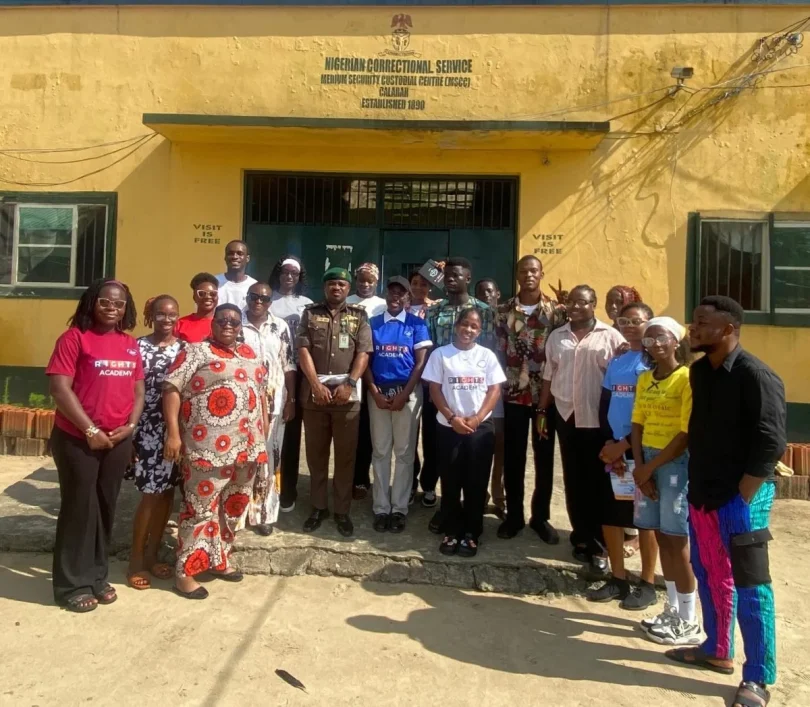
The Afokang Correctional Centre in Calabar, Cross River, is holding 784 inmates, 334 above its designed capacity of 450, with awaiting-trial inmates accounting for about 68 per cent of the prison population.
This was disclosed during an educational excursion to the facility by scholars of Rights Academy as part of efforts to expose them to the practical realities of human rights, justice administration and correctional services.
Figures made available to the scholars during the visit showed that the facility has 756 male and 28 female inmates.
ALSO READ: Fake agency: Reps panel clears Gbajabiamila of wrongdoing
Of the total population, 531 inmates are awaiting trial, comprising 520 males and 11 females, while 170 have been convicted, including 154 males and 16 females.
The facility also has 48 inmates on death row, comprising 47 males and one female, while 35 male inmates are serving life sentences.
The figures raised concerns over overcrowding and the large proportion of inmates who have not been convicted, with scholars questioning the impact of prolonged detention on access to justice and the rights of persons deprived of their liberty.
Tribune Online reports that the high awaiting-trial population underscored the need for greater attention to delays in the criminal justice system.
While showing the scholars around the facility, Chief Superintendent of Corrections, A.E. Edet, emphasized that extended periods of pre-trial detention can impact inmates’ job prospects, educational opportunities, family connections, mental health, and their capacity to engage fully in society.
The scholars were also informed that the Judiciary and the Department of Public Prosecutions (DPP) are among the key institutions whose processes could affect the length of time suspects remain in custody.
Worries were also expressed regarding how often judicial oversight occurs, with scholars mentioning that the Chief Judge of the state last conducted a jail delivery exercise in September 2025.
They stressed that regular jail delivery exercises were important for identifying inmates who might qualify for bail, those whose cases had stalled, and persons who had remained in custody for unnecessarily long periods.
The scholars also visited the female correctional unit, clinic, identified as the C.H.E.W facility, and rehabilitation hall.
During the visit, they were informed that the clinic was facing shortages of drugs, wound-treatment materials, hygiene items, and toiletries.
At the female unit, the scholars were informed that menstrual hygiene materials were being provided through government intervention and support from non-governmental organisations.
On rehabilitation, the scholars were introduced to programmes designed to help inmates acquire skills and prepare for reintegration into society after serving their sentences.
Meanwhile, another observation arising from the excursion questioned the gender imbalance in the correctional population and the way correctional facilities were designed.
The observer noted that the overwhelming male population at Afokang raised questions about whether the physical structures and broader criminal justice system had been designed around assumptions about gender and offending patterns.
The observation, however, stressed that the issue was not about portraying one gender as more prone to crime than the other, but about understanding the social, economic, cultural, educational and institutional factors behind the pattern.
It argued that “crime does not belong to a gender”, adding that justice should be responsive to the realities of society rather than assumptions.
The Rights Academy excursion also highlighted the importance of human rights education beyond the classroom, particularly the rights to dignity, humane treatment, healthcare, fair trial and timely justice.
The scholars recommended regular judicial reviews and jail delivery exercises, reduction of delays in criminal proceedings, improved coordination among law enforcement agencies, the DPP, Judiciary, legal practitioners and correctional authorities.
They also called for improved healthcare funding, consistent provision of hygiene materials, stronger rehabilitation programmes and measures to address overcrowding, particularly the large awaiting-trial population.
The scholars further urged greater civil society engagement in healthcare, legal assistance, hygiene, rehabilitation and reintegration programmes.
The excursion concluded with a call for stronger accountability across the criminal justice system to ensure that administrative and procedural delays do not unnecessarily deprive people of their liberty.