
By Yusuf Adekanbi
Across history, political transitions rarely arrive with dramatic announcements. More often, they unfold quietly through demographic change, economic realities, and the rise of individuals whose experiences begin to reflect the expectations of a younger society. Today, Nigeria appears to be approaching such a moment.
With a population exceeding 200 million people, Nigeria stands among the worlds most youthful nations. Demographic projections consistently indicate that more than 60 per cent of Nigerians are under the age of 30, while roughly 70 per cent are below 35. This structure is not merely a statistical observation; it signals a profound shift in the countrys political future. Nigeria is increasingly becoming a youth-driven society whose leadership expectations are evolving accordingly.
Yet for decades, the composition of political leadership did not mirror this reality. Young people formed the backbone of electoral mobilisation and campaign activity, but their presence within elected institutions remained limited. Estimates suggest that more than 52 million Nigerians fall within the youth category of 18 to 35 yearslarger than the total population of several African countriesyet they continue to occupy only a modest share of public offices nationwide.
This imbalance eventually prompted one of the most consequential democratic reforms in recent Nigerian history. In 2018, the National Assembly passed the Not Too Young To Run Act, reducing the constitutional age requirements for several elective offices. Eligibility for the House of Representatives and State Houses of Assembly dropped from 30 to 25 years, while the minimum age for governorship and the Senate fell from 35 to 30, and the presidency from 40 to 35.
Beyond its legal significance, the reform reshaped political psychology. It sent a clear signal that leadership was no longer formally restricted to older generations. In the elections that followed, more than 1,500 candidates under the age of 35 reportedly contested seats in the House of Representatives alone, representing roughly a quarter of the total candidate field. Although only a limited number secured victory, the reform succeeded in dismantling a longstanding barrier to youth political ambition.
However, legislation alone does not create political movements. Structural openings must be matched by visible examples of participation and leadership before broader confidence emerges.
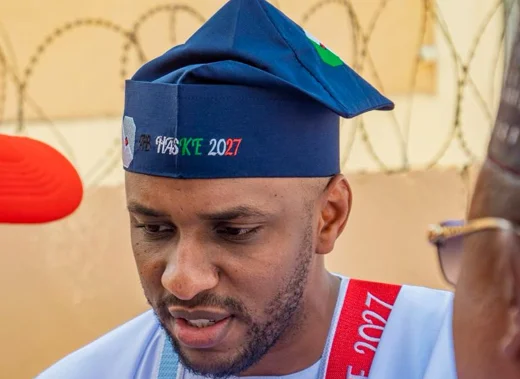
Across Northern Nigeria, signs of such momentum are becoming increasingly visible. A new generation of political actors is beginning to engage communities not only through party structures but also through economic initiatives, social programmes, and civic outreach. Among those attracting attention is 36-year-old Abdulrahman Bashir Haske from Adamawa State.
Adamawa has long occupied an important place in northern political history, producing influential figures and shaping regional political discourse. In recent years, however, it has also become a focal point for discussions about leadership renewal and generational inclusion.
Unlike many traditional political entrants, Haskes public profile first developed through enterprise and community engagement rather than party patronage networks. Educated at the American University of Nigeria, he established business interests in agriculture, logistics, and energysectors closely aligned with the economic realities of Northern Nigeria, where agriculture alone supports millions of livelihoods.
Through agricultural support initiatives and youth empowerment programmes extending across Adamawas 21 local government areas, his outreach has connected economic opportunity with civic participation. Such initiatives resonate strongly in a country where economic pressures increasingly shape political awareness among young citizens. National labour data suggests that more than 1.7 million young Nigerians enter the workforce annually, even as unemployment and underemployment remain persistent concerns.
These realities are reshaping how young people relate to politics. Participation is no longer viewed solely as a civic responsibility; it is increasingly understood as part of a broader struggle for economic inclusion and generational opportunity.
Adamawa itself reflects this transformation. Political forums, student associations, and community platforms across the state have intensified discussions around leadership renewal in recent years. Similar developments are evident elsewhere in the region. In states such as Kaduna, Kano, and Bauchi, youth-led civic networks and professional associations have expanded steadily over the past decade, with more young professionals declaring interest in legislative roles, local government offices, and party leadership positions.
Despite these developments, representation gaps remain significant. Parliamentary data indicates that only a small number of senators nationwide are aged 45 or younger, highlighting the distance still to be travelled before demographic realities are fully reflected in national institutions.
This disparity has intensified debate about generational inclusion. Some youth advocacy groups have begun calling for legislative frameworks that would significantly expand youth representation in elected offices as Nigeria approaches future electoral cycles.
Within this wider national conversation, figures emerging from states such as Adamawa are acquiring symbolic significance. Their activities are increasingly interpreted as indicators of a broader shift that may already be underway across Northern Nigeria.
Supporters point to interventions associated with Haske in education, skills development, humanitarian assistance, and youth engagement as examples of community-focused leadership approaches gaining visibility in the region. His advocacy for sports development has also provided platforms for youth participation and social cohesion, while investments in agriculture and logistics have contributed to employment opportunities and strengthened local value chains.
One notable initiative frequently cited is the establishment of a modern rice processing facility with a capacity of 48 tonnes per day, designed to enhance agricultural productivity, support smallholder farmers, and improve food security.
Projects of this nature illustrate how economic engagement is increasingly intersecting with emerging leadership narratives across the North.
For many young observers, such trajectories represent a changing political archetypeone that blends entrepreneurship, social investment, and civic ambition. Whether this emerging pattern will translate into large-scale electoral transformation remains uncertain. Nigerian politics has historically demonstrated a remarkable ability to preserve established structures even in the face of demographic change.
Yet demographic realities possess a persistence that political systems cannot indefinitely ignore. In a country where more than two-thirds of the population is young, the central question is no longer whether generational leadership will emerge, but when.
As political parties prepare for future contests, internal democratic processes are likely to play a decisive role in determining how effectively younger aspirants can participate. Within Adamawa, for instance, candidate selection procedures are already being closely observed by party members and analysts alike as indicators of how far institutional structures are prepared to accommodate generational change.
National party leadership has repeatedly emphasised that internal constitutional provisions do not recognise automatic candidacies, stressing instead the importance of transparent primaries and consensus-based processes where applicable. Such assurances reflect broader expectations among party members that candidate emergence should remain grounded in participatory decision-making rather than imposition.
Ultimately, the evolving debate surrounding leadership renewal in Adamawa reflects developments taking place across Northern Nigeria more broadly. It is not a story about a single individual or a single election cycle. Rather, it is part of a longer transition shaped by demographic momentum, economic pressures, and the growing political confidence of younger citizens.
If current trends continue, the coming decade may witness one of the most significant generational transitions in Northern Nigerian politics since the return to democratic governance in 1999. And while that transformation will be driven collectively rather than individually, emerging voices from states such as Adamawa may well prove to be among its earliest signals.
Adekanbi, a political scientist and public analyst sent in this piece from the UK.