
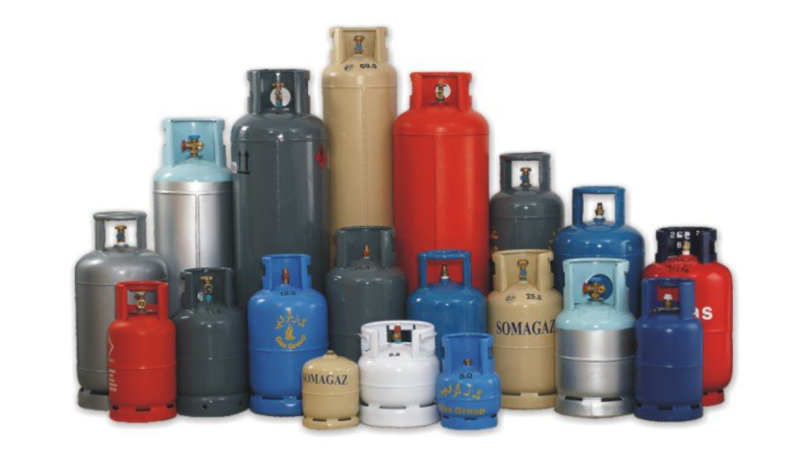
Cooking gas prices have risen again in Abuja, selling for between N1,600 and N2,000 per kg, further straining household budgets.
Many residents who spoke in Abuja on Sunday said the latest increase made it increasingly difficult to afford regular refills.
They said the development had forced some households to ration gas or combine it with traditional cooking fuels, such as charcoal stoves, as they struggle to cope with the rising cost.
The gas currently sells for between N1,600 and N2,000 per kg across Abuja, depending on the location and retail outlet.
At the prevailing prices, refilling a five-kilogramme cylinder costs between N8,000 and N10,000, while a 12.5kg cylinder costs between N20,000 and N25,000.
The latest increase is another setback for households already struggling with the rising cost of living, especially since cooking gas remains an essential domestic commodity.
Obi Nwosu, a resident of Gudu, said the rising cost of cooking gas forced her to stop refilling her cylinder, opting instead to buy smaller quantities depending on the money available to her.
“Refilling my cylinder at N24,000 is no longer possible, especially with the rising costs of transportation and food. I have to prioritise my expenses, so I only buy the quantity I can afford whenever my gas runs out,” she said.
Maimuna Idris, a resident of Lugbe, said she had resorted to using a charcoal stove alongside cooking gas to cut her fuel costs.
“For some time now, the price of cooking gas has continued to increase, making it difficult for me to fill my cylinder. I had to buy a charcoal stove and use it to prepare meals that require longer cooking time, such as beans, as well as boil water, because relying solely on cooking gas is no longer sustainable,” she said.
Asuquo Morgan, a resident of Karu, said he has reduced the amount of cooking gas he buys to cope with rising costs.
“My income has not increased, but the prices of cooking gas and other essential commodities keep rising. One has to find a way to survive, and that means buying gas in smaller quantities; otherwise, some households may run into financial difficulties.
“The government needs to find a lasting solution to the rising cost of cooking gas. Many households depend on it for cooking, and if the price continues to increase, people may be forced to return to using firewood,” he said.
Bidemi Ajayi, a resident of Lokogoma, said the latest price increase had further worsened her financial situation, putting additional pressure on her household budget.
“Everything now requires careful calculation, so I buy gas in small quantities, like five kilogramme, and manage it to enable me to meet other household needs, which has also not been easy.
“We appeal to the government to ensure that cooking gas remains affordable. The prices of everything cannot continue to increase while many people are struggling to afford even one meal a day,” she said.
In October, cooking gas prices ranged between N1,360 and N1,700 per kg in Abuja. The development followed an earlier increase reported in September when cooking gas sold for between N1,450 and N2,000 per kg in parts of Abuja after months of declining and relatively stable prices.
Industry experts previously attributed the rising cost of cooking gas to supply disruptions, higher logistics and transportation costs, foreign exchange volatility and developments in the international energy market.
The Nigerian Midstream and Downstream Petroleum Regulatory Authority (NMDPRA) also identified inadequate domestic supply, low import volumes, poor distribution infrastructure, and logistics challenges as factors contributing to the increase in LPG prices.
On June 22, the federal government directed the NMDPRA and other relevant agencies to intensify surveillance and clamp down on marketers involved in hoarding and diversion of gas.
(NAN)