
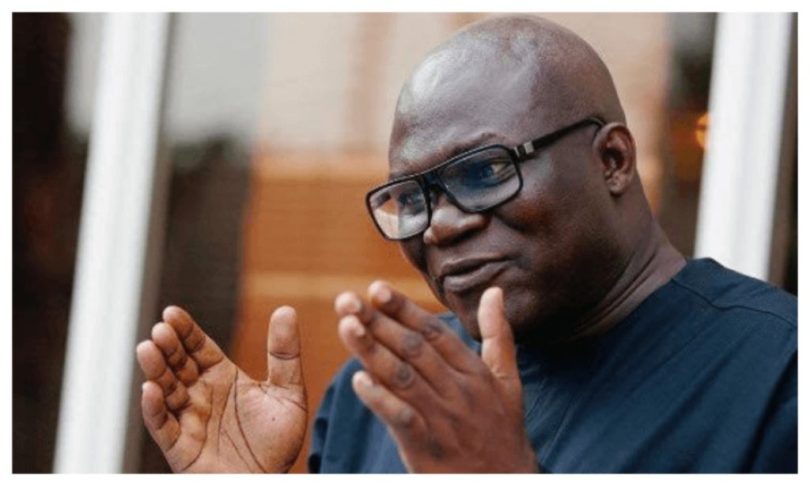
Former presidential aide and Arise Television’s Morning Show anchor, Dr Reuben Abati, has criticised the Federal Government’s ₦70,000 monthly transport allowance for public sector workers, describing the intervention as discriminatory.
Abati argued that the initiative excludes private sector employees who are also grappling with rising transportation costs and high fuel prices.
The media personality made the remarks on Wednesday while discussing the government’s plan to provide transport support to public servants amid the rising cost of living.
He questioned why the intervention was limited to government workers, insisting that the economic challenges prompting the allowance affect Nigerians across both the public and private sectors.
“So, federal government now said there is 70,000 naira transportation allowance for workers that are working in the public service.
“Well, I have an issue with that. Why is it only the public service? It’s not only organised labour that is affected in the public service, everybody is affected.
“Private sector, who is going to give us 70,000 naira transportation costs? We all go to the same market. No, we are all buying fuel at a very high cost,” Abati said.
He also questioned the effectiveness of the Federal Government’s directive to the Nigerian National Petroleum Company Limited (NNPC), arguing that Nigerians had yet to see tangible results from the measure.
“And the directive to NNPC, that has not even happened. We have not seen it, so we are all affected.
“So this is discriminatory,” he added.
Abati further suggested that the timing of the transport allowance could be politically motivated, although he did not provide further details to substantiate the claim.
The Federal Government had approved the ₦70,000 monthly transport intervention following a conciliation meeting with the Nigeria Labour Congress (NLC) in Abuja on Tuesday, October 27, 2026.
Under the agreement, the allowance is expected to be paid to public service workers across all levels for six months, beginning in November 2026.
Also Read: Delta-born Queen Ekrakene to represent State at Miss grand Nigeria 2027
The intervention is part of efforts to cushion the impact of rising living costs on workers.
The agreement also covers outstanding allowances and other welfare-related issues.
However, Abati’s criticism has drawn attention to the question of whether the transport support should extend beyond public servants to include private sector employees facing similar economic pressures.