
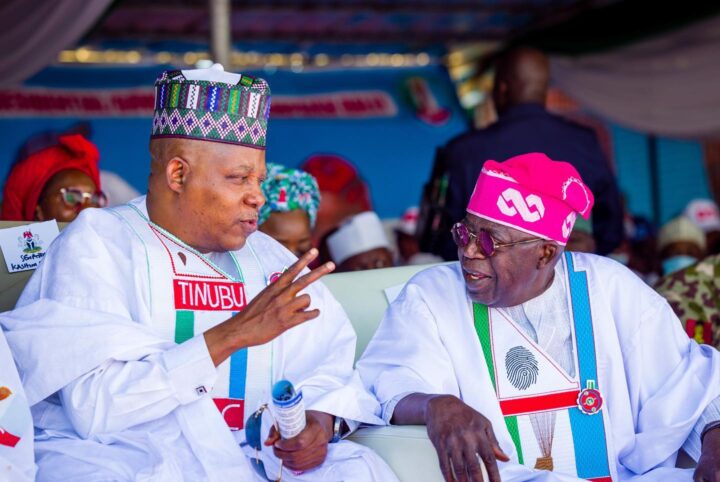
mVice President Kashim Shettima has criticised the African Democratic Congress (ADC) presidential hopeful, Atiku Abubakar, over his proposal to reintroduce petrol subsidy if elected president in 2027.
Shettima questioned the financial implications of Atiku’s proposal, arguing that political leaders must explain how such policies would be funded and which other government priorities might be affected.
The vice president made the remarks on Wednesday during the inauguration of the All Progressives Congress (APC) Presidential Campaign Council at the State House Banquet Hall in Abuja.
Atiku had pledged to restore fuel subsidy if he wins the 2027 presidential election, arguing that the policy would support domestic refining and petroleum production.
Reacting to the proposal, Shettima described the unfolding political season as a spectacle of political contradictions, taking aim at what he portrayed as a shift in Atiku’s ideological position.
The vice president argued that Atiku’s support for subsidies contrasted with the economic ideology he had publicly associated with throughout his political career.
Shettima said the former vice president, whom he described as a longstanding advocate of capitalism, now appeared to be embracing ideas associated with socialism.
“Your Excellencies, distinguished ladies and gentlemen, this political season has become a masterclass in cinematic comedy,” Shettima said.
“Atiku, who had worn the toga of capitalism with pride throughout his political career, now sounded like the legitimate offspring of Vladimir Lenin.”
He went on to question how Atiku’s proposed subsidy policy would be financed and what its implementation could mean for other areas of public spending.
Also Read: Family of Toluwanisings breaks silence on singer’s death
“Who pays? Who benefits? And which competing priorities must surrender their funding?” the vice president asked.
“A change of ideological wardrobe cannot balance a national budget,” he added.
Shettima Links Leadership To Responsibility
Beyond the disagreement over fuel subsidy, Shettima argued that aspiring presidents must demonstrate sound judgment, discipline and a clear understanding of the responsibilities attached to public office.
He maintained that the pursuit of political power should involve more than the ambition to occupy the presidency, stressing the need for accountability in policy proposals and public conduct.
“Political ambition is not merely the desire to [hold] public office. It is a test of character, intellectual maturity and responsibility,” he said.
“The higher the office a person seeks, the greater the discipline expected in his words, conduct and relationship with public institutions.”