
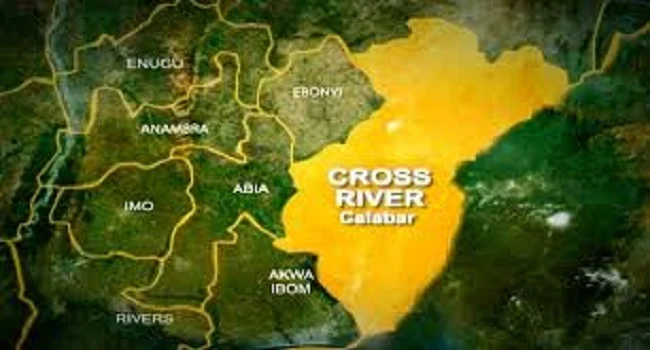
No fewer than 347 persons have been displaced by mudslides and flash floods that ravaged parts of Cross River State in August, the State Emergency Management Agency (SEMA) has disclosed.
The figure comprises 167 persons rendered homeless by a mudslide in Calabar and about 180 others displaced by heavy rainfall in communities in the Central Senatorial District.
The Director-General of Cross River SEMA, Mr Efa Nyong, disclosed this in Calabar on Tuesday while speaking with newsmen on the agency’s response to recent disasters in the state.
Nyong said the victims were being sheltered at various locations in Calabar and parts of the Central Senatorial District.
He attributed the increasing incidence of disasters in the state to both natural occurrences and human activities.
“Basically, two things are happening. They are happening out of natural occurrence and, secondly, out of human activity,” he said.
The SEMA boss, who assumed office on July 14, said he had visited communities in the Southern and Central Senatorial Districts to sensitise residents on disaster prevention and preparedness.
He said the campaign would be extended to the Northern Senatorial District before a statewide advocacy programme involving billboards, radio jingles and town criers would be launched.
Nyong identified indiscriminate dumping of refuse as one of the major causes of flooding, warning that the consequences could be felt several kilometres away from where waste was dumped.
“When people throw waste indiscriminately, it may not show its impact immediately where it is dumped. Its impact could be a couple of kilometres away from where the activity was carried out,” he said.
On fire prevention, he urged residents to switch off electrical appliances when not in use, replace faulty cables and bulbs promptly and upgrade defective electrical wiring.
Explaining the agency’s disaster-response structure, Nyong said Local Emergency Management Committees, coordinated by vice-chairmen of the respective local government areas, serve as the first responders to disasters.
He said cases beyond the capacity of the local committees were escalated to SEMA, while the agency could seek the intervention of the National Emergency Management Agency and international partners when necessary.
“Where we cannot manage it at the level of the state, we push it further to NEMA. When they cannot manage it at that level, we begin to seek international assistance,” he said.
Nyong also identified the Nigerian Red Cross Society as a key partner in providing shelter and other support to displaced persons.
He said the exact financial value of the damage caused by the disasters could not yet be determined, citing the volatility of the naira and the difficulty of accurately estimating the cost of restoring damaged properties and infrastructure.
According to him, government and private donors had provided relief materials and financial assistance as SEMA continued efforts to stabilise and resettle the affected victims.