
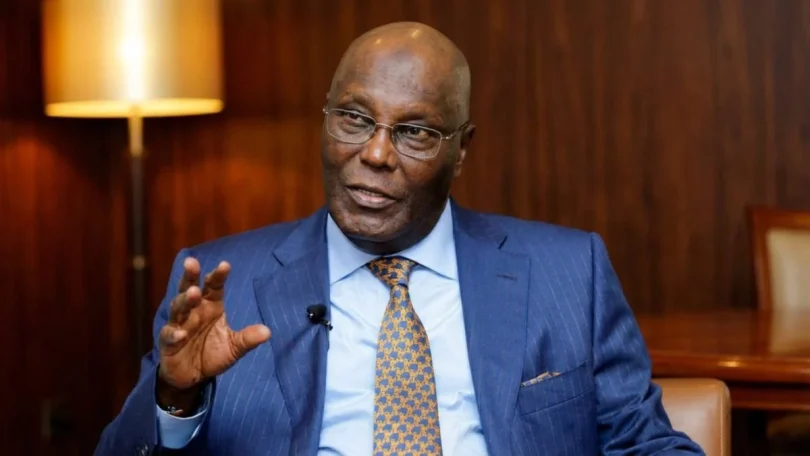
Former Vice President and presidential candidate of the African Democratic Congress (ADC), Atiku Abubakar, has promised to restore fuel subsidy if he wins the 2027 presidential election.
Atiku made the promise while speaking during a Facebook Live session, where he addressed questions surrounding the removal of petrol subsidy and its effect on Nigerians.
The former vice president said his position on the policy had changed since the subsidy was removed by President Bola Tinubu in May 2023.
Atiku said he did not initially oppose the removal of the subsidy. However, he questioned what had happened to the money the Federal Government said it would save from ending the programme.
“I initially did not oppose the removal of the fuel subsidy. But now that it has been removed, where is the money? Where has the subsidy money gone? Has it been used to improve healthcare, education or security?
“If I win the presidential election, I will restore the subsidy. And anyone who stole Nigeria’s subsidy funds must return the money.”
Recall, Tinubu announced the removal during his inauguration on May 29, 2023.
The declaration immediately triggered a sharp increase in petrol prices and was followed by higher transportation, food and other living costs across the country.
The President had argued that the subsidy had become too expensive for the country to sustain.
Tinubu said the funds previously spent on subsidising petrol would instead be directed towards infrastructure, healthcare, education, transportation and other areas that directly benefit Nigerians.
In a national broadcast on July 31, 2023, the President maintained that the subsidy had become a burden on the economy.
“For several years, I have consistently maintained the position that the fuel subsidy had to go,” Tinubu said.
He argued that the subsidy had cost the country trillions of naira every year and claimed the resources could be better deployed to public services.
Tinubu also said the subsidy system had created opportunities for corruption and had benefited a small group of individuals.
“Subsidy cost us trillions of Naira yearly,” he said, adding that the money would be better spent on “public transportation, healthcare, schools, housing and even national security.”
In a related development, the disagreement between Atiku and Tinubu over fuel subsidy is not new.
Politics Nigeria recalls on June 2024, Atiku accused the Tinubu administration of continuing to support petrol consumption despite the President’s declaration that the subsidy had ended.
Atiku raised the issue after reports suggested that government expenditure connected to petrol subsidy could reach N5.4 trillion in 2024.
He challenged the Federal Government to explain the situation and provide Nigerians with clarity on the actual cost of the subsidy regime.
Atiku said at the time that the government could not continue to claim that the subsidy had disappeared while allegedly making provisions that amounted to subsidy payments.
He declared, “Paying subsidies and lying about it is nothing to brag about. Nigerians deserve better than this deception.”
The allegation was rejected by the Presidency.
Then Special Adviser to the President on Information and Strategy, Bayo Onanuga, said on June 6, 2024, that the Federal Government had not made provision for N5.4 trillion fuel subsidy payments.
“The government wants to restate that its position on fuel subsidy has not changed from what President Bola Ahmed Tinubu declared on 29 May 2023. The fuel subsidy regime has ended. There is no N5.4 trillion being provisioned for it in 2024, as being widely speculated and discussed,” Onanuga said.
Atiku had argued that Nigerians needed to know how much was being saved and where the savings were going. The Presidency, on the other hand, maintained that the subsidy regime had been brought to an end.
The issue resurfaced again during the nationwide protests against economic hardship in August 2024.
On August 2024, Tinubu ruled out reversing the subsidy policy in a national broadcast.
The President described the decision as painful but necessary for the country’s economic recovery.
“For decades, our economy has remained anaemic and taken a dip because of many misalignments that have stunted our growth,” Tinubu said.
He added that he had taken the decision to remove the subsidy because Nigeria could no longer continue using what he described as temporary solutions to address long-term economic problems.
“I, therefore, took the painful yet necessary decision to remove fuel subsidies and abolish multiple foreign exchange systems which had constituted a noose around the economic jugular of our Nation and impeded our economic development and progress,” he said.
The President’s position was also consistent with his earlier argument that subsidy savings would provide government with more resources for development.
In his June 12, 2023 Democracy Day address, shortly after taking office, Tinubu acknowledged the hardship caused by the policy but insisted that the decision was necessary.
“I feel your pain,” the President told Nigerians.
He also said the subsidy removal was aimed at freeing resources that had previously been captured by a few individuals.
“I admit that the decision will impose extra burden on the masses of our people,” Tinubu said.
The President urged Nigerians to make sacrifices while his administration implemented measures intended to cushion the impact of the reforms.
Atiku has, however, continued to challenge the government’s handling of the policy.
In November 2024, he also explained how he would have approached subsidy removal had he been elected president in 2023.
Atiku said he had always supported removing a subsidy system he considered opaque and vulnerable to corruption, but argued that the process needed to be accompanied by stronger accountability and measures to protect Nigerians.
He said his administration would have prioritised tackling corruption, improving transparency and ensuring that public resources were properly managed.