
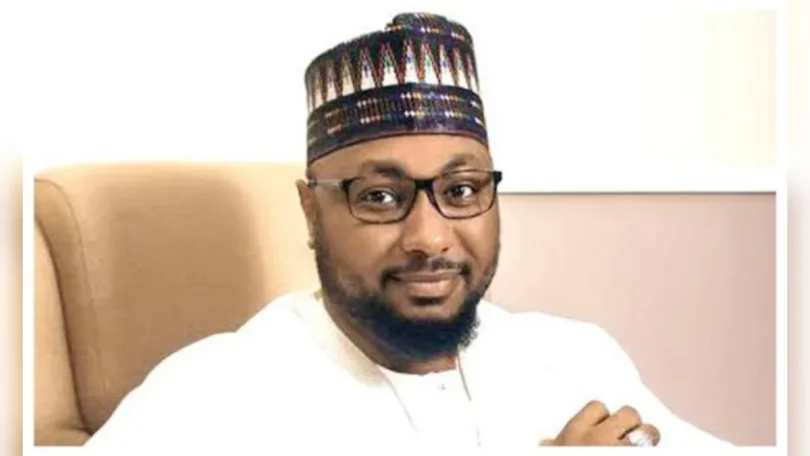
The Director-General of the Nigeria Democratic Congress (NDC) National Campaign Council, Ibrahim Abdulkareem, has criticised leaders of the African Democratic Congress (ADC) over their approach to building a political coalition ahead of the 2027 general elections.
Abdulkareem described some ADC leaders as lazy and entitled politicians, accusing them of failing to establish clear arrangements on power-sharing, zoning and the choice of a presidential candidate before inviting other political figures into their coalition.
He argued that the failure to agree on these important issues had created unnecessary disagreements within the opposition coalition, particularly over who should emerge as its presidential candidate.
The NDC campaign director made the remarks on Wednesday while appearing on Prime Time, an Arise Television programme, where he questioned the process through which the ADC coalition was being established.
According to him, the ADC leadership should have clearly stated its objectives and political arrangements from the beginning.
He maintained that doing so would have helped interested politicians understand the terms of the coalition before deciding to join.
Abdulkareem said some of the politicians involved in the arrangement appeared more interested in securing political positions than establishing a clear agreement that would guide the coalition.
He said, “I used to term some of the people I see in ADC as lazy politicians. Right from time, even when they are constructing this coalition that they talk about, instead of them finding a way of doing what the All Progressives Congress, APC, had done, put everything in black and white that we want to come for a coalition. And this coalition, this is the person that we want to be the president, or we are zoning this part of what we are going to do to this part of the country.”
He argued that a coalition should have clearly defined terms, including its leadership structure, presidential ambition and the distribution of political responsibilities among participating groups.
According to him, politicians joining such an arrangement should know what they are signing up for rather than leaving important decisions until after the coalition has attracted prominent political figures.
The NDC chieftain also questioned the controversy surrounding former Anambra State Governor Peter Obi and former Vice President Atiku Abubakar, particularly reports and discussions suggesting that Obi should accept a vice-presidential position under Atiku.
Abdulkareem described the situation as an example of the disagreements that could arise when political arrangements were not properly established from the beginning.
He said, “At that time, everybody that is coming into that coalition knows exactly why he’s coming, so it’s not going to be any problem in trying to see who becomes what. Immediately we started this thing they started to say Peter Obi is a vice-presidential candidate to Atiku. What kind of coalition is that? The entitlement from the elite, I find it very annoying sometimes.”
He particularly challenged the argument that the North should determine the direction of the opposition coalition or insist on retaining the presidency.
The NDC campaign director questioned the basis for such an expectation, arguing that Nigeria’s political leadership should not be treated as the exclusive preserve of any geographical region.
He also referenced the country’s past political leadership, mentioning former military Head of State General Ibrahim Babangida and former President Muhammadu Buhari.
According to him, the country’s experience under previous administrations should encourage political leaders to prioritise competence, accountability and the effective management of public resources rather than relying on regional considerations.
He said, “You just decide the North. Which North? You talk like you own something that you. There is no right given to Atiku, for example, to say everybody must surrender. We have been ruling from Gen Ibrahim Babangida (retd) to the late Muhammadu Buhari. But look at where we are.”
Abdulkareem further argued that the country’s political challenges should make politicians reconsider the criteria they use when selecting candidates for public office.
He said the priority should be finding individuals who could demonstrate integrity, accountability and a commitment to using public resources for the benefit of Nigerians.
He also criticised what he described as the sense of entitlement among some established politicians, insisting that age, political experience and regional influence should not automatically give anyone an advantage in the race for the presidency.
He said, “Go and see our streets. Go and see our villages. Look at how we have been ravaged. But since somebody is still coming today, trying to play this northern card at this level, it’s time to start thinking how can we hire somebody, irrespective of where he’s coming from, irrespective of religion or tribe, somebody that we know he has this integrity, somebody that can make these public funds to be used for public good, somebody that can be accountable, not people that are old and full of entitlement.”