
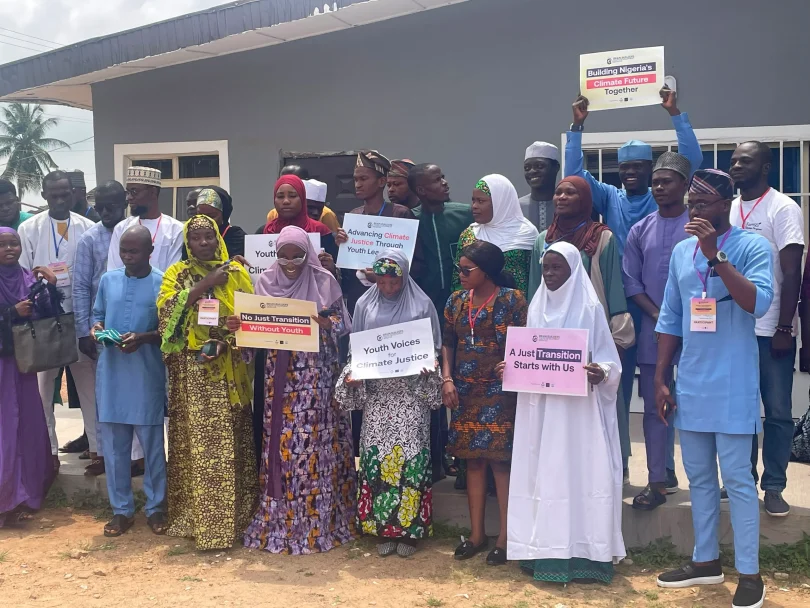
Nigerian youths have cautioned the Federal Government against an abrupt energy transition, warning that withdrawing existing energy systems without adequate alternatives could worsen the hardship low-income households already face.
The youths also called for greater involvement of young people in climate policy decisions, saying that they should not be left to bear the consequences of policies designed without their input.
The demands were made at a two-day National Youth Dialogue on Just Transition held in Ilorin, Kwara State, convened by the Brain Builders Youth Development Initiative (BBYDI).
Speaking at the event, the Executive Director of BBYDI, Nurah Jimoh-Sanni, said a successful energy transition must protect vulnerable groups while creating opportunities for young people.
She said, “A transition that works on paper but fails the household has not worked”.
Jimoh-Sanni added that young Nigerians were ready to contribute to the country’s transition to cleaner energy but must be given a seat at the table where decisions were made.
Participants at the dialogue session also said that Nigeria’s transition to cleaner energy must take into account the realities of ordinary households, particularly the rising cost of cooking gas, unreliable electricity and dependence on petrol, diesel and firewood.
They warned that removing affordable but environmentally harmful energy sources without providing accessible alternatives could push vulnerable families further into poverty.
The participants drew lessons from the 2023 removal of the fuel subsidy, saying future major reforms should be preceded by proper assessment of those likely to be affected, adequate support measures and clear communication.
They called for retraining and financial assistance for workers whose livelihoods depend on petrol and diesel, while urging the government to create more opportunities in areas such as solar installation and maintenance.
They also advocated measures to ensure that renewable energy remains affordable to low-income households.
The dialogue further focused on the disproportionate effects of climate change on women and girls.
The dialogue brought together 50 participants, including youth leaders from civil society organisations, universities and climate-affected communities, climate practitioners, University of Ilorin climate champions and officials of the Kwara State Ministry of Environment.
Participants raised concerns about gender-based violence during climate-related displacement and called for stronger protection measures, access to healthcare, clean water and reproductive health services during climate emergencies.
They stressed that women and girls should be involved in climate decision-making rather than being treated only as beneficiaries of interventions.
Working in five groups, the participants developed recommendations covering youth participation in climate governance, climate education, green jobs, waste management, gender-responsive climate action and public accountability.
The Community Engagement Lead of BBYDI, Ahmed Adebowale, said the discussions were deliberately centred on everyday experiences of Nigerians.
According to him, the recommendations would be taken to relevant institutions for consideration and action.
BBYDI said the recommendations from the dialogue would be consolidated into a youth climate agenda which the organisation plans to promote in national policy discussions and through its advocacy ahead of the 31st Conference of the Parties (COP31), scheduled to hold in Antalya, Türkiye, in November.