
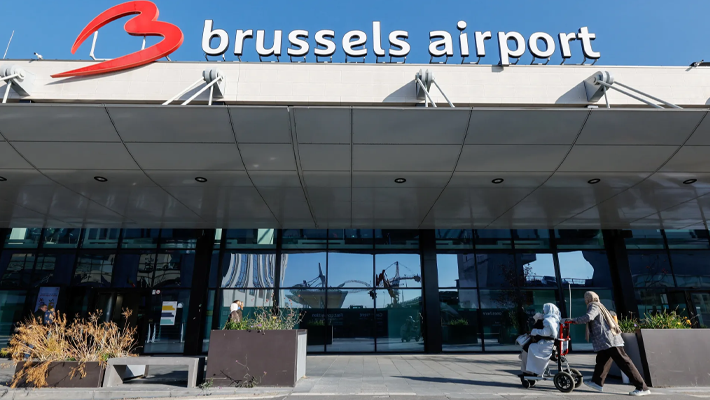
Belgium’s airports are set to suspend nearly all commercial flights on Monday as air traffic controllers join a nationwide strike against government austerity measures, threatening to disrupt travel for thousands of passengers.
Skeyes, the country’s air traffic control company, said it would suspend regular services between 7:00 a.m. and 9:00 p.m. local time after staffing levels fell below what was required to handle flights safely.
The company said only essential services, including emergency operations and other safety-critical flights, would remain operational during the industrial action.
The decision is expected to affect all commercial flights across the country, with Brussels Airport warning that most departing and arriving flights would have to be cancelled.
Brussels-Charleroi Airport, one of Belgium’s major European aviation hubs, for low-cost airline Ryanair, described the development as a complete shutdown of the country’s airports for the day and warned that thousands of passengers would be affected.
The airport criticised what it called a last-minute decision, saying the suspension of air traffic control services would prevent aircraft from taking off or landing.
The strike forms part of a nationwide protest organised by Belgian trade unions against austerity policies and economic reforms introduced by the country’s governing coalition.
The unions are also planning a large-scale demonstration in Brussels, with disruptions expected across other public services, including public transport, schools, government offices and refuse collection.
The Board of Airline Representatives in Belgium, which represents about 25 airlines, said the latest industrial action would be the 11th strike affecting Belgium’s airspace in 11 months.
The protest comes amid prolonged negotiations between Prime Minister Bart De Wever and his coalition partners over a cost-cutting budget aimed at saving €10 billion ($11 billion) over the next few years to reduce the country’s high budget deficit.
Earlier in November, Mr De Wever offered his resignation after his coalition failed to agree on the proposed budget.
However, King Philippe rejected his resignation and gave the prime minister additional time to resolve the political disagreement.