
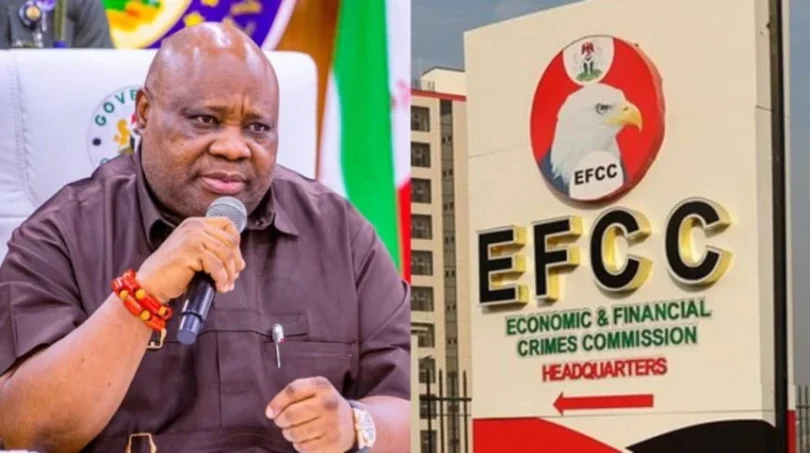
The Nigerian Bar Association (NBA) has said the Economic and Financial Crimes Commission (EFCC) has no legal power to freeze the Osun State Government’s bank account without first obtaining a court order.
The association said the anti-graft agency’s directive placing a post-no-debit (PND) restriction on the state’s account could disrupt government activities and public services, insisting that any move to freeze a government account must follow due process.
The EFCC had directed First Bank Plc to stop withdrawals from the Osun State Government’s statutory allocation account as part of an investigation into the alleged mismanagement of N11 billion ecological and intervention funds.
The directive was contained in a letter dated August 5, 2026, signed by Adenike Babalola, Assistant Commander of the EFCC, on behalf of the agency’s Director of Investigation.
The development has sparked fresh debate over the powers of the EFCC to restrict access to state government funds.
Governor Ademola Adeleke had accused federal agencies of trying to undermine the rights of state governments, saying Osun would resist any action capable of disrupting its operations.
Adeleke also alleged that the state had faced politically motivated actions, including the alleged harassment of Accord Party members and attempts to disrupt local government activities.
ALSO READ: Osun govt reveals ‘real reason’ EFCC froze state account
The EFCC, however, defended the restriction, saying it was part of its investigation into the alleged fraudulent handling of the funds.
According to the commission, the investigation began in March, and it observed significant transfers from the account to different corporate entities from August 2.
Speaking in an exclusive interview with The Punch, outgoing NBA President Afam Osigwe said the EFCC should have approached a court if it believed the account was being used for fraudulent activities.
He said the commission’s directive was unconstitutional because it could cripple the operations of a state government.
“No government agency or any person has the right or the power to restrict withdrawals from the account of any state because, first of all, the order has the effect of grounding the activities of a government,” he said.
Osigwe maintained that the EFCC could only freeze an account after obtaining a valid court order.
“If the EFCC knows that any particular account is being used for the purpose of fraud, it may be able to obtain a court order, but it cannot make a blanket order freezing the accounts of any state.”
He said any attempt to freeze a state’s account without judicial approval would exceed the commission’s powers.
“Such an order would be unconstitutional and also violate the powers of the EFCC and may actually amount to an abuse of power. We should not have such a situation,” Osigwe said.
The NBA president stressed that due process must be followed before restricting access to any government or private account.
“If there is a need to freeze the account of a person or government, there is a need to provide a proper basis for it and get a proper order,” he said.
Osigwe also urged First Bank not to comply with the EFCC’s directive unless it is backed by a valid court order.