
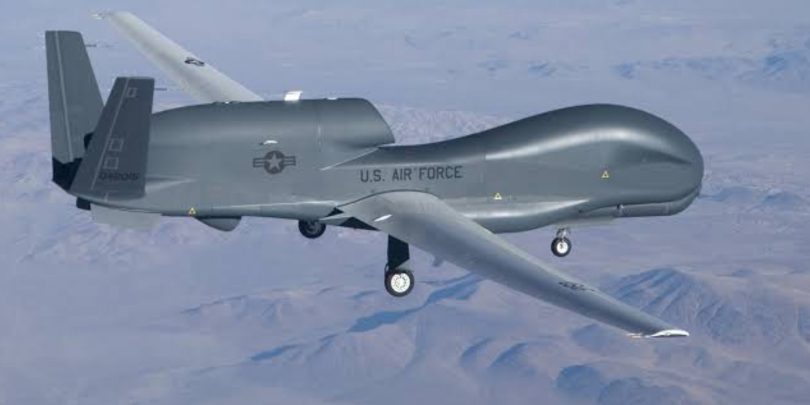
The United States has resumed intelligence, surveillance and reconnaissance (ISR) operations over Nigeria, days after conducting airstrikes against Islamic State fighters in Sokoto State.
A Sahel-focused terrorism analyst, Brandon Philip, disclosed on Saturday, December 27, that a U.S. aircraft was observed operating over parts of northeastern Nigeria, including Borno State.
Flight-tracking data identified the aircraft as a Gulfstream V jet, commonly adapted for long-range ISR missions.
According to Philip, the renewed surveillance is focused on the Islamic State West Africa Province (ISWAP), which is active in Nigeria’s North-East and the Lake Chad Basin.
He noted that the ISR missions resumed after a one-day pause following the Sokoto strikes, with operations reportedly covering areas around the Sambisa Forest in Borno State.
Flight records indicate that U.S. intelligence missions over Nigeria began on November 24, after the aircraft departed from Ghana, which serves as a major logistics hub for U.S. military operations in West Africa. Since then, the aircraft has reportedly flown over Nigerian airspace almost daily.
The aircraft is linked to Tenax Aerospace, a company known for providing specialised aviation services to the U.S. military.
When the surveillance missions first commenced, a former U.S. official said the operations were partly aimed at tracking an American pilot kidnapped in neighbouring Niger, as well as gathering intelligence on militant groups operating in Nigeria.
The resumption of ISR activities follows recent high-level security talks in Washington between Nigeria’s National Security Adviser, Nuhu Ribadu, and U.S. Defence Secretary Pete Hegseth. The meeting came amid renewed security concerns and warnings by former U.S. president Donald Trump over terrorism and violence in Nigeria.
After the talks, Hegseth said the U.S. Department of Defense would work closely with Nigeria to address security threats, including attacks by jihadist groups.
Trump has since indicated that further military action could follow the initial airstrikes in Sokoto, suggesting a more sustained phase of U.S. engagement in the region.