
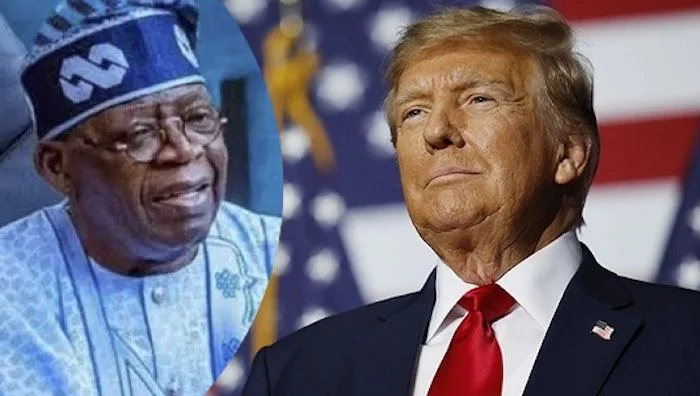
After weeks of harsh rhetoric that brought relations close to breaking point, President Donald Trump has shifted Washington’s approach to Nigeria, moving away from threats of military action and towards a sweeping multibillion-dollar health partnership.
Barely two months ago, Trump warned that the United States could step in with “guns a-blazing” to confront what he described as an existential threat to Christianity from Muslim militants in Nigeria. The remarks sparked outrage in Abuja and unease among diplomats, who feared that America’s most important security partner in West Africa was sliding towards an unprecedented confrontation with Washington.
Now, in a striking reversal, the US has signed a deal worth almost £1.6bn ($2.1bn) to support Nigeria’s fight against HIV, tuberculosis, malaria and polio, while expanding maternal and child healthcare. In return, Nigeria has pledged to raise its own health spending by nearly £2.2bn ($3bn) over the next five years, positioning itself as the first African country to benefit from Trump’s redesigned, protectionist aid policy.
Read related story from New Daily Prime:
Trump announces $10bn arms package for Taiwan
Trump imposes fresh US Visa restrictions on Nigeria
Central to the agreement is a political condition that reflects the president’s earlier concerns: Nigeria has committed to prioritising the protection of Christian communities and to placing “a strong emphasis on promoting Christian faith-based health care providers”. The US State Department said the deal “was negotiated in connection with reforms the Nigerian government has made to prioritise protecting Christian populations from violence”.
The language marks a notable shift in tone from the acrimony that followed Trump’s initial comments. Nigerian officials had firmly rejected his accusation that the government was turning a blind eye to Christian persecution, arguing that he had oversimplified a complex security landscape in which bandits, insurgents and extremists prey on both Christians and Muslims. Attacks, they said, were driven more by criminality and weak state control than by religion alone.
Following the announcement of the agreement, however, Abuja moved quickly to signal reconciliation. Nigeria’s information minister, Mohammed Idris, said the diplomatic rupture had been “largely resolved”.
“The recent diplomatic spat with the United States has been largely resolved through a firm, respectful engagement culminating in a strengthened partnership between America and Nigeria,” he said, underlining the government’s desire to reset relations with its most powerful ally.
The deal also reflects a broader transformation in US foreign assistance since Trump returned to office. One of his administration’s most controversial decisions was the dismantling of USAID and a sharp reduction in contributions to major global health institutions. The White House argues that traditional aid structures are inefficient, claiming that as much as three-fifths of US health funding is absorbed by technical assistance, programme management and overheads, leaving only two-fifths to reach frontline care.
Instead, Washington says it wants to forge direct bilateral agreements with African governments, cutting out international agencies as middlemen. Nigeria joins Kenya, Lesotho, Eswatini and Uganda in signing such deals, though its size and geopolitical importance make it the most significant test yet of Trump’s new aid doctrine.
For Nigeria’s Christian community, the agreement has coincided with other positive developments. Authorities announced this week that all children abducted last month from a Catholic school in Niger state have now been freed. Hundreds of pupils and staff were seized from St Mary’s co-educational boarding school in an attack that revived memories of the 2014 abduction of schoolgirls by Boko Haram in Chibok.
The precise number of those taken had remained unclear, with some escaping immediately and others believed to have fled home. A United Nations source told AFP that all those kidnapped appear to have now been released, though officials declined to disclose details of any negotiations with the gunmen.
Despite the improved atmosphere surrounding the health deal, strains persist in the wider relationship. Trump has ordered the recall of Richard Mills, the US ambassador to Nigeria, as part of a sweeping diplomatic shake-up affecting more than two dozen American missions worldwide. Africa has emerged as the most heavily impacted region, with Nigeria among 15 countries whose envoys are being withdrawn.
State Department officials told The Guardian that affected ambassadors were informed last week that their tenures would end in January. According to Politico, the move is aimed at aligning US diplomacy more closely with Trump’s “America First” priorities. Many of the recalled envoys were appointed under former president Joe Biden and are expected to return to Washington for reassignment rather than leave the foreign service.
Mills, who was confirmed only in May, departs at a moment of lingering tension over visa restrictions and security cooperation. His recall highlights the transactional nature of the evolving US–Nigeria relationship: one in which aid, religion and security are increasingly intertwined.
For now, Nigeria has secured critical health funding and a reprieve from Washington’s most aggressive rhetoric. Whether this reset marks the beginning of a durable partnership or merely a tactical pause will depend on how both governments manage the volatile mix of faith, violence and diplomacy that first brought them to the brink.
For more details, visit New Daily Prime at www.newdailyprime.news