
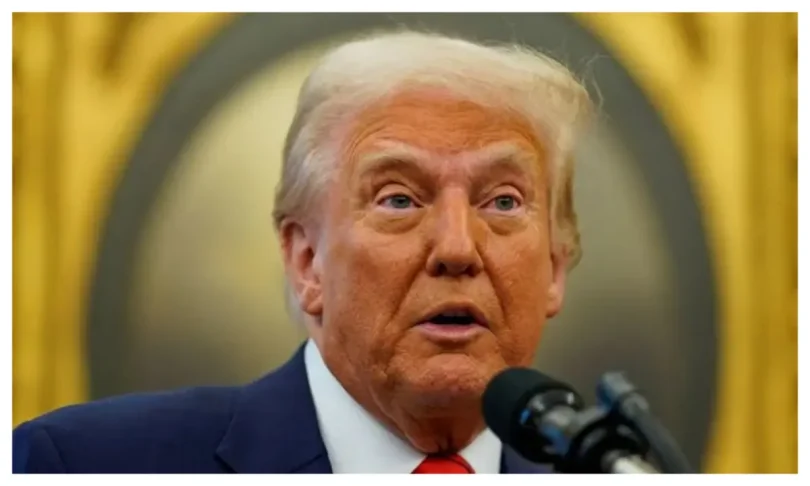
Donald Trump said Tuesday that the war involving the United States and Iran could end within two to three weeks, adding that responsibility for securing the strategic Strait of Hormuz would shift to other countries.
The White House also announced that Trump would address the nation Wednesday night to provide an update on the conflict, which has unsettled global energy markets and raised tensions across the Middle East.
Speaking in the Oval Office, Trump said U.S. forces would leave Iran “very soon,” possibly within weeks, while insisting Washington was “finishing the job.” He added that a negotiated settlement with Tehran remained possible before any withdrawal timeline expires.
Meanwhile, Benjamin Netanyahu said Israel’s joint military campaign with the United States had “changed the face of the Middle East,” while Masoud Pezeshkian said Tehran was willing to end the war if guarantees were provided that hostilities would not resume.
In Lebanon, authorities reported that seven people were killed in Israeli strikes on southern Beirut and nearby areas. Israel’s military said it targeted a senior commander of Hezbollah. Lebanese officials say Israel’s campaign against Hezbollah has left more than 1,200 people dead and displaced over one million residents.
Global markets reacted positively to signs of possible de-escalation. U.S. stocks rose sharply, while Brent crude futures fell 3.2 percent to $103.97 per barrel. Japan’s Nikkei 225 gained more than three percent at opening, and South Korea’s Kospi climbed nearly five percent.
Trump also said the United States would no longer take responsibility for securing the Strait of Hormuz, through which roughly one-fifth of global oil shipments pass, urging countries such as France and China to protect their own energy interests.
Israeli operations continued across Iran, with reported strikes in Isfahan and Tehran. Iranian media also reported damage to steel facilities and a religious centre in Zanjan, though some claims could not be independently verified.
Iran’s Foreign Minister, Abbas Araghchi, said he continues to receive messages from U.S. envoy Steve Witkoff but stressed that such contacts do not amount to formal negotiations.
The conflict, which began on February 28 after U.S.–Israeli strikes that killed Iran’s supreme leader Ali Khamenei, has triggered retaliatory attacks across the region and heightened fears of wider escalation, even as Washington signals the possibility of a near-term resolution.