
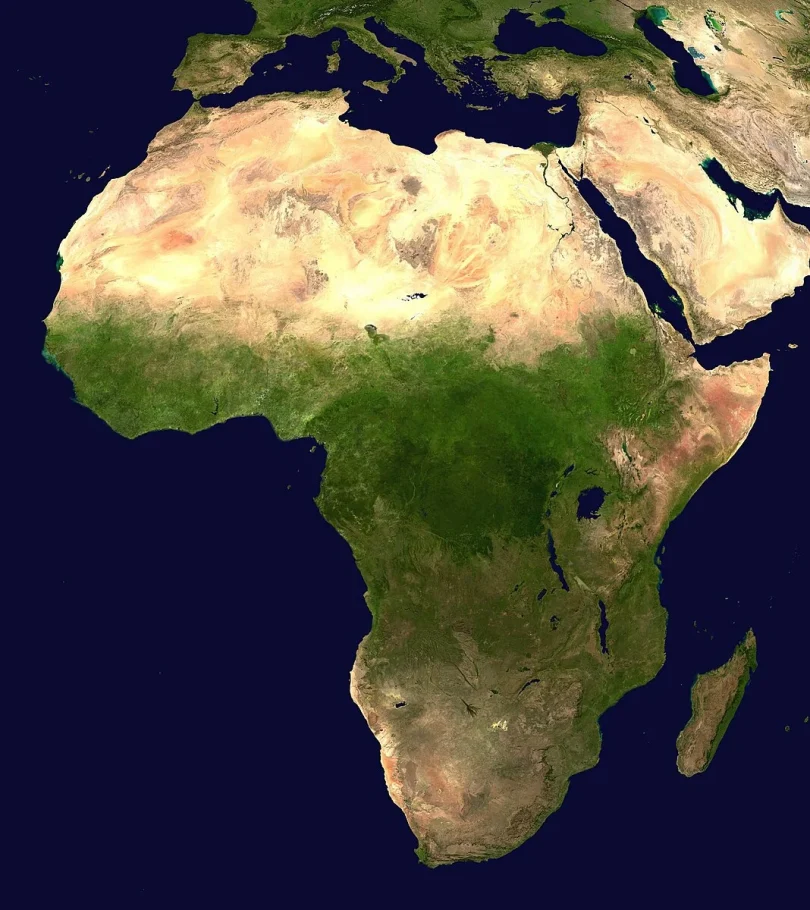
Africa is a continent of immense diversity, culturally, geographically, and economically. While it is often portrayed through the lens of developing economies, the continent is home to several nations that have built strong, stable, and high-performing economic systems.
These countries stand out not only for their natural resources but also for strategic policies, diversified industries, and steady long-term development.
Using GDP per capita (Purchasing Power Parity) as a key measure, one that reflects the average wealth available to each citizen, several African countries consistently rank among the continent’s richest.
Here is an in-depth look at the top performers and the factors driving their economic success.
1. Seychelles
Seychelles remains the wealthiest country in Africa by GDP per capita, with figures surpassing $40,000. The nation’s impressive economic performance comes largely from its luxury tourism industry, which attracts high-income visitors from Europe, Asia, and the Middle East.
Additionally, the country benefits from a small population, meaning national wealth is distributed across fewer people. The government has also implemented strict environmental and sustainability measures, which have helped preserve its natural beauty and maintain its appeal as a global destination.
2. Mauritius
Mauritius follows closely with a GDP per capita of over $33,000. What sets Mauritius apart is its diversified economy. Once heavily reliant on sugar exports, it has successfully expanded into tourism, textiles, real estate, financial services, and information technology.
The country remains politically stable and continues to attract foreign investors due to its business-friendly environment. Mauritius also positions itself as a gateway for global companies seeking access to African markets.
3. Gabon
Gabon ranks among Africa’s richest nations thanks to its abundant natural resources, particularly oil and manganese. With a GDP per capita of around $24,700, the country benefits from high export revenue, despite its relatively small population.
In recent years, Gabon has also invested in economic diversification, focusing on sustainable forestry and ecotourism. While inequality remains an issue, the country’s overall wealth places it firmly among Africa’s economic leaders.
4. Egypt
With one of the largest and most complex economies in Africa, Egypt records a GDP per capita of about $21,700. As the continent’s third-most populous country, Egypt demonstrates how a large nation can still maintain strong per-person wealth figures.
The nation’s economy thrives on tourism, manufacturing, Suez Canal revenues, natural gas exports, and a dynamic services sector. Egypt’s strategic geographic position, linking Africa, the Middle East, and Europe, continues to boost its global economic relevance.
5. Equatorial Guinea
Despite its small population, Equatorial Guinea remains one of Africa’s richest countries, with a GDP per capita above $20,000. The discovery of oil in the 1990s transformed its economic structure almost overnight.
However, wealth distribution remains uneven, and the country faces significant challenges in converting its oil revenue into broad development. Still, in terms of average income per person, it ranks high.
6. Botswana
Botswana is often celebrated as one of Africa’s greatest economic success stories. With a GDP per capita of roughly $19,000, its wealth comes primarily from diamond mining, alongside strong governance and prudent financial management.
Unlike many resource-rich nations, Botswana has avoided the “resource curse” by reinvesting revenues into infrastructure, education, and public services. Its political stability has also made it a magnet for foreign investment.
7. Algeria
Algeria boasts a GDP per capita of over $18,500, driven mainly by its vast oil and natural gas reserves. As one of Africa’s largest energy producers, the country enjoys significant export revenues.
Algeria is also making strides toward economic reform and diversification, particularly in manufacturing and renewable energy. Despite challenges related to inflation and unemployment, it remains one of the continent’s economic heavyweights.
8. Libya
Libya, with a GDP per capita of $17,900, owes much of its wealth to oil, the lifeblood of its economy. Although political instability has affected its economic growth in recent years, the country still ranks among Africa’s richest due to its enormous energy reserves and high export capacity.
9. South Africa
South Africa has one of the most diverse and industrialised economies on the continent. With a GDP per capita of around $16,000, it thrives on mining, finance, manufacturing, telecommunications, and tourism.
As the most industrialised African nation, it serves as a hub for regional and international business. However, income inequality remains one of the country’s biggest challenges.
10. Tunisia
Tunisia rounds out the list with a GDP per capita of approximately $15,000. The country’s economy relies heavily on tourism, agriculture, and manufacturing, particularly textiles and automotive components.
Tunisia’s well-educated workforce and its Mediterranean location give it an economic edge, despite its political fluctuations over the past decade.
Beyond the numbers
While GDP per capita provides valuable insight into average living standards, it does not fully reveal the level of development within a country.
Wealth distribution, employment opportunities, infrastructure, and access to education and healthcare all play a vital role in quality of life.
Still, the countries on this list highlight what is possible when natural resources, strategic governance, and economic diversification work together.
They serve as strong examples of Africa’s potential and its growing influence on the global economic stage.