
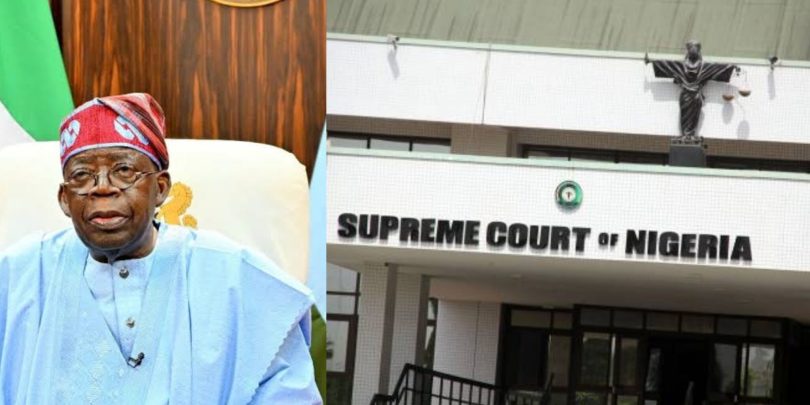
The Supreme Court has confirmed that the President has constitutional authority to declare a state of emergency in any state to prevent lawlessness or a breakdown of order.
In a six-to-one ruling, the apex court held that the President may suspend elected officials during such periods, provided the suspension is temporary.
Justice Mohammed Idris, delivering the majority judgment, explained that Section 305 of the 1999 Constitution empowers the President to take extraordinary measures to restore normalcy, leaving the specific actions at the President’s discretion.
The case arose after several PDP-governed states challenged the declaration of a state of emergency in Rivers State, where state officials were suspended for six months.
Court dismisses suit on jurisdiction and merits
The plaintiffs, including Attorneys-General from multiple states, sought to determine if the President could legally suspend governors, deputy governors, and state assemblies under emergency powers.
Justice Idris upheld preliminary objections from the Federal Government and National Assembly, ruling that the plaintiffs failed to establish a case that warranted the Supreme Court’s original jurisdiction.
Nevertheless, the court also considered the substantive arguments and dismissed the case on merit, affirming the President’s power under the Constitution.
Dissenting opinion warns against abuse
Justice Obande Ogbuinya dissented, agreeing that the President may declare an emergency but “Such power cannot be extended to suspending elected officials, including governors, deputy governors, and members of state legislatures.”
He explained that doing so undermines the democratic mandate and the balance of power intended by the Constitution.