
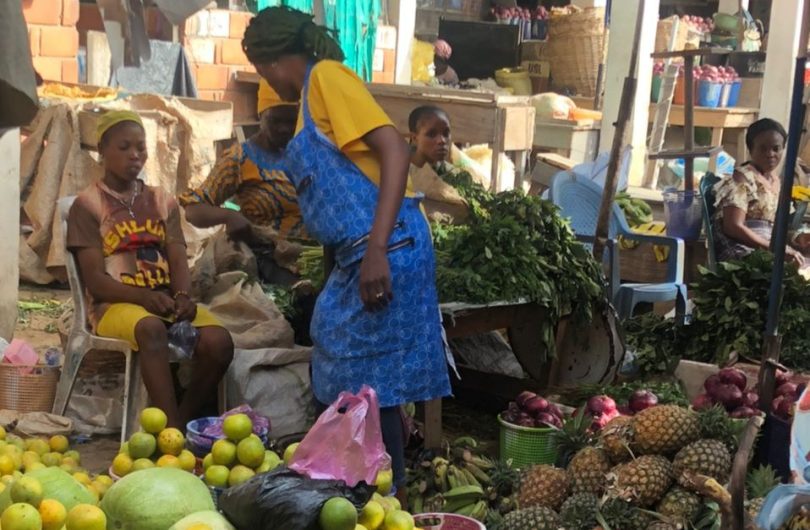
Stakeholders in government, development organisations and trade associations have called for improved accountability and safer border procedures to protect women traders from harassment and abuse.
The stakeholders made the call in a statement by Brice Adou, programme lead for the Making Trade Work for Women Project at Trade Mark Africa, on Friday in Abuja.
Mr Adou said representatives from Global Affairs Canada, TradeMark Africa, the Nigeria Customs Service, the Nigeria Immigration Service, and Women Traders’ Associations held a strong dialogue recently on how to protect women traders.
According to him, the dialogue focused on identifying practical measures to promote safer and more inclusive border crossings for women engaged in regional commerce.
“The engagement was convened under the Making Trade Work for Women in West Africa (MTWW) programme, implemented by TradeMark Africa and the Centre for International Studies and Cooperation (CECI).
“The programme is implemented in partnership with Canada, with Africa International Trade and Commerce Research (AITCR) serving as a local partner,” he said.
Mr Adou described the dialogue as an advocacy platform for addressing the challenges facing women traders.
He said findings from a study conducted between August and November 2026 identified harassment as a major concern among women involved in cross-border commerce.
“The harassment includes sexual harassment, verbal abuse and other forms of mistreatment experienced by women traders,” he said.
Also speaking, Sand Mba-Kalu, executive director of AITCR, called for effective enforcement of existing protections and stronger accountability to address abuses against women traders.
“There are regulations that have been put in place to protect them, and we want to make that active,” he said.
Mr Mba-Kalu said women accounted for approximately 90 per cent of cross-border traders along the Lagos-Abidjan and Tema-Wagadu corridors.
He said addressing insecurity and harassment was important to achieving regional integration objectives under the African Continental Free Trade Area (AfCFTA).
He also highlighted the importance of protecting women traders to the effective implementation of the ECOWAS Trade Liberalisation Scheme (ETLS).
“The dialogue featured findings from a digital survey on gender-based violence along the Abidjan-Lagos corridor and a panel discussion on improving border conditions for women traders,” he added.
Participants discussed improved border procedures, professional conduct among border officials and stronger mechanisms for reporting and addressing cases of abuse.
They also examined the implementation of the AfCFTA Protocol on Women and Youth in Trade as part of efforts to promote inclusive regional commerce.
The engagement is part of wider activities along the Abidjan-Lagos corridor, with subsequent dialogues scheduled for Cotonou, Benin, on December 1 and Abidjan, Côte d’Ivoire, on December 8, 2026.
(NAN)