
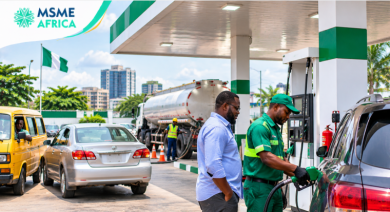
Nigerian motorists may be heading for further relief as Dangote Petroleum Refinery has announced another reduction in its petrol price, bringing its gantry rate down to ₦1,070 per litre from ₦1,130. This is coming on the heels of a drop in price just some days ago.
The latest ₦60 reduction, announced on Friday, November 20, 2026, represents a decline of approximately 5.3% and takes Dangote’s petrol price to its lowest level since July.
The development comes amid a series of downward price adjustments in Nigeria’s downstream petroleum market, with the Nigerian National Petroleum Company Limited (NNPC), MRS Oil, Empire Energy, Ranoil and other marketers also reviewing their pump prices in recent days.
For motorists, transport operators, households and businesses that depend heavily on petrol-powered vehicles and generators, the latest development raises an important question: how much cheaper will petrol become at filling stations?
Although the reduction at Dangote’s refinery is significant, the price motorists eventually pay will depend on how quickly marketers pass the lower wholesale cost to consumers.
Here is what Nigerians need to know about the latest petrol price reduction and the new prices reported at major filling stations.
Dangote Reduces Petrol Price by ₦60 to ₦1,070 Per Litre
Dangote Petroleum Refinery has reduced its petrol gantry price from ₦1,130 to ₦1,070 per litre.
According to market checks reported by BusinessDay, the new price was communicated through the refinery’s consortium marketers on Friday, November 20.
The ₦60 reduction represents a 5.3% decline from the previous rate.
It is also the latest in a series of downward adjustments by the refinery during November.
The refinery’s petrol price had climbed to ₦1,300 per litre on November 3 before subsequent adjustments brought it down.
The latest reduction takes the price below the ₦1,075 per litre recorded in July 2026, making it the lowest reported gantry price since then.
The development is significant because Dangote Refinery has become an important supplier in Nigeria’s domestic petrol market, and its pricing decisions influence the wholesale market and the pricing decisions of other petroleum marketers.
New Petrol Prices: How Much Are NNPC, MRS and Other Filling Stations Charging?
While Dangote’s latest reduction concerns the price at which marketers obtain petrol from the refinery, motorists are more interested in the actual pump price.
A market survey reported by Legit.ng on November 20, based on prices observed on Thursday, November 19, showed that some filling stations in Abuja had already adjusted their prices.
The reported prices were:
| Filling station | Reported pump price per litre |
|---|---|
| NNPC | ₦1,300 |
| MRS | ₦1,365 |
| Empire Energy | ₦1,385 |
| Ranoil | ₦1,385 |
NNPC reportedly reduced its price from ₦1,325 to ₦1,300 per litre at selected Abuja outlets.
MRS also reduced its price from ₦1,399 to ₦1,365, representing a ₦34 reduction.
Empire Energy and Ranoil reportedly reduced their prices from ₦1,420 to ₦1,385 per litre, representing a ₦35 reduction.
These figures provide an indication of the price adjustments taking place in the market, but they are not confirmed nationwide prices following Dangote’s latest November 20 reduction.
Motorists should also expect variations between Lagos, Abuja and other parts of the country because of transportation costs, distribution expenses and individual marketers’ pricing decisions.
Will Petrol Prices Fall Further After Dangote’s Latest Reduction?
The latest reduction could create additional pressure on filling stations and independent petroleum marketers to review their prices.
However, a reduction in the refinery’s gantry price does not automatically translate into an equivalent reduction at filling stations.
There are several factors that determine the final retail price.
1. Transportation and distribution costs
Petrol must be transported from refineries, depots and other loading points to filling stations.
The cost of moving the product, including tanker transportation and other logistics expenses, affects the final pump price.
2. Marketers’ operating margins
Filling station operators have operating expenses, including staff salaries, electricity, maintenance, security and other business costs.
These expenses influence how much they charge consumers.
3. Competition among filling stations
With several suppliers and marketers competing for customers, lower wholesale prices could encourage retailers to reduce their pump prices to remain competitive.
4. Cost of imported petrol
Imported petrol also competes with locally refined products.
When the landing cost of imported petrol falls, it can put additional pressure on local suppliers and marketers to adjust their prices.
5. Crude oil and international petroleum prices
Global crude oil prices influence the cost of producing and supplying petroleum products.
Changes in international oil markets can therefore affect domestic pricing, although the relationship is not always immediate or direct.
For consumers, the key issue is whether the latest wholesale reduction will be passed on quickly and consistently across filling stations.
What Does the Petrol Price Reduction Mean for Nigerian Households?
Petrol remains an important household expense in Nigeria.
Beyond the cost of filling private vehicles, many households depend on petrol-powered generators to supplement electricity supply.
A reduction in petrol prices could therefore provide some financial relief.
For example, consider a motorist purchasing 40 litres of petrol.
If the pump price falls by ₦50 per litre, the motorist saves:
40 litres × ₦50 = ₦2,000.
For someone who purchases 100 litres over a period of time, the same reduction translates into ₦5,000 in savings.
The actual savings will depend on the reduction passed on by individual filling stations.
How Will Lower Petrol Prices Affect Small Businesses in Nigeria?
For Nigerian small businesses, petrol prices have implications beyond transportation.
Many MSMEs depend on petrol to power generators, move goods, deliver products and operate equipment.
A sustained reduction could help businesses manage some of their operating costs.
Here are some sectors that could benefit.
1. Retail businesses
Small shops, supermarkets, neighbourhood stores and other retailers that use generators could spend less on fuel if pump prices fall.
2. Food vendors and restaurants
Restaurants, bakeries, caterers and food vendors frequently rely on generators to preserve food, operate equipment and maintain business activities.
Lower petrol prices could reduce some of their energy expenses.
3. Logistics and delivery businesses
Businesses involved in dispatch services, e-commerce delivery and product distribution depend heavily on petrol.
A reduction could help lower delivery and transportation costs.
4. Transport operators
Commercial drivers, taxi operators, ride-hailing drivers and other transport businesses could experience improved operating margins if fuel prices decline.
5. Manufacturing and production businesses
Small manufacturers that depend on petrol-powered generators and equipment could benefit from reduced energy costs.
6. Agricultural businesses
Farmers, agro-processors and distributors who use petrol-powered equipment and vehicles could also benefit from lower fuel expenses.
However, lower petrol prices do not automatically mean that all business operating costs will decline.
Businesses must also contend with electricity tariffs, rent, wages, raw material costs, exchange rates and other expenses.
Will Transport Fares Reduce as Petrol Prices Fall?
This is another important question for Nigerian commuters.
Transport fares are influenced by several factors, including fuel prices, vehicle maintenance, spare parts, road conditions and operating costs.
A sustained decline in petrol prices could create room for transport operators to review their fares.
However, transport fares do not always respond immediately or proportionately to fuel price reductions.
For example, a commercial driver who has experienced increases in vehicle maintenance costs, spare parts and other expenses may not reduce fares simply because petrol becomes cheaper.
The extent of any reduction will therefore depend on the overall cost structure of transport operators and competition within the sector.
Why Are Petrol Prices Falling Again in Nigeria?
The latest reduction is taking place against a background of changing international oil prices and increased competition in the domestic petroleum market.
Dangote Refinery’s pricing adjustments have been accompanied by changes in the cost of imported petrol and wholesale supply prices.
BusinessDay reported that Brent crude, Nigeria’s benchmark crude, was trading at $91.67 per barrel at the time of its November 20 report, while US benchmark West Texas Intermediate traded at $82.58.
Although crude oil prices remain an important factor, the relationship between crude prices and petrol pump prices also depends on exchange rates, refining costs, product supply and distribution expenses.
The return to an EBOB-linked pricing structure by Dangote Refinery has also featured in the recent sequence of price adjustments.
The combination of these market developments has contributed to changing wholesale prices and increased competition among suppliers.
Will Petrol Become ₦1,000 Per Litre?
With Dangote’s gantry price now at ₦1,070 per litre, some Nigerians may be wondering whether petrol could soon sell for ₦1,000 per litre at filling stations.
However, it is too early to make that prediction.
The refinery’s gantry price is not the same as the retail pump price.
Marketers still have to account for transportation, distribution, storage and operating costs before selling to consumers.
For petrol to sell at ₦1,000 per litre at filling stations, the wholesale supply price would generally need to fall further, or marketers would need to operate with very narrow margins or other cost advantages.
The current reduction is encouraging, but it does not establish that petrol will reach ₦1,000 per litre in the immediate future.
What Should Nigerians Expect Next?
The latest Dangote price reduction could trigger further adjustments across the downstream petroleum market.
Motorists should watch for updated pump prices from NNPC, MRS, Ardova, Ranoil, Empire Energy and other major marketers over the coming days.
However, consumers should avoid assuming that every filling station will immediately adopt the new wholesale price.
For small businesses, the development is worth monitoring because sustained reductions could provide some relief on fuel-dependent operating expenses.
The bigger question is whether the latest price movement will translate into lasting reductions in the cost of transportation, distribution and other goods and services.
Frequently Asked Questions About the Latest Petrol Price Reduction
1. What is Dangote Refinery’s new petrol price?
Dangote Petroleum Refinery reduced its petrol gantry price to ₦1,070 per litre on November 20, 2026, from ₦1,130.
2. How much did Dangote reduce petrol by?
The refinery reduced its petrol price by ₦60 per litre, representing approximately 5.3%.
3. What is NNPC’s new petrol price?
A November 19 market survey reported NNPC selling petrol at ₦1,300 per litre at selected outlets in Abuja. This is not a confirmed nationwide price following Dangote’s latest reduction.
4. How much is MRS selling petrol?
MRS was reported to be selling petrol at ₦1,365 per litre at surveyed Abuja outlets on November 19.
5. How much are Empire Energy and Ranoil selling petrol?
Both marketers were reported to be selling petrol at ₦1,385 per litre at surveyed Abuja outlets on November 19.
6. Will petrol prices fall further in Nigeria?
Further reductions are possible if wholesale supply costs continue to decline and marketers pass the savings on to consumers. However, additional reductions are not guaranteed.
7. Does Dangote’s ₦1,070 price mean Nigerians can buy petrol at that rate?
No. The ₦1,070 figure is the refinery’s gantry price, not the nationwide retail pump price. Filling stations must account for distribution and operating costs.
8. Will the petrol price reduction affect transport fares?
It could create room for lower transport fares if fuel costs decline sustainably. However, fares also depend on vehicle maintenance, spare parts and other operating expenses.
9. How will lower petrol prices benefit small businesses?
Businesses that use petrol for generators, transportation, logistics, deliveries and production could experience lower operating expenses if the reductions reach retail outlets.
Conclusion
Dangote Refinery’s latest decision to reduce its petrol gantry price to ₦1,070 per litre represents another significant development in Nigeria’s downstream petroleum market.
The ₦60 reduction, alongside recent price adjustments by NNPC, MRS, Empire Energy and other marketers, offers the possibility of further relief for motorists and businesses.
However, the real benefit will depend on how quickly and extensively filling stations pass the reductions on to consumers.
For Nigerian households and MSMEs, sustained reductions could help ease some of the pressure associated with transportation, power generation and distribution costs.
MSME Africa will continue monitoring petrol price changes and reporting updated rates from major filling stations across Nigeria.