
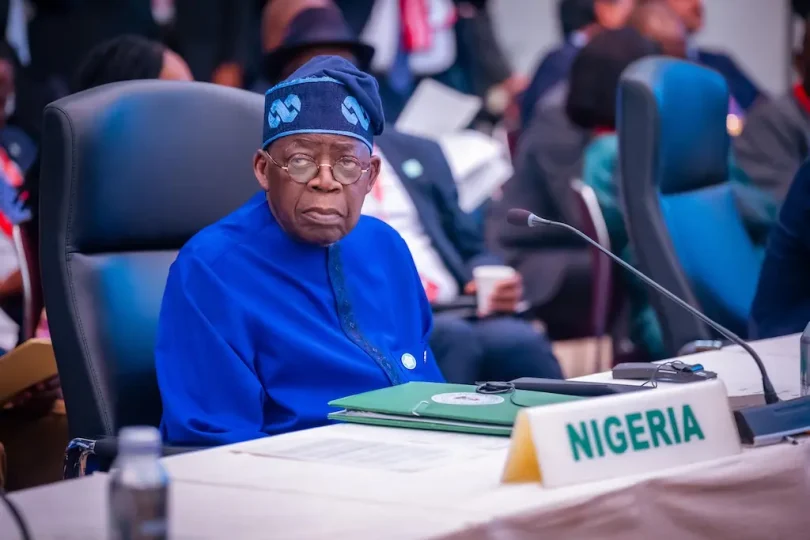
President Bola Ahmed Tinubu has been told to overhaul all divestment policies in the country’s oil sector carried out under the reign of the former chief executive officers of the Nigerian Midstream and Downstream Petroleum Regulatory Authority and the Nigerian Upstream Petroleum Regulatory Commission, Farouk Ahmed and Gbenga Komolafe.
An environmentalist and activist, Celestine AkpoBari, made this call in a statement on Thursday.
Recall that Ahmed and Komolafe tendered their resignations on Thursday after Aliko Dangote, President of Dangote Refinery, accused the former of corruption.
Tinubu thereafter appointment Oritsemeyiwa Amanorisewo Eyesan and Saidu Mohammed as CEOs of NUPRC and NMDPRA, respectively.
As a result, AkpoBari, who doubled as the team lead of the MIIDEEKOR Environmental Development Initiative, urged the incoming leadership of the two agencies to urgently overhaul Nigeria’s oil sector divestment policies, warning that current practices are deepening environmental injustice in oil-producing communities.
He described the emergence of new leadership in the sector as an opportunity to restore transparency, accountability, and public trust in the governance of Nigeria’s petroleum industry.
AkpoBari also lauded Dangote for what he described as his courageous exposure of alleged corruption and regulatory capture within petroleum regulatory agencies.
He said host communities in the Niger Delta have been left with polluted land and waterways, damaged livelihoods, and worsening health conditions as a result of poorly regulated divestment processes.
“As an organization dedicated to protecting the environment and livelihoods of Niger Delta communities devastated by decades of oil pollution, we call on the incoming chief executives to immediately review and reverse all divestment policies and orders implemented under the previous leadership.
“These policies have facilitated the exit of international oil companies from onshore assets without adequate remediation of legacy pollution, leaving host communities burdened with contaminated lands, waterways, and health crises,” he stated.