
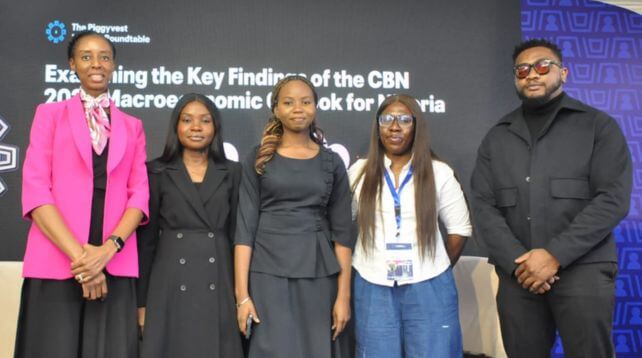
Only six percent of Nigerians say they feel financially secure and content, highlighting widespread financial strain across households, according to the Piggyvest Savings Report 2025.
The report, presented at the third annual Piggyvest Finance Roundtable in Lagos, draws on responses from over 26,000 Nigerians across the country and points to weak income levels, declining savings, and limited financial buffers.
Anchoring the discussion, Boluwatife Akindele, team lead, content strategy at Piggyvest, said the figure raises deeper concerns about the real impact of financial innovation.
Read also: Over 50% of Nigerians struggle to cover basic expenses amid rising costs – PiggyVest
“We work in finance, fintech, policy, and media, and a number like this forces a harder question: how do we measure progress if the people whose lives should be improved say it isn’t?” he said.
The report shows that nearly three in five Nigerians either have no monthly income or earn below N100,000. At the same time, the share of Nigerians saving monthly has dropped to 40 percent in 2025, from 64 percent in 2023, while six in ten respondents have no emergency savings.
Younger Nigerians were identified as the most financially vulnerable group, with 40 percent of Gen Z respondents reporting no monthly income.
Stakeholders at the roundtable linked the trend to inflation and changing consumption patterns, with households prioritising essentials over discretionary spending.
Joshua Chibueze, co-founder and chief marketing officer of Piggytech, said financial behaviour has shifted toward survival.
“People are no longer saving towards things like travel. As inflation rose, people started adjusting to survive. They’re focused on getting through the day, building emergency funds, and raising their families,” he said.
Read also: Power outage leaves Band A customers paying more for less
Despite the pressure on incomes, participants pointed to emerging opportunities in the digital and creative economy.
Douglas Kendyson, co-founder of Selar, said more Nigerians are monetising their skills and reaching global markets.
“Now more than ever, people are aware that their knowledge and ideas can be monetised, not just selling to Nigerians but to people in other countries,” he said.
Also speaking, Odunayo Eweniyi highlighted Nigeria’s cultural exports as a growing economic lever.
“One of our biggest exports right now is our culture — music, art, and creativity. There is a market out there,” she said.
On the macroeconomic outlook, Oreoluwa Oyinlola of PV Capital said recent stability in key indicators could provide some relief.
“The rate of price increases has slowed significantly… the stability we’re seeing, particularly around the exchange rate, is helping businesses and consumers breathe a little,” she said.
Read also: More than half of Nigerians can’t save as food top spending – Piggyvest
The roundtable also examined policy developments, including the Nigeria Tax Acts, 2025, and the role of public-private partnerships in supporting small businesses.
Chidozie Ezemenyiba of Lagos CARES said collaboration with the private sector remains critical to expanding access to finance, training, and market opportunities for micro and small businesses.