
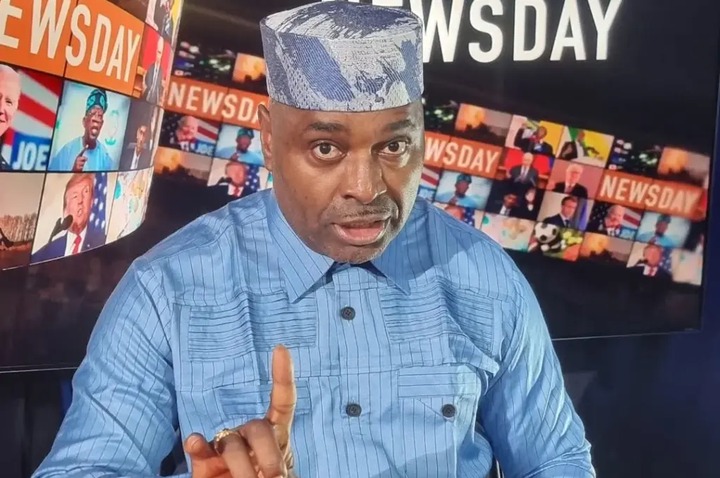
According to a report by Arise News on Wednesday, March 25, 2026, a legal practitioner and politician, Kenneth Okonkwo, has expressed concern about the state of Nigeria’s judicial system, stating that the major challenge affecting it is not a lack of competence among judges but what he described as complicity in certain cases.
He made this known during an appearance on Arise News, where he discussed issues surrounding judicial decisions, particularly in relation to electoral matters.
Okonkwo explained that while many judges possess the knowledge and training required for their roles, the credibility of the judiciary is affected when decisions appear to be influenced by factors beyond the law.
He indicated that such concerns are often more noticeable in high-profile cases, especially those involving elections.
According to him, public confidence in the judicial system depends not only on the technical ability of judges but also on the perception that rulings are delivered independently and in line with established legal principles.
His remarks were made in response to comments by a former President of the Court of Appeal regarding the outcome of the 2023 presidential election.
Okonkwo questioned certain interpretations associated with that election, suggesting that they may not fully align with the provisions of the Electoral Act 2022.
He focused on specific aspects of the law relating to party membership and candidate eligibility, which have been subjects of legal debate in recent times.
In his explanation, Okonkwo addressed the requirement for political parties to submit their membership registers within a stipulated timeframe.
He clarified that this requirement, as outlined in the Electoral Act, applies to parties rather than restricting individuals from joining at any time.
Based on his interpretation, individuals who become members of a political party are eligible to contest elections once they meet the necessary conditions.
He argued that this understanding is consistent with the provisions of the law and should guide judicial decisions in related cases.
The lawyer further emphasised that differences in legal interpretation can have significant implications for electoral outcomes.
He pointed out that court rulings in election-related disputes often shape political developments and influence public perception of fairness in the electoral process.
As a result, the role of the judiciary remains central in resolving disputes and ensuring that legal frameworks are applied consistently.
He said, “Once you’re a member of a political party, you are qualified to contest election,” he said, stressing that the legal position does not support the claim that certain candidates were ineligible based on timing.
... “Once You’re A Member Of A Political Party, You Are Qualified To Contest Election–Okonkwo ... Sportify Post.