
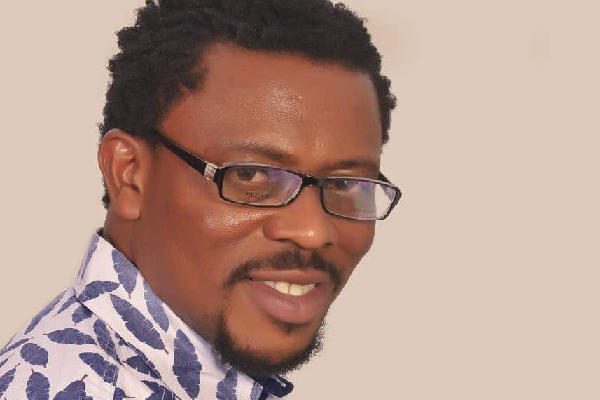
Jennifer Azi came to my office and, after three hours of difficult questions, uncomfortable silences and occasional laughter, asked with Nigerian sarcasm: “Do we all have mental health issues? Are we really okay? What level of something are we each battling?” Trauma Informed Care and Basic Community Mental Care conversations
In October 2025, Jennifer had organised a mental health conference and was now planning 2.0. So, I drilled her. What do we make of nudity competing for public attention? What about corruption so brazen that it resembles collective derangement? Why do people avoid professionals until distress becomes disaster? Why is therapy unaffordable? And why is the field crowded with motivational merchants, weekend “therapists” and people who confuse confidence with competence?
The question followed us around the room: No be all of us dey craze?
The honest answer is no. But neither are we all well.
Every human being has mental health. The World Health Organization defines it as a state of well-being that helps us cope with life’s stresses, use our abilities, learn, work and contribute to the community. It exists on a continuum. A person may be distressed without having a disorder; another may function visibly while living with severe depression. Diagnosis requires evidence, context and trained assessment—not gossip, religious suspicion or social-media commentary.
That distinction matters. Nudity is not a psychiatric diagnosis. It may reflect art, commerce, protest, exploitation, poor judgement, attention-seeking or personal choice. Corruption is not automatically a mental illness either. Many corrupt acts are calculated decisions within systems that reward theft and protect impunity. Calling every behaviour we dislike “madness” is lazy and cruel to people living with mental-health conditions.
Yet a corrupt, violent and profoundly unequal society can injure the mind. When public money meant for hospitals disappears, when a graduate searches years for work, when a mother must choose between food and medication, when communities repeatedly bury victims of violence, and when justice depends on who placed a call, the damage is not only economic. It produces fear, humiliation, anger, grief, distrust and learned helplessness. Nigeria may not be collectively insane; it is certainly collectively overstretched.
The statistics offer warning, not a complete portrait. Popular prevalence figures are repeated without a recent national survey behind them. That weakness is a national emergency: what we do not measure, we cannot manage. Still, the evidence is sobering. In a UNICEF–Gallup survey reported in 2021, one in six Nigerians aged 15–24 reported frequent symptoms of depression or anxiety. The 2018 national survey estimated 14.3 million people aged 15–64 had used drugs in the preceding year. Drug use is not mental illness, but dependence, trauma and psychological distress often meet.
Access is even more troubling. A 2025 study in PLOS Mental Health cited fewer than 300 psychiatrists, mostly in urban areas, for over 200 million people. Psychiatrists are not the entire workforce—there are also psychologists, psychiatric nurses, social workers, counsellors and trained primary-care practitioners—but scarcity, poor distribution and weak referrals leave millions far from competent care.
Then comes the cost. World Bank data show that households directly paid 71.9 per cent of Nigeria’s total health expenditure in 2023. That figure covers all health care, not mental health alone, but it explains the dilemma. Therapy competes with rent, transport, school fees and dinner. Telling an exhausted Nigerian to “seek help” while building no affordable route to that help can sound like institutional mockery.
Stigma completes the trap. We call a struggling person weak, possessed, ungrateful or mad. Men are trained to swallow fear until it reappears as rage, alcohol dependence, recklessness or collapse. Women carry violence, care work and economic pressure, then are told to pray harder. Young people are crushed between unemployment and the edited success of their peers. Displaced persons, survivors of conflict, persons with disabilities, first responders and even caregivers are expected to survive without psychological first aid. By the time many families reach a hospital, they have tried silence, denial, punishment, chains, herbs and every prayer house except one that knows when to refer.
Faith is not the enemy of mental health. A responsible pastor, imam or traditional leader can provide meaning, belonging and hope. But prayer is not a licence to stop prescribed medication, and spiritual care cannot replace clinical assessment. Neither can motivational speaking. A microphone is not a licence; eloquence is not evidence. Coaches and peer supporters can help, but must state their limits, protect confidentiality and refer beyond their training.
Nigeria has made an important legal start. The National Mental Health Act, signed into law in January 2023, replaced the colonial-era Lunacy Act and provides for dignity, informed participation, rights protection, community-based care, a Mental Health Services Department and a Mental Health Fund. In its 2025 statement to the World Health Assembly, the Federal Ministry of Health and Social Welfare said implementation was under way, including primary-care integration and expansion of WHO’s mhGAP approach. But a progressive law cannot counsel a child, supervise a practitioner or stock medicine. Rights on paper require budgets, regulations, personnel and public accountability.
What, then, must be done?
First, take care closer to the people. Every state should equip primary health centres to identify common conditions, provide psychological first aid and refer to complex cases. Properly trained and supervised frontline workers can deliver defined interventions, supported by specialists through referral networks and telehealth.
Second, make treatment affordable. The NHIA and state insurance schemes should cover assessment, evidence-based psychotherapy, medicines, crisis care and rehabilitation. Governments can contract accredited providers, support sliding-scale services and fund helplines linked to real emergency response—not numbers that ring into emptiness.
Third, clean up the profession. Nigeria needs transparent, searchable credentials; enforceable scopes of practice; continuing education; safeguarding rules; complaint mechanisms; and sanctions for abuse or fraudulent cures. The public should know the difference between a psychiatrist, psychologist, counsellor, social worker, coach and peer supporter—and what each is qualified to do.
Fourth, prevent distress rather than merely medicalise suffering. Mental-health policy must enter schools, workplaces, prisons, IDP camps and policing. But counselling cannot compensate for hunger, abuse, insecurity or injustice. Jobs, social protection, safe communities, responsive institutions and honest government are also mental-health interventions.
Finally, count honestly and listen humbly. Nigeria needs regular, representative surveys and state-level dashboards on need, spending, workforce, waiting times, treatment outcomes and rights violations. People with lived experience must help design and evaluate services. Nothing about them should be decided without them.
Jennifer’s Conference 2.0 must therefore resist becoming another festival of speeches. It should leave the room with measurable commitments: practitioners mapped, referral pathways published, subsidised sessions secured, schools and PHCs adopted, government promises tracked, and survivors seated at the decision table.
So, no be all of us dey craze? No. We are not a nation of mad people. We are a nation carrying too much pain with too little support, laughing so that we do not cry, spiritualising what frightens us and normalising what should alarm us.
The task is not to diagnose Nigeria from a distance. It is to build a Nigeria in which asking for help is not shameful, receiving help is not a luxury, and no wounded mind has to become a public tragedy before we finally admit that it mattered—May Nigeria win!
—
Prince Charles Dickson PhD
Team Lead
The Tattaaunawa Roundtable Initiative (TRICentre)
https://tattaaunawa.org/
Development & Media Practitioner|
Researcher|Policy Analyst|Public Intellect|Teacher
234 803 331 1301, 234 805 715 2301
Alternate Mail: [email protected]
Skype ID: princecharlesdickson