
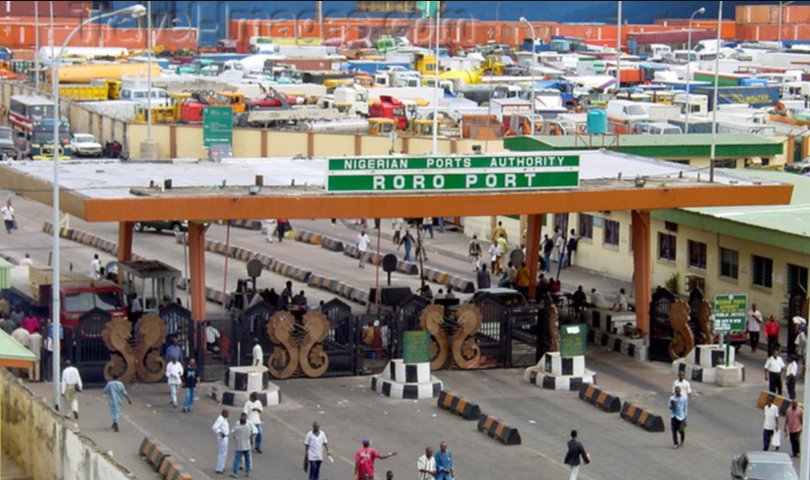
The Nigerian Ports Authority (NPA) is targeting N1.489 trillion in internally generated revenue (IGR) for the 2026 fiscal year, reflecting its drive to strengthen earnings from port operations.
The disclosure was made by the Managing Director of the NPA, Dr. Abubakar Dantsoho, during the agency’s 2026 budget defence before the Senate Committee on Marine Transport, according to the News Agency of Nigeria (NAN).
The target signals a modest increase from prior projections and comes amid ongoing efforts to modernise port infrastructure and improve efficiency across Nigeria’s maritime sector.
Dantsoho stated that the N1.489 trillion target represents an increase of N21 billion over the N1.468 trillion projection for 2025, which the authority exceeded significantly.
He added that the authority’s 2026 budget is designed to support its revenue ambitions, with N945 billion earmarked for capital projects, N447.5 billion for operating expenses, and N90.6 billion for remittances into the Consolidated Revenue Fund, reflecting a focus on growth and operational efficiency.
Dantsoho further explained that port modernisation projects would play a central role in driving future revenue growth.
The planned upgrades of Apapa and Tin Can Island ports are expected to boost capacity and efficiency, as both facilities are ageing and require modern infrastructure.
He noted that these reforms are critical to sustaining growth and ensuring Nigeria’s ports remain competitive in handling rising cargo volumes.
The Federal Government has recently intensified efforts to overhaul Nigeria’s port infrastructure and improve trade efficiency.
Earlier in March, the federal government unveiled a £746 million financing agreement with the United Kingdom to modernise key seaports.
These initiatives are aimed at addressing longstanding bottlenecks and positioning Nigeria as a more efficient maritime hub.
Lekki Deep Sea Port recorded the highest cargo throughput in 2025, accounting for 40.6% of total cargo handled.
The performance data underscores the growing importance of modern port infrastructure and the need for continued investment to sustain growth in Nigeria’s maritime sector.