
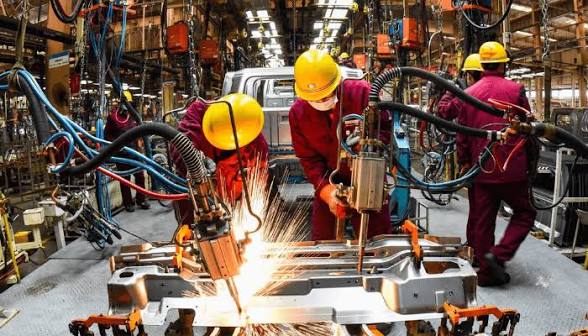
Nigeria’s manufacturing sector continues to face significant operational challenges despite ongoing government reforms and a gradual slowdown in inflation, as businesses grapple with rising energy costs, expensive financing, foreign exchange pressures and weak consumer demand.
Although improvements in some macroeconomic indicators suggest that the country is gradually moving towards economic stability, these developments have yet to translate into substantial relief for manufacturers battling rising operating expenses and declining profit margins.
Many businesses are struggling to sustain production, retain employees, maintain competitive prices and secure the financial resources needed for expansion.
Unreliable electricity supply remains one of the biggest challenges confronting Nigerian manufacturers, forcing businesses to depend heavily on diesel and gas-powered generators to sustain their daily operations.
According to the Manufacturers Association of Nigeria (MAN), manufacturers spent approximately ₦1.35 trillion on alternative energy in 2025, highlighting the considerable financial burden associated with inadequate electricity infrastructure.
High interest rates have also restricted access to affordable financing, making it increasingly difficult for businesses to purchase machinery, acquire raw materials, adopt new technologies and expand production capacity.
These challenges are particularly significant for micro, small and medium-sized enterprises (MSMEs), which often have limited financial resources to absorb rising operating expenses.
Manufacturers that depend on imported machinery, spare parts, chemicals and industrial raw materials continue to face difficulties arising from foreign exchange instability.
Currency fluctuations have made production planning increasingly difficult, while rising transportation and logistics expenses have further increased operating costs.
Meanwhile, declining consumer purchasing power has weakened demand for manufactured products, leaving businesses struggling to balance increasing production expenses with the need to keep their products affordable.
Multiple taxation, regulatory levies, inadequate infrastructure, insecurity and disruptions in agricultural supply chains have also contributed to the difficult operating environment.
Despite persistent operational difficulties, the Manufacturers Association of Nigeria’s Manufacturers CEO Confidence Index for the second quarter of 2026 recorded an improvement in business confidence.
The index rose from 48.7 points in the preceding quarter to 52.1 points, reflecting growing optimism among manufacturers.
However, concerns surrounding electricity supply, access to financing, foreign exchange and infrastructure continue to undermine industrial productivity.
Industry stakeholders have consequently called for targeted interventions that directly address the challenges confronting businesses, arguing that broader economic stabilisation alone is insufficient to drive industrial recovery.
David Etim, Project Implementation Team Lead at Calabar and Gulf of Guinea Municipal and Trade Centre Limited by Guarantee, identified Nigeria’s dependence on imported processed raw materials as a major obstacle to industrial development.
According to Etim, Nigeria possesses considerable agricultural resources capable of supporting domestic manufacturing if adequate investments are made in processing and value addition.
Using cassava as an example, he explained that the crop has approximately 480 potential derivatives, including ethanol, starch and sweeteners, which could serve industries such as pharmaceuticals, food processing and energy.
However, Nigeria continues to export agricultural commodities in minimally processed forms, allowing foreign industries to capture much of their commercial value.
Local manufacturers subsequently import processed derivatives at significantly higher prices, exposing their businesses to foreign exchange fluctuations, international shipping expenses and additional logistics costs.
Etim maintained that developing domestic processing capabilities would reduce import dependence, conserve foreign exchange and improve the competitiveness of Nigerian manufacturers.
He also emphasised the importance of policy consistency, efficient public institutions and improved accountability across the three tiers of government.
According to him, strengthening public service delivery and reducing institutional inefficiencies would help ensure that economic reforms produce measurable benefits for businesses and citizens.
Imokhai Ehimigbai, a member of the Manufacturers Association of Nigeria Exports Group (MANEG), also expressed concerns over the prevailing business environment.
He identified unstable electricity supply, limited availability of compressed natural gas (CNG), expensive credit and foreign exchange costs as major challenges affecting manufacturing operations.
According to Ehimigbai, borrowing rates ranging between 27 and 30 per cent, alongside short financing periods, have placed considerable pressure on manufacturers seeking to sustain or expand their operations.
He further noted that the removal of petrol subsidies in 2023 significantly increased transportation expenses, affecting the movement of raw materials and finished products across the country.
Government initiatives such as Executive Orders 003 and 005 and the Nigeria First Policy are designed to promote local content, encourage domestic production and prioritise Nigerian-made products in public procurement.
However, concerns remain over the implementation and enforcement of these policies.
Industry stakeholders maintain that reliable electricity supply and affordable, long-term financing are essential to improving industrial productivity. Greater foreign exchange stability would also enable manufacturers to plan their operations more effectively and reduce uncertainties associated with importing essential production inputs.
Increased investment in domestic raw material processing, improved transportation infrastructure and the elimination of overlapping taxes and regulatory charges could further strengthen local manufacturing and create opportunities for MSMEs.
Stakeholders have also emphasised the need for consistent economic policies and effective public institutions capable of supporting long-term private sector investment.
Nigeria’s manufacturing sector remains critical to economic diversification, employment generation, export development and MSME growth.
While ongoing economic reforms may provide a foundation for long-term stability, their effectiveness will ultimately depend on whether businesses experience measurable improvements in their operating environment.
Without targeted interventions to address these structural challenges, Nigerian manufacturers may continue to struggle with rising production costs, declining profitability and limited expansion opportunities despite improvements in broader economic indicators.