
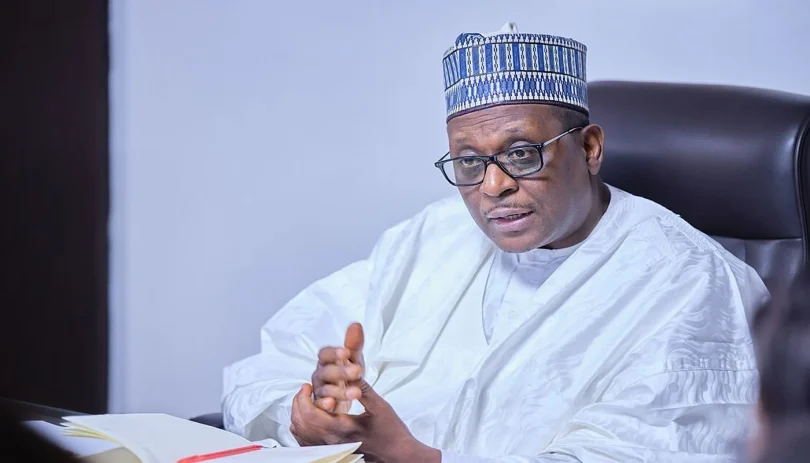
The Coordinating Minister of Health and Social Welfare, Dr. Ali Pate, says Nigeria has the capacity to respond effectively to medical emergencies, while stressing that sustained investment is still required to strengthen the country’s healthcare system.
Speaking on Sunday Politics, Pate said significant efforts have been made to improve emergency care and medical infrastructure nationwide, noting that Nigeria has specialised institutions such as national eye and ear hospitals and trained professionals capable of handling complex cases.
He attributed the preference of some Nigerians for seeking care abroad partly to limited public awareness of existing local capacities, adding that many Nigerian health professionals trained overseas have returned to serve in the country.
Pate said healthcare funding has increased under President Bola Tinubu’s administration, rising from about four per cent of public expenditure in 2023 to over five per cent, reflecting what he described as a “reasonable leap” in investment.
According to him, the government’s health reforms focus on expanding health insurance coverage, improving working conditions for health workers, making quality care more accessible to low-income earners, and strengthening international partnerships.
He said notable gains have been recorded in maternal health and malaria control, with 20 states improving their health performance in 2025 compared to 2024. He added that access to direct financing for basic healthcare facilities increased by 5,000, bringing total supported facilities to about 13,000.
Pate disclosed that visits to basic healthcare centres rose to more than 80 million by the first quarter of 2025, up from about 20 million in 2023, while 59 million children were immunised during the most recent campaign. He said maternal mortality dropped by 10 per cent in 172 high-burden local government areas between 2023 and 2025.
On health insurance, the minister said coverage has expanded to over 21 million Nigerians, with seven million insured in the informal sector and about 2.4 million in the formal sector. He said the government aims to reach 50 million people over time, subject to improved funding.
Pate also said three of six planned cancer centres have been completed, while three are under construction, and that more than 73,000 health workers have been retrained. He acknowledged challenges such as malaria vaccine resistance, climate change, and financing gaps, but expressed optimism about new interventions and local production of mosquito nets.
Addressing industrial actions by doctors, Pate said most disputes stem from legacy issues, including over N50 billion in outstanding arrears from 2023, which he said are being resolved through ongoing negotiations and collective bargaining mechanisms.