
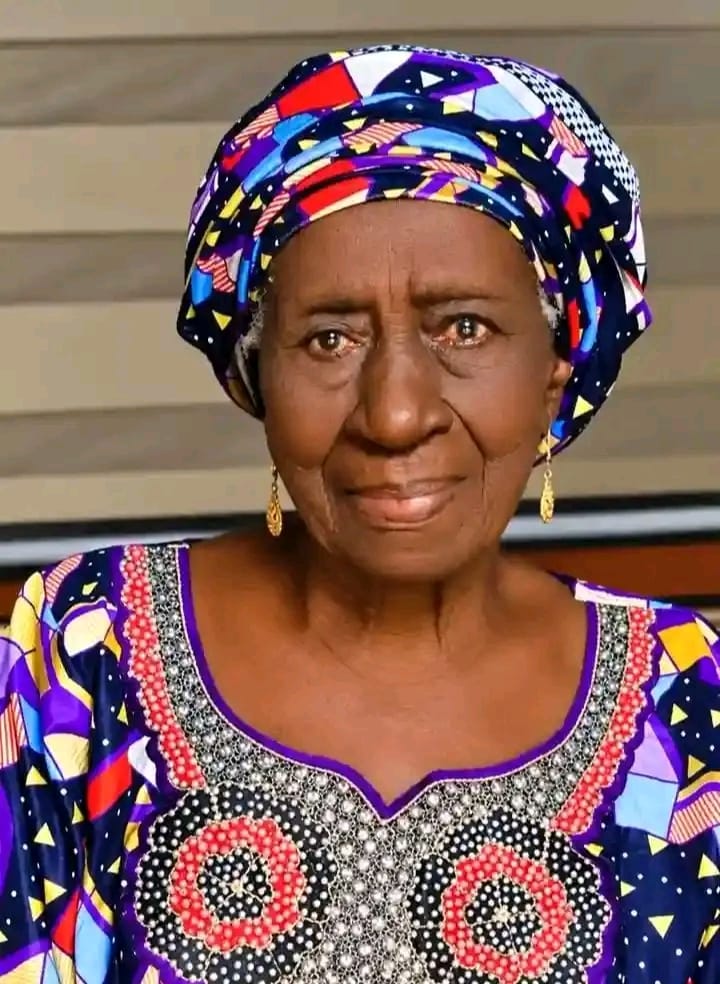
Mama Salamatu Elias Bogoro, who lived more than a century, became a living archive of life’s true essence: complete devotion to serving God and humanity. Mama lived a great life in line with what Dr Martin Luther King Jnr. said: “Everybody can be great…because anybody can serve. You don’t have to have a college degree to serve. You don’t have to make your subject and verb agree to serve. You only need a heart full of grace. A soul generated by love.”
For showing love to her family and beyond, Mama Bogoro lived an inspiring life espoused by Mother Teresa: “At the end of life we will not be judged by how many diplomas we have received, how much money we have made, or how many great things we have done. We will be judged by “I was hungry, and you gave me something to eat; I was naked, and you clothed me. I was homeless, and you took me in.”
When Mama Bogoro passed away on 16th October 2026, Nigeria did not merely mourn the departure of a centenarian. It paused to honour an extraordinary matriarch whose life spanned the dramatic arc of modern Nigerian history. Born around 1921, she witnessed the amalgamation’s early decades, the struggle for independence, the birth of the First Republic, the turbulent years of civil conflict and military rule, and the consolidation of contemporary democracy. Yet, the matriarch’s enduring significance does not rest on holding political office or commanding public podiums. Instead, her legacy is deeply etched in the quiet, transformative power of Christian faith, maternal sacrifice, community leadership, and an unwavering devotion to education that reshaped her immediate family, the Zaar ethnic nation, the religious communities of Plateau State, and Nigeria’s higher education landscape.
For her, Christianity was never a passive Sunday observance. It was a daily discipline of humility, generosity, prayer, and service to neighbours. Raised in an agrarian society where resilience, communal solidarity, and hard work were essential for survival, she imbibed traditional virtues of respect and hospitality, seamlessly blending them with her deep spiritual convictions. Those who knew her across generations consistently recalled a woman of serene strength—someone whose personal hardships and the rigours of a changing century never hardened her spirit but refined her capacity for empathy and patience.
Perhaps the most visible monument to Mama Salamatu’s vision lies within the walls of the household she built alongside her late husband, Elias Bogoro. Together, they had eight children, five of whom survived her. In an era when many families in rural Northern Nigeria prioritised immediate agricultural labour over formal schooling, Mama and her husband, Pa Elias Bogoro, made a radical, forward-looking commitment: every child would be educated to the highest possible level.
This conviction required immense personal sacrifice. Raising a large family in mid-twentieth-century Nigeria demanded frugality, tireless domestic work, and moral vigilance. Mama was the bedrock of discipline and encouragement at home because she understood early that education was the surest pathway to liberation, dignity, and societal impact. Through her relentless support, prayers, and insistence on academic excellence, all her surviving children did not merely attend school; they became university graduates who earned higher degrees and distinguished themselves in public service and academia.
The most prominent fruit of her maternal investment is her son, Professor Suleiman Elias Bogoro, a renowned animal scientist and two-time Executive Secretary of the Tertiary Education Trust Fund (TETFund), widely celebrated across Nigeria as an “Apostle of Research and Development”. During his tenure at TETFund, Prof. Bogoro spearheaded landmark reforms that revitalised infrastructure, research grants, and academic staff training across Nigerian universities, polytechnics, and colleges of education. Whenever Prof. Bogoro spoke of his work ethic, integrity, and passion for uplifting Nigerian youth through knowledge, he consistently pointed back to the foundational values instilled by his mother. Thus, Mama Salamatu’s quiet insistence on educating her children in Gwarangah ultimately rippled outward to benefit millions of Nigerian students and researchers nationwide.
Beyond her immediate household, Mama Salamatu Elisha Bogoro was a towering pillar of the Church of Christ in Nations (COCIN). Over several decades, she served meritoriously within the COCIN Women Fellowship across Bauchi and Plateau States, particularly at COCIN Regional Church Council (RCC) Yelwa Nshar in Shendam Local Government Area of Plateau State, where she resided in her later years. Her dedication to the spiritual and material welfare of women and families earned her the revered title of Uwar Zummunta, a Hausa honorific meaning “Mother of Fellowship” or “Mother of Unity”.
In the cultural and ecclesiastical context of Northern Nigeria, Uwar Zummunta is more than a ceremonial title; it recognises moral authority, peacemaking, and selfless mentorship. As Uwar Zummunta, Mama served as a counsellor to young brides, a comforter to the bereaved, a mediator in community disputes, and an organiser of charitable outreach to the vulnerable. In states like Plateau and Bauchi States, which have, at various points in Nigeria’s history, navigated complex ethno-religious tensions, Mama Salamatu stood as a quiet force for peaceful coexistence. She preached and practised neighbourliness across divides, demonstrating that true faith expresses itself through compassion for all humanity. Her home in Shendam and her country home in Gwarangah were perpetual sanctuaries of welcome, where visitors regardless of status or background were met with warmth, wise counsel, and prayer.
Reaching 105 placed the matriarch of the Bagoro family in a rare category of human longevity. Having outlived virtually all her childhood contemporaries, she became a bridge between eras—a living repository of oral history, cultural memory, and spiritual wisdom for grandchildren, great-grandchildren, and younger generations of the Zaar nation. Even as old age brought physical frailty and a prolonged illness toward the end of her journey, her mental clarity, spiritual fervour, and concern for her family and nation never dimmed. Her community regarded her longevity not merely as a biological milestone but as a divine reward for a life lived without malice, anchored in contentment, service, and devotion to God.
When news of Mama Salamatu Elisha Bogoro’s passing broke in October 2026, tributes from the highest echelons of Nigerian leadership underscored the profound respect she commanded. President Bola Ahmed Tinubu hailed her as a devoted Christian whose commitment to fellowship and community service exemplified “the enduring values of compassion, humility, and love for humanity”. The President specifically noted how her role as Uwar Zummunta fostered unity and mutual support within the Christian community in Shendam and beyond.
Similarly, Bauchi State Governor Senator Bala Abdulkadir Mohammed led a high-powered delegation to Gwarangah in Bogoro Local Government Area to condole with Prof. Suleiman Bogoro and the family, praising Mama Salamatu’s enduring legacy and the immense contributions of the children she raised to education and national development. Governors from neighbouring states, including Benue State Governor Rev. Fr. Hyacinth Alia, alongside the Northern Christian Religious Leaders Assembly (NOCRELA), local government leaders in Bogoro, and traditional institutions across Zaar Chiefdom, joined in celebrating a matriarch who “lived a fulfilled life” and left behind an indelible moral blueprint.
The life and times of Mama Salamatu Bogoro offer a compelling counter-narrative to modern notions of influence and success. She never held a political portfolio, wrote a memoir, or sought media attention. Yet she demonstrated that the quiet fidelity of virtuous women sustains thriving societies. Through her steadfast walk with God as Uwar Zummunta, her fierce commitment to educating her children against the odds of her time, and her lifelong embodiment of humility and love, she lived through more than a century of Nigerian history, leaving her corner of the world richer and wiser. Her memory remains a beacon for future generations: a reminder that a single life dedicated to faith and family can echo across a nation for generations.
Nigerians will troop to Gwarangah in Bogoro LGA to bid farewell to Mama on Thursday, 26th November 2026, for the Evening of Tributes, and the final interment on Friday, 27th November 2026, in honour of a devoted life dedicated to the common good.
Simon Reef, a member of the Nigeria Guild of Editors (NGE), can be reached through: [email protected]