
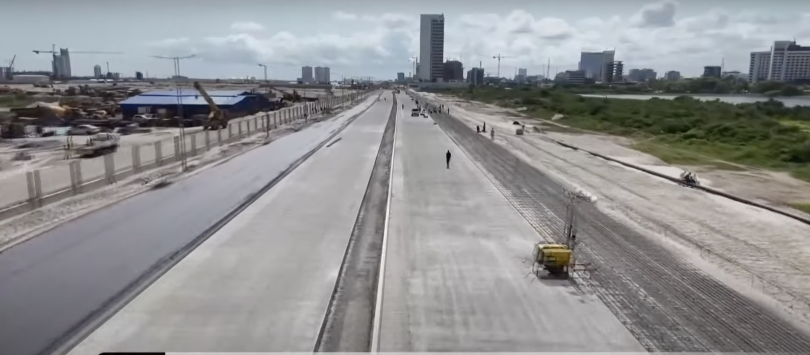
A Lagos-based rights activist and Senior Advocate of Nigeria (SAN), Ebun-Olu Adegboruwa, has expressed concerns over the alleged alteration of the Ondo State section of the Lagos-Calabar Coastal Highway, warning that diverting the road inland would defeat its core purpose.
The controversy centres on the Federal Ministry of Works’ reported resolve to realign the highway to pass through parts of Edo State, thereby bypassing Ondo State’s approximately 100-kilometre coastline.
Meanwhile, the pan-Yoruba sociocultural organisation Afenifere, the Ilaje Committee of Lawyers, Itsekiri and Iwere groups, traditional rulers and community leaders described the inland diversion as a major geographical and economic injustice to Ondo State.
In an intervention titled ‘The Geo-Political and Localised Devastation: The Ondo State Realignment’, Adegboruwa posited that the issue transcends the Ilaje people.
The SAN insisted that this is not merely an Ilaje issue but an Ondo State, Niger Delta and national development issue bordering on equitable infrastructure planning.
In his words: “What makes a Coastal Highway ‘coastal’? “Is it merely a highway that eventually connects coastal cities? Or is it intended to create a strategic transportation corridor that opens up, integrates and stimulates development along Nigeria’s coastal belt?”
Adegboruwa posited that a properly conceived coastal highway should create economic corridors, jobs, logistics hubs, tourism growth, maritime connectivity, fisheries expansion and industrial development, not just asphalt.
It would be recalled that the Ministry of Works had reportedly defended the realignment on the grounds of severe soil and geotechnical challenges along the Ondo coastline.
The SAN suggested that engineering considerations such as soil bearing capacity, environmental impact, flooding, cost and long-term sustainability must influence highway alignment, even as he insisted that difficult terrain should invite engineering solutions, not outright avoidance.
According to the SAN, “Modern engineering has demonstrated that infrastructure can be constructed across difficult terrains, wetlands, riverine environments and mangrove ecosystems.”
Adegboruwa requested full transparency, with a demand that the Federal Government (FG) should publish geotechnical findings, alternative routes investigated, comparative construction costs, environmental implications and projected economic benefits of each alignment.
From the legal perspective, the human rights crusader opined that bypassing the coastline violates the equity principles of the Niger Delta Development Commission (NDDC) Act and defeats the statutory objectives of the Coastal Highway project.
He noted that the original route was designed to open up neglected oil-producing littoral communities in Ilaje Local Government Area and link strategic economic frontiers like Araromi Beach, a major ecotourism hub, directly to Lagos and the South-South.
Adegboruwa warned that forcing an inland path would strip the Ilaje people of their right to infrastructural inclusion and turn a generation-defining coastal project into a standard mainland expansion.
The SAN, who insisted that the development of Edo, Delta and Ondo States should be complementary, not competitive, stressed that the national question should be, “How can Nigeria obtain the greatest developmental benefit from the entire coastal corridor?”
The senior legal luminary commended the reported visit of the Minister of Works to Igbokoda for direct engagement but urged deeper technical and stakeholder dialogue involving engineers, environmental experts, economists and the coastal communities themselves.