
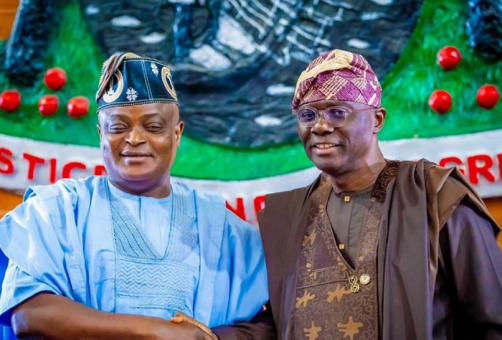
The Lagos State House of Assembly has passed the ₦4.4 trillion Appropriation Bill for the 2026 fiscal year after adopting the report of the House Committee on Economic Planning and Budget.
Presenting the report during plenary, the committee chairman, Sa’ah Olumoh, said the budget—tagged “Budget of Shared Prosperity”—is the third budget of the current administration and the final full budget cycle of Governor Babajide Sanwo-Olu’s second term.
He said the spending plan aligns with the state’s development agenda, built around four pillars: human capital development, modern infrastructure, a resilient megacity economy, and efficient governance.
According to the committee, the budget framework was guided by key macroeconomic assumptions, including an exchange rate of ₦1,512 to the dollar, inflation at 14.7 per cent, oil production of 2.06 million barrels per day, and a benchmark oil price of $64 per barrel.
Lawmakers were also briefed on the 2025 budget performance, which recorded a cumulative implementation rate of 79 per cent as of November 2025. Capital expenditure stood at 75 per cent, while recurrent expenditure reached 87 per cent.
For 2026, recurrent expenditure is projected at ₦2.052 trillion, while capital spending is pegged at ₦2.185 trillion, reflecting the government’s continued emphasis on infrastructure development. The budget includes allocations for personnel costs, overheads, debt servicing and repayments.
The spending plan carries a projected deficit of about ₦243 billion, to be funded through approved deficit-financing options. Lawmakers noted that an additional ₦171 billion was added during the budget review process.
During deliberations, members described the budget as realistic and growth-oriented, stressing the need for revenue reforms, prudent debt management and effective implementation to sustain the state’s fiscal strength.
The House subsequently passed the bill into law after its third reading. Governor Sanwo-Olu had presented an initial ₦4.237 trillion proposal to the Assembly on November 25, 2025, projecting total revenue of ₦3.99 trillion, largely from internally generated revenue and federal allocations.