
By Salmat Abdulwaheed
Every year on March 8, the world pauses to celebrate International Women’s Day, a global observance formally recognized by the United Nations as a platform to honour the achievements of women and advocate for gender equality. Beyond celebration, the day serves as a reminder that progress for women is progress for humanity. The 2026 theme, “Give to Gain,” carries a powerful message that resonates deeply with me.
“Give to Gain” speaks to the enduring spirit of the Nigerian woman. It is a theme rooted in sacrifice, resilience, vision, and strategic contribution. For generations, Nigerian women have given their strength to families, their intelligence to institutions, and their courage to communities. They have given leadership in times of crisis and stability in times of uncertainty. In return, the nation has gained development, continuity, and hope. Yet, the theme also challenges society to reflect: when women give so much, what structures are in place to ensure they gain equal opportunity, representation, and recognition?
Across Nigeria’s social and political landscape, women continue to navigate structural barriers that limit their participation in governance and economic leadership. Despite this, they remain active voices in advocacy, civil society, and policy engagement.
Women-led movements and organizations consistently give time, research, strategy, and media engagement to influence reforms that promote inclusive governance. Their sustained efforts reflect a belief that meaningful gains require intentional investment. When women give their voices to policy debates, Nigeria gains stronger democratic processes. When they give their expertise to public service, the country gains transparency and accountability.
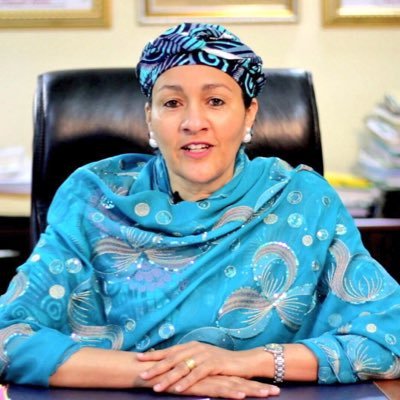
The story of Nigerian women is also one of global excellence. Figures such as Ngozi Okonjo-Iweala have demonstrated that competence and integrity can elevate not just a nation, but an entire continent on the world stage. Leaders like Amina J. Mohammed continue to shape international conversations around sustainable development, while enterpreneurs such as Folorunsho Alakija has built legacy as one of the most influential female business leaders in Africa. These women illustrate the essence of “Give to Gain”: when women give excellence, nations gain credibility and influence.
Economically, Nigerian women form the backbone of the informal sector, agriculture, small-scale enterprises, and emerging digital spaces. They give labour, creativity, and entrepreneurial drive despite limited access to credit, land ownership, and capital. When women are empowered through education, financial inclusion, and digital access, the ripple effect extends beyond individual households. Communities gain economic resilience. Families gain stability. The nation gains sustainable growth. Investing in women is not charity; it is a strategic national development imperative.
The theme also signifies the importance of mentorship and solidarity. When experienced women give guidance and opportunity to younger generations, they build a continuum of leadership. Sisterhood becomes a tool for structural change. In a society where representation remains limited, intentional mentorship ensures that gains are not isolated achievements but collective progress. The advancement of one woman becomes the pathway for many others.
However, “Give to Gain” must not be interpreted as a one-sided expectation placed solely on women. Institutions, policymakers, and communities must also give. They must give equitable policies, safe working environments, political inclusion, and respect. When systems give fairness, society gains productivity and social harmony. Gender equality cannot thrive where structural barriers remain intact. It requires deliberate action and institutional commitment.
As Nigeria marks International Women’s Day 2026, the theme calls for reflection and renewed determination. It invites women to continue giving courage, innovation, and leadership, but it also challenges society to reciprocate with justice, opportunity, and inclusion. The gains Nigeria seeks economic prosperity, democratic stability, and social cohesion are inseparable from the empowerment of its women.
The Nigerian woman has always given. She has given strength in silence, leadership in adversity, and vision in moments of uncertainty. International Women’s Day 2026 is a reminder that when women give their full potential, the nation gains transformation. And when society gives women equal ground to stand on, Nigeria gains a future that is stronger, fairer, and more inclusive for all.
Salmat Abdulwaheed wrote from Abuja, Nigeria.