
By Helen Okechukwu, Fatimah Idera
- Emotional weight of bad news
- Coping strategies amid fear
For millions of Nigerians, regular news of banditry, abduction, kidnapping, family displacement, accidents, and the activities of the Indigenous People of Biafra (IPOB) has become routine. The constant flow of insecurity-related updates across social and traditional media has reshaped daily life, contributing to a growing mental health crisis despite government reassurances.
Even those far from the affected areas experience psychological distress as the media continue to report rising death tolls, the number of abductees, and the large ransoms being paid , with some victims still not released alive even after payments.
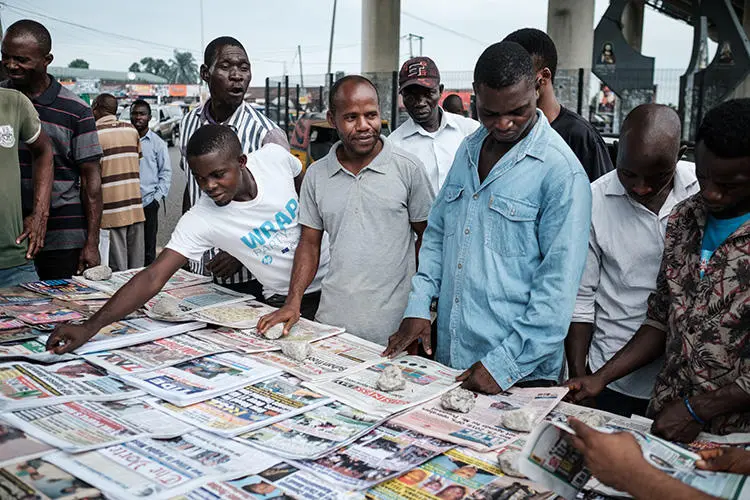
With continuous news updates, citizens and non-citizens scroll through social media and news outlets, many gripped by fear and uncertainty about becoming victims themselves.
To protect their mental health, some people now avoid the news and social media altogether. Constant exposure to negative reports makes them feel depressed, stressed, or anxious, so they withdraw from such content to cope.
Imagine listening to a report from the National Human Rights Commission stating that 2,266 deaths were recorded from bandit or insurgent attacks in the first half of 2025 alone, a figure already higher than the total for 2024.
A Nigerian citizen and entrepreneur who resides in Obio/Akpor of Rivers State, Mrs Chisom Gift who spoke with New Daily Prime Newspaper says she feels traumatised daily, revealing how negative news especially kidnapping cases has clouded the media space than good news.
“Every day on the radio, it appears that we have more bad news than good news and it’s more of kidnapping to tell how unsafe our roads, our communities, and our homes are too. It’s traumatizing, emotional-wise, psychological-wise, it has not really been fair to our emotions at all,” Mrs Gift said while sharing that due to insecurity issues and the fear of being victims, a lot of people will not travel this festive period.
Speaking on the recent kidnapping of four students at the Rivers State University (RSU) extension campus in the Rumuche/Rumuohia community of Emohua Local Government Area (LGA), Rivers State, an area dotted with police checkpoints, the entrepreneur, who is also a mother, described the incident as “unbelievable” and said it highlights how unsafe the university’s student environment has become.
“The news really destabilised us. It feels like no place is safe anymore. Recently, there have been abductions and killings in churches, and now in schools,” she said, while recounting how a man and his wife were kidnapped from their home in Edo State and a huge ransom demanded by their abductors. “The question is, where is safe?” she asked.
The South-South region is not left out in the issue of insecurity faced in Nigeria despite the high records of insecurity in the Northern region of the country.
The River State Police Command had announced the release of the four students and one resident, Mrs Gift said the circumstances surrounding their release remain unclear. Questions linger over whether a ransom was paid, and no arrests have been made.
“River State Police Command came up to say they’ve been released. If we don’t even know it’s this sketchy, how were they released? Was a ransom paid? Who were the kidnappers? No one has been arrested, “ she questioned.
For citizens, the incident highlights the precariousness of daily life, where even stepping out to buy groceries can pose a risk.
“It’s as if we are living in hell, and nobody knows what’s next. Everybody’s scared,” said the entrepreneur residing in Rivers State, recalling how a young child went missing in her neighbourhood on 27 November.
Stories like these have become a daily reality, leaving many feeling powerless and vulnerable.
Emotional weight of bad news
Constant exposure to violent news is taking a heavy toll on mental health. Kemi Adeyelu, an ex-corp member and resident of Oyo State, described how media coverage of bandit attacks directly affects her thoughts and daily behaviour.
“It creates a big fear in me,” she said. “The fear that if you travel, you’re not certain that you will get home safe. Seeing people’s tears online breaks you down emotionally and makes you sad.” Adeyelu has adjusted her lifestyle in response, limiting late-night travel and staying more cautious overall.
Similarly, Chidinma Clement, a recent communicator graduate from University of Port Harcourt recounted how reports of banditry and other insecurity incidents, including threats from groups like IPOB, have influenced her emotional well-being.
“Sometimes when I go online and see news about bandits near a community close to us, it brings fear,” the Edo state based resident said.
She described experiencing dreams of bandits after seeing disturbing news online and recounted real-life encounters that triggered panic.
“There was a time I saw a herdman with cows while passing by, and I had to ask the bike man to drive fast because I was so scared,” she said.
Oyewole Anthony, resident of Oyo State, approached the issue from a slightly different angle, highlighting discernment and faith as key coping mechanisms.
“When listening to news about insecurity, you must know the source of information. False news can affect your mental stability,” he said.
Anthony stressed that while insecurity is deeply concerning, he manages his emotional well-being by remaining security-conscious and placing trust in God.
“Even though I am aware of the risks, my anchor is God. There are security measures you can take, but ultimately, God is the chief security,” he said.
In an interview with Abudullahi Aminu, a corper serving in Ogun state, said his frequent hearing about bandit attacks has made him more anxious and cautious in his daily life thereby terrifying.
“I become tense whenever I hear sudden noises or when I have to travel and it makes me feel uneasy and stressed.”
Aminu revealed that the media encourages the bandits, adding that the way those incidents are reported makes the situation feel worse and more frightening to the public.
He added that the constant insecurity threat has made him more security-conscious as he avoids late-night movements. “I’ve noticed that I get worried more easily, and my mood can shift quickly when I hear bad news,” he said.
Speaking to the New Daily Prime, an Abuja corps member, Taofeek Imam, said the frequent news surrounding banditry and insecurity has continued to cause unrest which had influenced his mental health negatively.
Taofeek said the thought alone does not only deepen sadness but as well create social unrest and confusion on what the future of Nigeria holds which gives him sad thoughts everyday.
Although the media are helping the matters, only fake news and unfactual reports from some media continue to worsen the situation and this “I think about it everyday, leads to a negative influence to my mental health and Mental unrest generally,” he revealed.
“For someone who resides in the north like me the news gives me bad thoughts and also makes me unsecure even at my convenient place. I get bothered and disturbed amidst work, making me concentrate less on work and even training”.
In a similar vein, another corp member from Taraba state, Abdulrasheed Akere, explained that the frequent reports on insecurity have been making him feel unsafe as he constantly expects terrorism attacks despite being in a NYSC camp which is secured by military men and other security agencies.
Akere said there were days that the soldiers do beagle the fire alarm and order all corps members to gather up in the multipurpose hall, the camp commandant later said it was a training to prepare them in case of any attack.
“I often have horrible dreams where I’m being chased by unknown gunmen and this affect me Psychologically, this might be due to the constant insecurity in the country,” the Taraba corper said.
For him the media reports don’t encourage banditry but a medium that keeps the public informed and aware of their cruelty.
Coping strategies amid fear
Nigerians adopt various strategies to manage fear. Kemi relies on selective media consumption, avoiding sad news and seeking comedic content to lighten her mood. Chidinma turns to prayer during daily commutes and other stressful situations. Anthony emphasizes discernment in receiving information and spiritual faith to maintain calm and mental stability.
Aminu narrated that his coping mechanisms were limiting how often he read or watched the news by focusing more on positive activities like talking to friends, listening to music, and praying.
Taofeek maintained that the government should collaborate with the military to deploy a strategy that enables them to track the locations of the bandits and as well donations and support can also come from members of the public.
Akere advised that the strategy is prayer for peace, but suggested there should be control of images used in insecurity reports and exaggeration should not be allowed on radio and televisions because they add tension and anxiety to people’s minds.
The role of media, govt, and community
While citizens acknowledge the media’s role in raising awareness, concerns remain over sensationalism and misinformation. Chidinma noted, “Some people posting on social media are just civilians trying to scare people or make content for money.” Anthony echoed the need for vigilance in evaluating information sources.
Nigerians who spoke with our correspondents also called for decisive action from government and community leaders. Ms Adeyelu urged intensified security measures, social support programs, and solution-oriented media reporting.
While Ms Clement recommended better deployment of security personnel and active monitoring by community leaders. Anthony highlighted the responsibility of citizens to participate in maintaining safety and ethical conduct, noting that corruption among officials and loopholes in security agencies can undermine efforts.
The corper from Ogun advised that the government should provide adequate security, while the media should practice responsible reporting and focus more on solutions and safety tips. Community leaders can offer support by counselling and providing emotional support.
Call for solution-based approaches
As for Mrs Gift, she emphasized solution-focused journalism as a way to inform the public while promoting mental well-being. She added that news reporting should combine awareness with practical guidance, such as safety tips or relocation advice for vulnerable populations. Community-led programs, financial empowerment initiatives, and emotional support networks can further help citizens navigate daily life in an environment overshadowed by insecurity.
“They should consider talking about the government, how they can make their citizens happy, and what they should think of. In fact, I don’t even want that empowerment because it is more like it’s just within the same caucus. The government should just go to the bank and ensure that the bank credits Nigerians as a Christmas bonus. They should come up with programs. Let’s hear more of these interesting charitable programs, you know, for pregnant, nursing mothers, the elderly and all that.” she suggested as she concluded that citizens want to hear about good news daily.