
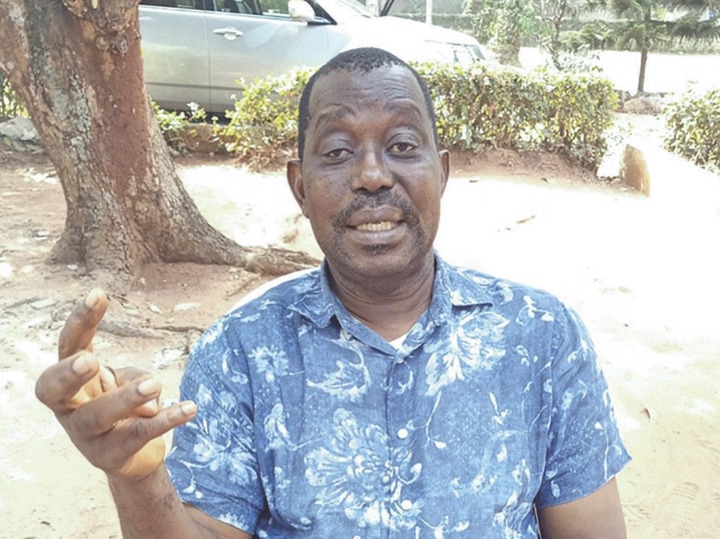
According to a report by The Sun News, on Sunday, March 8, 2026, Chief Damian Okeke, who formerly served as the national vice-president of Ohanaeze Ndigbo Worldwide, has called upon the Nigerian populace to vigorously advocate for the restructuring of the federation.
Chief Okeke, a prominent figure often addressed by the title ‘Ogene Nanka’, maintained that such a systemic overhaul is the primary remedy for the diverse and complex challenges currently bedevilling the nation.
He expressed a firm belief that Nigeria possesses the potential to transform into a superior environment for residency, professional pursuits, and capital investment, provided that the citizens collectively commit to that objective.
These perspectives were shared during an extensive dialogue with the Sunday Sun, where he addressed several pressing national and regional concerns.
When questioned about the growing sentiment that leaders from various ethnic backgrounds should convene to renegotiate the terms of national unity or even deliberate on whether the constituent parts should remain as one entity Okeke offered a blunt assessment of the national psyche.
He suggested that a lack of genuine sincerity among Nigerians has hindered progress, noting that the original terms of the 1914 amalgamation appear to no longer be functional in the modern era.
He Said, “It is only one tribe that is paying the price of keeping Nigeria together irrespective of what they think about Nnamdi Kanu.”
He pointed out that while the Igbo people are instrumental in driving development across every corner of the country, they paradoxically remain the most marginalised group.
However, he also acknowledged that marginalisation is a widespread grievance, noting that certain minorities in the Hausa regions, the Niger Delta, and Benue State face even deeper levels of neglect without adequate representation.
He emphasised that restructuring has become the unified demand of groups like Ohanaeze and Afenifere, viewing it as a long-overdue necessity to foster healthy competition and rapid advancement between regions.
The conversation eventually shifted toward the governance of Anambra State under Professor Chukwuma Soludo.
As the governor prepares for his second term, Okeke spoke highly of his performance, admitting that Soludo’s achievements surpassed the expectations of many citizens.
He observed that the governor’s impact went beyond his written manifesto.
While Soludo had frequently mentioned revitalising the Okpoko area, he had not explicitly promised the extensive road dualisation projects or the construction of the new Government House that have since come to fruition.
Okeke characterised Soludo as a leader who had spent decades meticulously researching and planning for the state’s development, carrying a mental master plan that he executes with precision.
This strategic approach has resulted in widespread development that reaches various communities and local governments, often without the need for traditional rulers or individuals to lobby for specific interventions.
The level of public satisfaction is such that, according to Okeke, communities have begun financially contributing to support his administration rather than seeking handouts.
Regarding the debate over the proposed second airport in Omogho, Orumba North, which some critics argue is redundant given the existing facility in Umueri, Okeke urged patience and trust in Soludo’s economic expertise.
While the governor has expressed a strong desire for an interconnected railway system linking major Southeast hubs like Onitsha, Nnewi, and Enugu, Okeke suggested the new airport project might serve a specialised purpose, such as a cargo servicing hub, which could prove more lucrative than standard commercial ports.
He highlighted that Soludo’s ability to fund these massive projects without officially incurring debt is a testament to his fiscal management.