
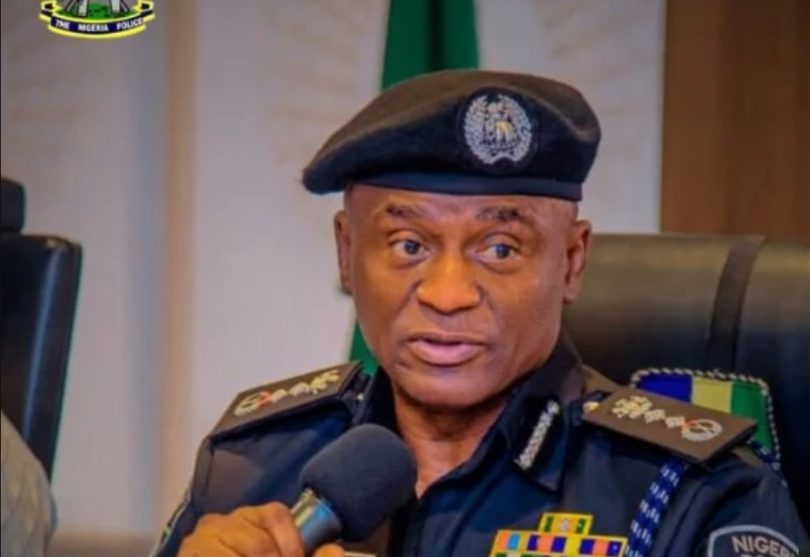
According to a report by Punch News, on Wednesday, March 4, 2026, the newly inaugurated Inspector-General of Police, Olatunji Disu, has revealed that the Nigeria Police Force is maintaining a vigilant watch over various Islamic organisations that maintain ideological ties to Middle Eastern nations.
This heightened surveillance follows the intensification of the military conflict involving the United States, Israel, and Iran.
Speaking shortly after his official swearing-in ceremony at the Council Chambers in the State House, Abuja, the Inspector General cautioned that the ongoing instability in the Middle East has the potential to spark significant domestic reactions within Nigeria.
He explained that modern law enforcement necessitates a strategy rooted in intelligence gathering, noting that the police are keeping their ears to the ground to monitor the situation effectively.
The Inspector-General acknowledged that Nigeria is home to a diverse array of Islamic sects, some of which maintain spiritual or political allegiances to various powers in the Eastern world.
He said, “So we know if anything happens in the eastern part of the world, the repercussion will come to us.”
In light of this reality, Disu confirmed that the police are implementing comprehensive preventive measures, including increased street patrols and direct engagement with religious leaders.
The primary objective is to ensure that these groups remain peaceful and refrain from taking the law into their own hands as international events unfold.
This proactive stance comes at a time when global tensions have reached a boiling point due to weekend airstrikes by the United States and Israel against Iranian assets, which were met with retaliatory missile strikes from Tehran against American and Israeli military bases.
This surge in violence has prompted international concern regarding the possibility of a broader regional war, leading major world powers like China, the United Kingdom, and the United States to issue urgent travel warnings and evacuation notices for their citizens in the Middle East.
Nigeria’s internal security landscape is particularly sensitive to these developments because the country hosts influential Islamic movements with deep-seated ties to either Iran or Saudi Arabia.
For instance, the Islamic Movement in Nigeria, under the leadership of Sheikh Ibrahim El-Zakzaky, is characterised by its Shia orientation and its vocal support for the Iranian government.
Conversely, several Sunni organisations in Nigeria maintain strong religious and cultural links with Saudi Arabia and other Gulf nations.
Historically, major geopolitical shifts in the Middle East have served as a catalyst for large-scale demonstrations in Nigeria, especially within the northern states where the Muslim population is most concentrated.
Past iterations of the Israeli-Palestinian conflict have seen thousands of citizens marching through major urban centres such as Kano, Kaduna, Lagos, and Abuja to express their grievances.
Some of these past gatherings have escalated into violent confrontations with security personnel, resulting in property damage and physical injuries.
By deploying proactive measures now, Disu hopes to prevent a recurrence of such volatility during the current crisis.
Beyond the immediate concerns of international conflict, the Inspector-General also addressed the structural evolution of Nigerian law enforcement.
He announced the formation of a specialised committee tasked with articulating the Nigeria Police Force’s official stance on the proposed creation of state police.
Disu emphasised that the police leadership wants to be active participants in this constitutional dialogue rather than passive observers.