
…Domestication of Rome Statute, additional Protocols underway – AGF Fagbemi
…Urges ICC to note Africa’s peculiar challenges
The Nigerian government has called for cooperation of member states and respect for the country’s sovereignty and constitutional framework.
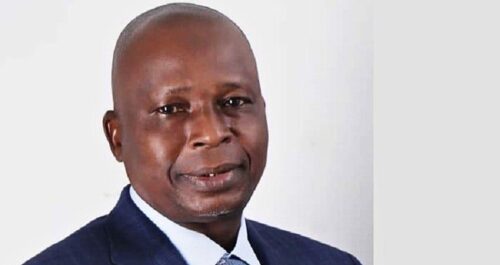
The Attorney General of the Federation and Minister of Justice, Prince Lateef Fagbemi (SAN), made the call at the 24th Session of the Assembly of States Parties to the Rome Statute of the International Criminal Court (ICC) which started today at The Hague, Netherlands.
The AGF in the country’s address expressed President Bola Ahmed Tinubu’s appreciation to the Court and to the Assembly for their tireless efforts in ensuring a successful and meaningful session.
Stating that Nigeria’s longstanding commitment to the Rome Statute system remained unwavering, he assured of resolve to hold accountable those responsible for war crimes, genocide and crimes against humanity.
“The Federal Government of Nigeria reaffirms its readiness to continue working with the ICC in the fulfilment of its mandate. Our cooperation is firmly rooted in the principles of international law and the sovereign equality of States, and we remain committed to ensuring that such cooperation always reflects respect for Nigeria’s sovereignty and constitutional framework,” he said.
Highlighting recent national efforts aimed at strengthening the country’s commitment to international humanitarian and criminal justice norms, Fagbemi recalled that Nigeria in May convened a High-Level International Humanitarian Law Dialogue, bringing together relevant Ministries, Departments and Agencies, civil society organizations, and academia.
He said Nigeria has continued to prioritise the protection of civilians and accountability during military operations.
“Our Armed Forces conduct operations in line with international humanitarian law and maintain mechanisms for independent and transparent investigations into alleged violations. The Six-Month Demobilization, Deradicalization and Reintegration (DDR) Programme, our home-grown initiative, has successfully reintegrated more than 6,000 former combatants into society, contributing significantly to national stability and peacebuilding.
“Nigeria has also taken important legislative steps, including the domestication of the African Union Convention for the Protection and Assistance of Internally Displaced Persons (the Kampala Convention), which now awaits Presidential assent. The processes for the domestication of the Rome Statute and Additional Protocols I and II to the Geneva Conventions are ongoing. Furthermore, Nigeria has joined like-minded States in the Global Initiative to Garner Political Support for International Humanitarian Law and recently endorsed the Political Declaration on Explosive Weapons in Populated Areas.
“Consistent with the ICC’s principle of complementarity, Nigeria continues to demonstrate the capability and willingness to investigate and prosecute serious crimes committed within its jurisdiction. In this regard, all arms of our government are collaboratively working to strengthen domestic mechanisms to address grave crimes and reinforce the rule of law. Nigeria therefore looks forward to formal conclusion of its Situation by the ICC. We will continue to cooperate with the Office of Prosecutor to address all observations on our Situation, in line with our international and national obligations.”
The minister said the ICC’s mandate—to act where States are unable or unwilling to prosecute the gravest crimes—has become even more vital in the face of the alarming increase in armed conflicts worldwide.
He said, “The disregard for international humanitarian law, deliberate targeting of civilians, and destruction of civilian infrastructure illustrates the urgent need to bolster global accountability efforts. Nigeria particularly finds concerning, the dehumanization of wars and armed conflicts against even persons not directly involved in these conflicts.
“Emerging technologies, including lethal autonomous weapons systems (LAWS), pose increasingly complex challenges to the protection of civilians and the attribution of responsibility. As autonomous systems evolve from defensive tools to potentially offensive weapons, questions of legal responsibility and ethical accountability become more pressing. Nigeria therefore supports ongoing international processes—within the United Nations and other multilateral fora—to establish norms, rules, and safeguards that ensure technology serves humanity and not the reverse. We also reiterate our call for the universalization and full implementation of all international humanitarian law instruments.
“The Assembly must remain attentive to the unique challenges faced by states confronting terrorism, insurgency, conflict and mass displacement. Nigeria reiterates that global accountability architecture should remain sensitive to these realities, whilst upholding the highest standard of justice. Effective cooperation, including victim support, timely sharing of information, technical assistance and support for national justice systems remain essential.”
The AGF expressed Nigeria’s full supports to efforts aimed at strengthening the ICC’s independence, efficiency, and credibility.
He however said Africa’s peculiar experiences and challenges must be integrated into ongoing discussions on cooperation, complementarity and reform
“We encourage adequate resourcing of the Court and continued implementation of the Independent Expert Review recommendations. We also emphasize the need for continued dialogue between the ICC and the African Continent. Africa’s peculiar experiences and challenges must be integrated into ongoing discussions on cooperation, complementarity and reform.
Nigeria also condemned the recent cyberattacks on the ICC’s digital infrastructure, saying they were clearly deliberate attempts to undermine the court’s independence and mandate and erode global confidence in international justice.
“We urge the Court to deepen collaboration with relevant stakeholders, including experts in emerging technologies and artificial intelligence, to bolster resilience against future threats and safeguard the integrity of the Court’s operations,” the minister said.
He extended Nigeria’s warm congratulations to the newly elected member of the Board of Directors of the Trust Fund for Victims, stating that the Fund remains a vital pillar of the Rome Statute system, giving tangible expression to the promise of justice for victims.
“We trust that the Board will continue to discharge its responsibilities with diligence, transparency and compassion. Nigeria calls for increased voluntary contributions to support reparations and assistance programmes that promote reintegration and healing.”
The minister said Nigeria stood firmly with fellow States Parties in the collective effort to end impunity for the most serious crimes of concern to the international community.
“We reaffirm our full support for the work of the Court and encourage States that have not yet acceded to the Rome Statute to do so in the interest of global peace, justice, and human dignity,” he added.