
…Kaduna-Kano-Katsina-Maradi rail projects engage over 9,000 youths
The Permanent Secretary, Federal Ministry of Transportation, Engr. Olufunso Adebiyi, has said efficient railway development will significantly decongest Nigerian roads, particularly by reducing the movement of cargo trucks.
Adebiyi said the railway system had the potential to free the nation’s roads from heavy traffic and prolong their lifespan if its capacity was effectively utilised.
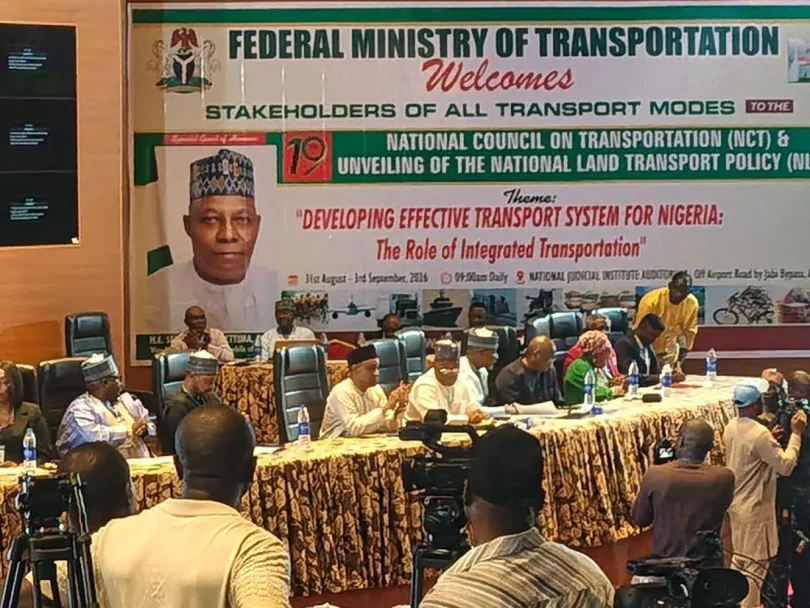
The Permanent Secretary spoke at the opening session of the 19th National Council on Transportation in Abuja.
He cited the movement of containers by rail from the Apapa Port to the Ibadan Dry Port as an example of how rail freight could reduce pressure on the nation’s roads.
Adebiyi said he recently witnessed the loading of a train with 33 40-foot containers for transportation from Apapa Port to the Ibadan Dry Port.
“Technically, you have removed 33 trailers on the Lagos-Ibadan Road,” he said.
He said the Federal Government was also considering the extension of freight movement from Ibadan to other parts of the country, with dry ports serving as points where containers could be transferred closer to their final destinations.
Adebiyi identified employment generation as another major benefit of investment in railway infrastructure.
He disclosed that thousands of Nigerians had been engaged in ongoing rail projects, citing about 4,000 workers on the Kano-Katsina rail project and more than 5,000 workers on the Kaduna-Kano rail project.
According to him, the two projects had provided employment for about 9,000 youths.
The Permanent Secretary also highlighted the establishment of the Federal University of Transportation as part of efforts to develop specialised manpower for the nation’s transportation industry.
He said the university would produce graduates with the skills required to meet the manpower needs of the sector.
Adebiyi said the broader objective of the Federal Government was to develop an integrated transportation system in which road, rail, air and water transportation would complement one another.
He noted that a functional rail system would not only ease pressure on the roads but also support economic activities through more efficient movement of passengers and goods.
The 19th National Council on Transportation is being attended by stakeholders from the maritime, aviation, road and rail sectors from across the country.